REVIEW · BERGAMO
Bergamo: Palazzo Moroni Entry Ticket
Book on GetYourGuide →Operated by FAI - Fondo Ambiente Italiano · Bookable on GetYourGuide
Fresco-filled rooms and a real private garden. I love the Baroque frescoes that cover the walls, and I love that the visit includes two hectares of gardens you can actually stroll. One drawback to plan around: the whole experience is timed to about an hour, so you’ll want to move with intention rather than wander endlessly.
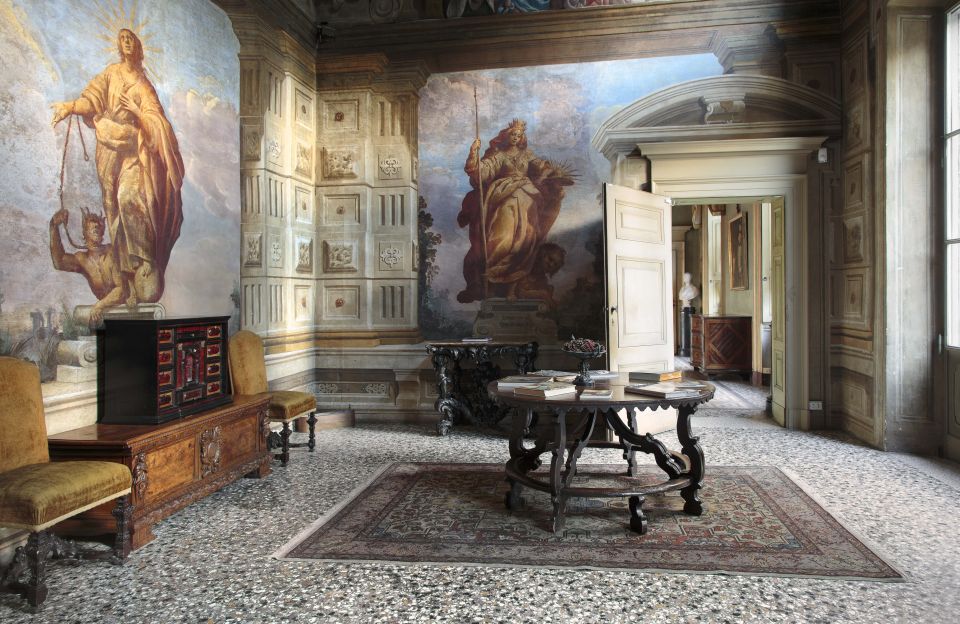
Palazzo Moroni sits in Bergamo’s Upper Town and dates to the 17th century. With FAI’s restoration work now open to the public after three years of effort, you can step into nine rooms such as the Ball Room, the Yellow Room, and the Chinese and Turkish Room.
In the grounds, you’ll find ornamental areas plus vegetable grounds, which makes the place feel lived-in, not staged. One consideration: written help may not be equally strong in every language, so if you rely on French, bring a translation app just in case.
In This Review
- Key things I’d prioritize at Palazzo Moroni
- Palazzo Moroni in Bergamo’s Upper Town: what this $14 ticket really gives you
- Start at Via Porta Dipinta: how to pace your one-hour visit
- The 17th-century palace experience: the Baroque effect in real rooms
- Nine rooms you can’t skim: Ball Room, Yellow Room, and the themed spaces
- Gardens in two hectares: ornamental space plus vegetable grounds
- Value check: is a one-hour ticket worth it at $14?
- Who this stop suits best (and who might want to skip)
- Small practical notes that help your visit feel smoother
- Should you book the Palazzo Moroni entry ticket?
- FAQ
- How much does the Palazzo Moroni entry ticket cost?
- How long is the visit?
- What is included with the ticket?
- Where is the entrance and meeting point?
- Is food included?
- Can I get a full refund if my plans change?
- Can I reserve now and pay later?
Key things I’d prioritize at Palazzo Moroni
- FAI’s restored 17th-century urban palazzo in Bergamo’s Upper Town
- Nine rooms to explore, including the Ball Room and the Yellow Room
- Color-forward frescoes that help you spot the Baroque “theater” effect on the walls
- Two hectares of gardens, including ornamental space and vegetable grounds
- Big private-garden scale for the dense Upper Town area
- About one hour on site, so pick what you want to linger over
Palazzo Moroni in Bergamo’s Upper Town: what this $14 ticket really gives you
For $14 per person and a roughly one-hour visit, Palazzo Moroni is the kind of stop that works well when your Bergamo day has a lot going on. This is not about taking a long guided march through a massive site. It’s about getting into a specific, restored palace and then using your time to see the rooms and gardens in a tight loop.
The building is an urban palazzo, not a country villa, and that matters. In an area like Bergamo’s Upper Town, space feels precious. You feel that right away: once you’re inside, the frescoed rooms are your “wow” moment, and then the gardens give you a surprising change of pace—green, open, and surprisingly large for the setting.
Also, the ticket is just the entry. There’s no food included. If you want a snack or drink, you’ll need to plan that separately, ideally before or after your visit so you don’t feel rushed inside.
You can also read our reviews of more tours and experiences in Bergamo

Start at Via Porta Dipinta: how to pace your one-hour visit
Your meeting point is the entrance on Via Porta Dipinta. From there, the smart move is to treat the hour like a mini route: rooms first, then gardens.
Why that order? Fresco rooms are visually intense. Once you’ve seen a few spaces, your eyes start to want variety. If you end in the gardens, the shift tends to feel easier—your brain gets to rest while still enjoying the detail of the grounds.
Even without a full itinerary listed, the site gives you a clear checklist: nine rooms plus the gardens. With only about one hour, I’d aim for a steady pace—enough time in each room to look closely at the fresco work, but not so slow that you run out of time outside.
The 17th-century palace experience: the Baroque effect in real rooms
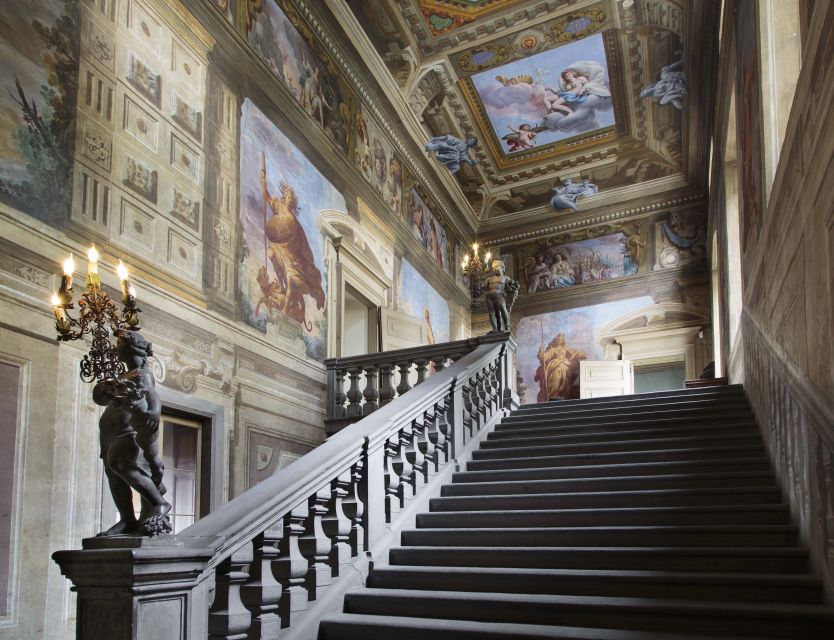
Palazzo Moroni is considered one of the more important buildings of the Baroque era, and the reason is straightforward: the frescoes. This is the kind of artwork where you don’t just read the image—you feel the movement and drama across the walls.
A helpful way to look at Baroque frescoes is to notice how they use the room itself. They’re not decorative wallpaper. They shape what you think the room is, turning flat wall space into something more dimensional and theatrical. If you like art that makes architecture feel like part of the story, you’ll get a lot from this.
The palace is FAI’s first urban palazzo, which is a nice detail because it frames what you’re seeing. Instead of a distant estate, you’re inside a major cultural property embedded in Bergamo’s daily geography—walkable, local, and tied to the city’s Upper Town atmosphere.
And because the restoration is recent (the public opening follows three years of work), the overall experience tends to feel sharp: the building is presented as an actual preserved home and artwork setting, not as something faded or half-finished.
Nine rooms you can’t skim: Ball Room, Yellow Room, and the themed spaces
The ticket lets you see nine rooms, including the Ball Room and the Yellow Room, plus the Chinese and Turkish Room. Those room names aren’t just for decoration—they hint at why the interiors feel like a collection of scenes.
Here’s how I’d approach the room sequence:
- Ball Room: Expect a space designed for spectacle. Even if you’re not into party-room fantasies, you’ll likely appreciate the scale and how the frescoes support that sense of occasion.
- Yellow Room: This is where color naming helps you anchor the look. A room like this is often about mood—watch how the fresco palette interacts with the room’s own tone.
- Chinese and Turkish Room: These are the most curiosity-driven spaces in the set. They give you a glimpse of how tastes and references traveled through Europe, and you can spend extra time comparing how each room’s theme shows up in the artwork.
The practical takeaway: don’t treat the rooms like quick photo stops. The real payoff is spending long enough to see how the fresco details change as you move across the room. If you’re the kind of person who likes to stand still for a minute and really look, this place rewards you.
Gardens in two hectares: ornamental space plus vegetable grounds
After the rooms, the gardens are your second big highlight. Palazzo Moroni’s grounds cover about two hectares, and they include ornamental areas as well as vegetable grounds.
That mix is what makes the gardens feel honest. Ornamental gardens can sometimes feel like they exist only to be admired from a path. Vegetable grounds add a different kind of rhythm—you’re seeing a functional layer inside a beautiful setting.
And here’s a standout detail: Palazzo Moroni has the biggest private garden in Bergamo’s Upper Town. In plain terms, that means you’re not just walking past a token courtyard. You’re getting enough space to feel like the Upper Town has a secret release valve—rooms when you want art, gardens when you want breathing room.
If you’re short on time, focus on two things in the gardens: (1) the way the space opens up as you walk, and (2) how the garden’s design frames views back toward the palace setting. Even if you don’t have time to explore every corner, those two observations tend to make the experience feel complete.






Value check: is a one-hour ticket worth it at $14?
A $14 entry ticket can be a good deal when it buys you access to two major parts: frescoed rooms and real garden ground. Here, you’re not paying for an all-day pass that you might rush. You’re paying for a focused visit that fits into a typical Bergamo itinerary.
Also, the site is backed by FAI, and the restoration detail is meaningful. You’re visiting after work that took three years, and that usually translates to a better-preserved presentation of rooms and fresco surfaces. That matters because Baroque frescoes don’t age gracefully when display conditions are poor.
One more value angle: the rating is strong, with an average of 4.6 from 181 reviews. That doesn’t mean you’ll love it, but it does suggest the experience consistently lands for people who want art plus a garden break.
Who this stop suits best (and who might want to skip)
This is a great fit if you want:
- A short, high-impact indoor/outdoor cultural stop in Bergamo’s Upper Town
- Strong artwork—specifically frescoes—and themed rooms like the Chinese and Turkish Room
- A garden that feels substantial, not just a courtyard
It’s less ideal if you’re the type who needs lots of time to wander without decisions. With only about an hour, you’ll be happier if you can commit to a “look first, walk second” pace.
If you’re traveling with kids, it can still work, but you’ll want to keep expectations realistic: the fresco rooms reward patience, and the best experience comes when you let kids view the “big wow” moments quickly before moving outside.
Small practical notes that help your visit feel smoother
A few details that make the difference between rushing and enjoying:
- Bring a plan for your time. You’re looking at nine rooms and gardens in about an hour. Pick a couple of rooms you care about most, then enjoy the rest at a faster pace.
- Wear shoes you can handle for garden walking. Vegetable-ground paths can feel a bit different than indoor floors.
- Don’t wait until the end to appreciate the palace art. The frescoes are the reason people come, and they’re hardest to enjoy if you’re mentally already halfway outside.
Language note: one booking experience flagged that French information may be limited. If you’re relying on French, don’t assume every label will help you. A translation app is a low-effort backup.
Should you book the Palazzo Moroni entry ticket?
I’d book it if you want a tight Bergamo add-on that combines Baroque fresco rooms with a surprisingly large private garden. At $14 for about an hour, it’s a strong value when your schedule is packed but you still want something more authentic than a quick exterior photo stop.
Skip or reconsider only if you know you dislike short museum-style visits, you want a guided explanation (this is an entry ticket), or you’re hoping for food to be included. Otherwise, Palazzo Moroni is exactly the sort of place that turns an hour into a real memory—fresco walls inside, and garden space that makes the Upper Town feel bigger than it looks.
FAQ
How much does the Palazzo Moroni entry ticket cost?
The price is $14 per person.
How long is the visit?
The experience is set for about 1 hour.
What is included with the ticket?
Your ticket includes entry to Palazzo Moroni.
Where is the entrance and meeting point?
Go to the entrance of Palazzo Moroni on Via Porta Dipinta.
Is food included?
No. There is no food or restaurant included with the ticket.
Can I get a full refund if my plans change?
Yes. You can cancel up to 24 hours in advance for a full refund.
Can I reserve now and pay later?
Yes. You can reserve your spot and pay later to keep your travel plans flexible.