REVIEW · MILAN
e-Scavenger hunt Milan: Explore the city at your own pace
Book on Viator →Bookable on Viator
Milan, solved one clue at a time. This e-Scavenger hunt Milan app tour turns major landmarks into a question-and-assignment walk you can do whenever you want.
I love the self-paced format: you’re not stuck matching someone else’s speed. I also like how the app nudges you beyond the usual photo stops, pushing you to notice details at places like the Galleria Vittorio Emanuele II and Milan Cathedral.
One consideration: it’s app-first, so you’ll need your own smartphone and data. Also, feedback from one unhappy user said the guide-style explanation didn’t work well and the experience felt incomplete at times.
In This Review
- Key highlights at a glance
- Price and what $36.07 actually buys you
- Starting at Piazza Fontana: an easy loop through the center
- Galleria Vittorio Emanuele II and the Duomo zone: start big, learn fast
- Castello Sforzesco and Porta Sempione: medieval edges without the museum marathon
- Leonardo’s Last Supper area and Santa Maria delle Grazie: a UNESCO stop with gravity
- Brera and Pinacoteca: art-forward streets without the pressure
- Church details that reward the pause: San Fedele, San Lorenzo Maggiore, and Santa Tecla
- The “in-between” landmarks that make Milan feel lived-in
- How to make the app hunt work smoothly in real life
- Who this e-Scavenger hunt Milan is for
- Should you book it?
- FAQ
- How long does the e-Scavenger hunt Milan take?
- Where do I start and where does it end?
- What do I need to play?
- Is this a private tour?
- What landmarks does the hunt include?
- Is free cancellation available?
Key highlights at a glance

- Self-paced walk with no group schedule pressure
- App-led game with questions and research assignments
- Top Milan landmarks tied together into one route
- Flexible for groups and ages (family-friendly)
- Private group so only your party plays
Price and what $36.07 actually buys you
The price is $36.07 per group for up to 6 people. That’s a key value point: if you’re traveling with friends or family, the cost per person can drop fast compared with per-person walking tours.
The time window is also reasonable. Plan on about 2 to 4 hours, which fits a morning explore, a mid-afternoon roam, or a relaxed start to evening plans. You’re not paying for a long sit-down or a bus ride. You’re paying for a structured walking route you can run at your own speed.
Just be aware of what’s not included: smartphone and data. The tour provides the online app to play and a mobile ticket, but you supply the device and connectivity. If your phone battery is weak or your data plan is stingy, bring a plan.
You can also read our reviews of more city tours in Milan



Starting at Piazza Fontana: an easy loop through the center

You begin at Piazza Fontana, 20122 Milano and end back at the same meeting point. That loop matters. It reduces stress: you don’t need to solve “how do we get back” after a few miles of walking.
This also helps if you want to mix the hunt with independent exploring. You can finish and then keep going toward whatever you’re most curious about—shopping around the Duomo area, a slow coffee break in Brera, or another church stop nearby.
It’s near public transportation, and service animals are allowed. The experience is also described as user friendly for the hearing impaired, which is a plus if you’ve ever dealt with tours where you miss half the story because audio wasn’t designed for everyone.
Galleria Vittorio Emanuele II and the Duomo zone: start big, learn fast

Your route opens with Galleria Vittorio Emanuele II, described as Italy’s oldest active shopping gallery and a major Milan landmark. Even if you’ve seen photos, being inside the space changes how you read it. This is one of those spots where you can feel the city’s fashion-and-commerce mindset in the architecture and the energy around you.
From there, you move into the Milan Cathedral area (officially the Metropolitan Cathedral-Basilica of the Nativity of Saint Mary). This is the kind of place where a standard tour can feel repetitive: “look up, look at the facade, quick stop, next.” Here, the app game approach can make your attention sharper. Instead of only watching other people’s reactions, you’re working through questions and tasks, so you’re forced to look more carefully.
You’ll also encounter Duomo Square, enclosed by the gothic cathedral. The note that shopping is what draws most crowds here is practical. Expect lots of people near the cathedral zone, especially if you go at peak times. The app’s self-paced style can be a real advantage here: if it gets crowded, you can pause, work through a few questions when you have breathing room, and keep moving when the flow shifts.
Castello Sforzesco and Porta Sempione: medieval edges without the museum marathon
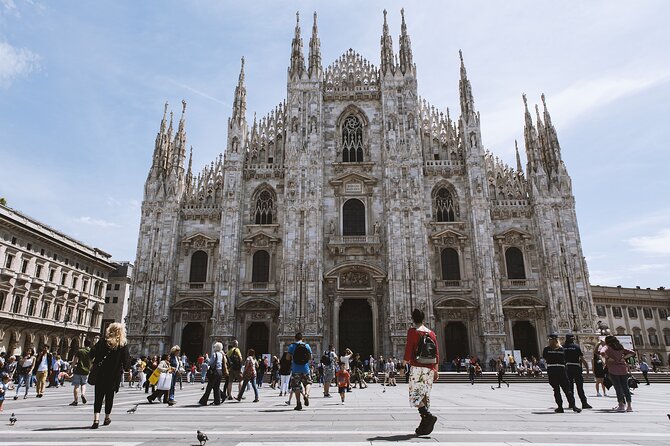
Next up is Castello Sforzesco, a medieval fortification built in the 15th century. If you like your landmarks to have a backbone, this is a great contrast to the more decorative areas near the Duomo. Even without lingering for a long interior visit, the castle setting gives your walk a sense of Milan’s older defensive history.
Then you reach Porta Sempione, a city gate and also the name for the surrounding district. A gate stop can sound dull until you realize it gives you orientation. It’s a “why this location matters” type of landmark, the kind that helps you understand how the city was organized and how people historically moved through it.
One practical consideration: castle and gate areas can vary in how comfortable they are for stopping and focusing on your phone. If you’re going with kids or anyone who gets impatient, keep the app moving and aim for short check-ins rather than long phone reading while you’re stuck in a tight crowd.
Leonardo’s Last Supper area and Santa Maria delle Grazie: a UNESCO stop with gravity
A standout part of Milan is how the city connects everyday streets to world-famous art. Your walk includes The Last Supper, a late 15th-century mural painting by Leonardo da Vinci. It’s housed by the refectory of the Convent of Santa Maria delle Grazie, which means this isn’t just a “see it from outside” stop in your head. The location alone carries weight.
The tour also ties in Santa Maria delle Grazie, described as a church and Dominican convent and a UNESCO World Heritage Site. UNESCO sites can sometimes feel like you’re checking a box. The app format helps avoid that. You’re more likely to slow down and notice what you’re looking at rather than rushing past because you already know the name.
That said, do keep expectations realistic. The data you have here doesn’t promise special access, tickets, or timed entry. If you’re aiming to see specific interiors, confirm ahead of time what you can do on the day, because the hunt itself is built around the walking and the app activities.





Brera and Pinacoteca: art-forward streets without the pressure

As you head into Brera, you get another strong Milan identity layer. Brera is described as a district home to the Pinacoteca di Brera gallery and its collection of Italian art spanning centuries, and it’s also noted as fresco-filled. The word fresco-filled matters because it hints at what you should do during the hunt: pause and look at the visual texture around you, not just the big headline sights.
The Pinacoteca di Brera is specifically called the main public gallery for paintings in Milan, with one of the foremost collections of Italian paintings. If you’re the type who enjoys art but doesn’t want to commit to a long museum schedule, this stop can still work well. The hunt structure can act like a “pre-museum warm-up,” helping you notice themes before you decide whether you want to linger longer on your own.
For practical pacing: museums can eat time. Your app tour is designed for 2 to 4 hours, so if Brera pulls you in, set a mental clock. Keep the hunt moving, then decide after you finish whether you’ll return for a longer art session.
Church details that reward the pause: San Fedele, San Lorenzo Maggiore, and Santa Tecla
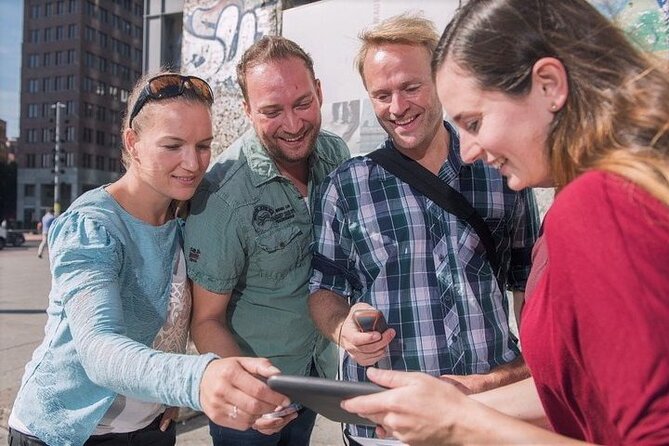
Milan does church stops differently from many cities. They’re not only about worship; they’re packed with architectural quirks, names, and design choices that reward careful looking.
You’ll visit San Fedele, a Jesuit church dedicated to St. Fidelis of Como. That kind of dedication detail is useful during a self-guided format because it gives you a thread to follow while you’re standing there, not just a building silhouette.
Next is Basilica of San Lorenzo Maggiore, noted as within the city’s ring of canals and originally built in Roman times. Roman roots add a different kind of depth to your walk: you’re not only moving through medieval and Renaissance eras, but also into what survives from earlier Milan.
You’ll also encounter Basilica di Santa Tecla, described as a former paleo-Christian basilica church in Milan. This is one of the more detail-rich parts of the route. It’s noted for its statues on the roof and its false apse, an early example of trompe-l’oeil, attributed to Donato Bramante. Even if you don’t go hunting for every visual trick, the app tasks can push you to look where you’d normally pass by.
The “in-between” landmarks that make Milan feel lived-in

Not every stop is a headline. And that’s part of what can make an app hunt worth it.
You’ll find Casa Panigarola, also known as Palazzo dei Notai, located in Piazza Mercanti, described as the former city centre in the Middle Ages. That’s a great kind of stop for a scavenger hunt, because it helps you connect Milan’s present layout to its older civic center.
You’ll also encounter a fountain detail described as a rectangular fountain designed by Giuseppe Bovara, with water gushing out through three mouths: two lateral and one front. That kind of specific description is tailor-made for a game format. It forces your eyes to track the right part of the scene instead of turning it into background scenery.
These are the moments that help the hunt feel like more than just a checklist.
How to make the app hunt work smoothly in real life
Since the experience is app-led, you’ll get the most out of it if you treat your phone like part of your gear, not a fragile accessory.
Bring a fully charged smartphone. You’ll need it for the game, and the tour data makes clear that smartphone and data aren’t included. If you rely on mobile data and your coverage is spotty in some street corridors, download or set up the app before you start whenever possible.
Use your own walking rhythm. The big selling point here is that you can set your own pace and avoid syncing with a group. In practice, that means you can spend extra time near the Duomo zone when you want photos, then speed up through lesser-stops when you’re trying to keep the day moving.
One more thing: because the hunt uses questions and research assignments, you may want a quick note-taking habit. If the app asks for something you can’t answer immediately, you’ll likely find the answer quicker if you pause and write down key clues rather than trying to remember them while walking.
Finally, consider your expectations. One unhappy user feedback mentioned that the product felt unusable and that a travel guide was expected more than a partially functioning game. That’s not common enough to assume it’s your outcome, but it’s a useful warning: if you want storytelling and instruction from a human, this won’t replace that.
Who this e-Scavenger hunt Milan is for
This works best for people who like structure without a rigid schedule. If you enjoy solving small challenges while you walk, the app-led format can turn Milan into a series of mini missions.
It’s also built to work for small or large groups and for all ages, which makes it a strong option for families who want everyone doing something. And since it’s private for your group only, you don’t have to navigate the awkwardness of getting in someone else’s way or feeling like you’re holding up a stranger.
Where it might not fit: if you want a deep, narrated cultural walkthrough and you dislike relying on a phone to learn, a traditional guide will likely feel more satisfying. The app format can feel thin if the explanation isn’t clear on your device.
Should you book it?
I’d book this e-Scavenger hunt Milan if you want an efficient way to cover major sights on your schedule and you’re comfortable learning through questions on your phone. The value math is solid for groups up to six, and the landmark mix is strong: Galleria Vittorio Emanuele II, Milan Cathedral and Duomo Square, Castello Sforzesco, Porta Sempione, the Last Supper area at Santa Maria delle Grazie (UNESCO), and art-oriented Brera.
I’d hesitate if you expect a guide-style explanation as the main event, or if you don’t want to deal with smartphone/data needs during your walk. Also, given that at least one user reported a frustrating experience with the app’s instructions, I’d treat this as a “try it, adapt, and be ready for a game-first approach” tour.
If that sounds like you, it’s a fun, practical way to experience Milan beyond the obvious photos.
FAQ
How long does the e-Scavenger hunt Milan take?
It’s listed as about 2 to 4 hours.
Where do I start and where does it end?
You start at Piazza Fontana, 20122 Milano and the activity ends back at the meeting point.
What do I need to play?
You need an online app on your phone. The tour information also notes that smartphone and data are not included, so you’ll need your own device and connectivity.
Is this a private tour?
Yes. It’s described as a private tour/activity, and only your group participates.
What landmarks does the hunt include?
The stops listed include Galleria Vittorio Emanuele II, Milan Cathedral (Duomo), Castello Sforzesco, The Last Supper, Porta Sempione, San Fedele, Casa Panigarola (Palazzo dei Notai), Basilica of San Lorenzo Maggiore, Basilica di Santa Tecla, Duomo Square, Brera, Pinacoteca di Brera, Santa Maria delle Grazie, and Palazzo Litta.
Is free cancellation available?
Yes. You can cancel for a full refund up to 24 hours in advance of the experience start time.