REVIEW · MILAN
Milan: Cathedral and Duomo’s Terraces Entrance Ticket
Book on GetYourGuide →Operated by Veneranda Fabbrica Duomo di Milano · Bookable on GetYourGuide
Climb Milan’s skyline on sacred stone. This Duomo all-areas ticket gives you access to the cathedral complex, the terraces for panoramic views, and the museum side, so you can see why this landmark matters to the city. You also get entry to the Church of St. Gottardo in Corte, a quiet add-on that fits the big-picture story of Milan’s faith and art.
I especially like the way the ticket ties together scale and detail. The Duomo interiors and its stained glass windows are jaw-dropping, and the Duomo Museum in the 14th-century Palazzo Reale adds context with displays tied to the cathedral’s spiritual and cultural role. If you choose the optional audio guide, it helps you pace your visit without feeling rushed.
The main drawback is that this is an unguided ticket: you manage the flow yourself, and you’ll still deal with security checks and possible waits. Plan for lots of stairs at the top, and follow the strict clothing rules (no shorts or tank tops).
In This Review
- Key things to know before you go
- What’s included in a Milan Duomo all-areas ticket
- Timed entry isn’t a magic spell: how to manage lines and security
- Duomo Terraces: panoramic views, Candoglia marble, and how hard the climb feels
- Inside the cathedral: stained glass, sculpture details, and the 27-hall scale
- Duomo Museum in Palazzo Reale: what you’ll actually see
- Church of St. Gottardo in Corte: the smaller room that rounds out the story
- A practical 2-day game plan (so you don’t waste your once-only access)
- Price and value: is $30 fair for this much access?
- Who this Duomo ticket suits best (and who should rethink it)
- FAQ
- What areas does this Milan Duomo ticket include?
- How long is the voucher valid after booking?
- Is there an option for an audio guide?
- Can I visit all parts on a Wednesday?
- Are there stairs to reach the terraces?
- What time should I plan to enter?
- What clothing is not allowed?
- What items are prohibited?
- Should you book this Milan Duomo access ticket?
Key things to know before you go
- 48-hour validity: Your voucher works for 2 days from the booking date, and each site must be used during its opening hours.
- Duomo terraces are the must-do: On bright days, you can see toward the Alps and even the Apennines.
- You visit each area only once: Pick an order that keeps you in the mood—don’t lose momentum.
- Museum and St. Gottardo close Wednesdays: Plan around it so you don’t miss half the ticket.
- Optional elevator can save your legs: Some routes include elevators depending on the option you select.
- Strict entry rules: Security checks happen, and certain items and clothing are not allowed.
What’s included in a Milan Duomo all-areas ticket
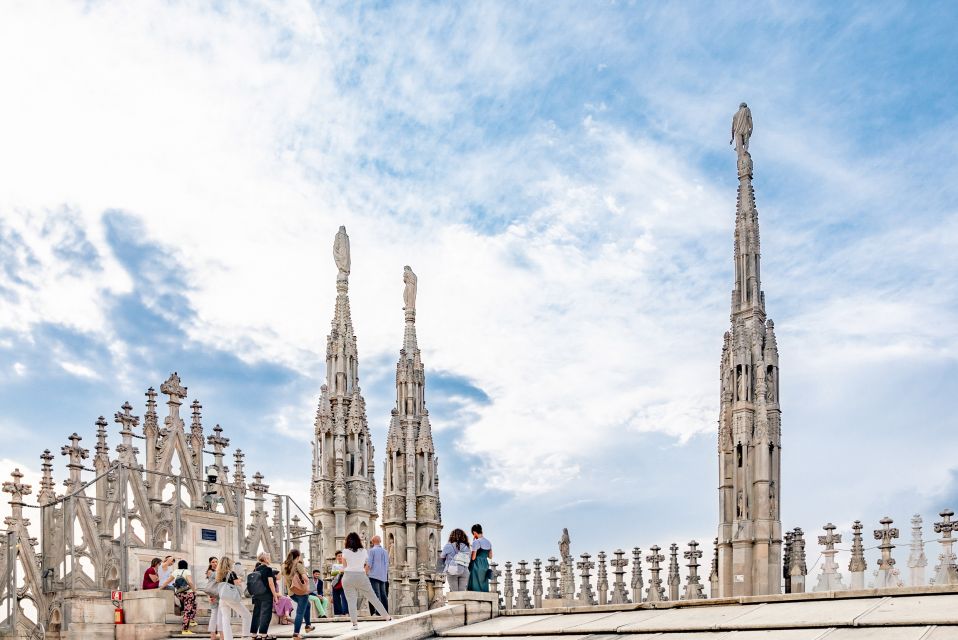
This ticket is designed for maximum access to Milan’s symbol, not a quick photo stop. With your entry, you can visit the Duomo terraces, the cathedral itself, and the Duomo Museum. The ticket also includes entry to the Church of St. Gottardo in Corte, which helps balance the grand Duomo experience with something smaller and more intimate.
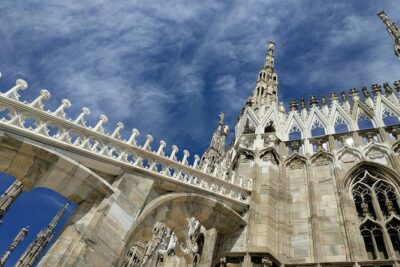
In plain terms: you’re not just buying a view. You’re buying a full circuit of spaces that explain how the Duomo became the center of Milan’s religious life and civic identity over centuries. The cathedral is described as a 600-year-old work, built with Candoglia marble, and the ticket gives you time to see both the craftsmanship and the bigger “why.”
If you like art and architecture, this format is a good fit. You can walk at your own speed, switch between inside-and-outside moments, and still cover multiple sites without having to book separate entries.
You can also read our reviews of more tours and experiences in Milan


Timed entry isn’t a magic spell: how to manage lines and security
You pick a time when you book, and that matters, because the Duomo system runs on scheduled entry slots. Still, even with a timed ticket, you should expect security checks and some waiting at peak hours. Many people find it smooth when they arrive early, and a little less smooth later—especially if elevators are busy.
The last entry for all sites is at 5:50 PM, so don’t plan a “late-day sprint.” If you want the terraces and interior without stress, aim earlier in the day. One smart strategy: treat the whole visit like two parts—terraces first or last—rather than trying to do everything in a single rush.
Also note that each area can be visited only once. That’s important. Once you leave the terraces, you can’t go back to them later. Once you do the cathedral circuit, you’re done with that portion of the ticket. So your time management affects the quality of the experience more than you’d think.
Finally, check dress and rules before you arrive. The ticket is strict: shorts and tank tops are not allowed, and you can’t bring high-heeled shoes, large bags/luggage, food and drinks, or anything sharp. Security checks happen for everyone, so show up ready to move.
Duomo Terraces: panoramic views, Candoglia marble, and how hard the climb feels
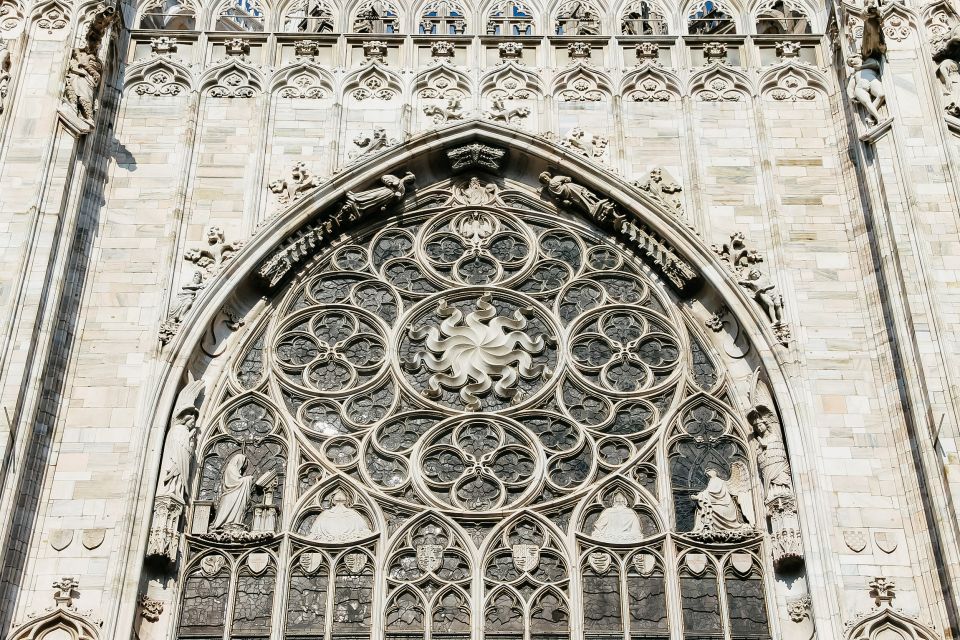
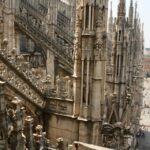
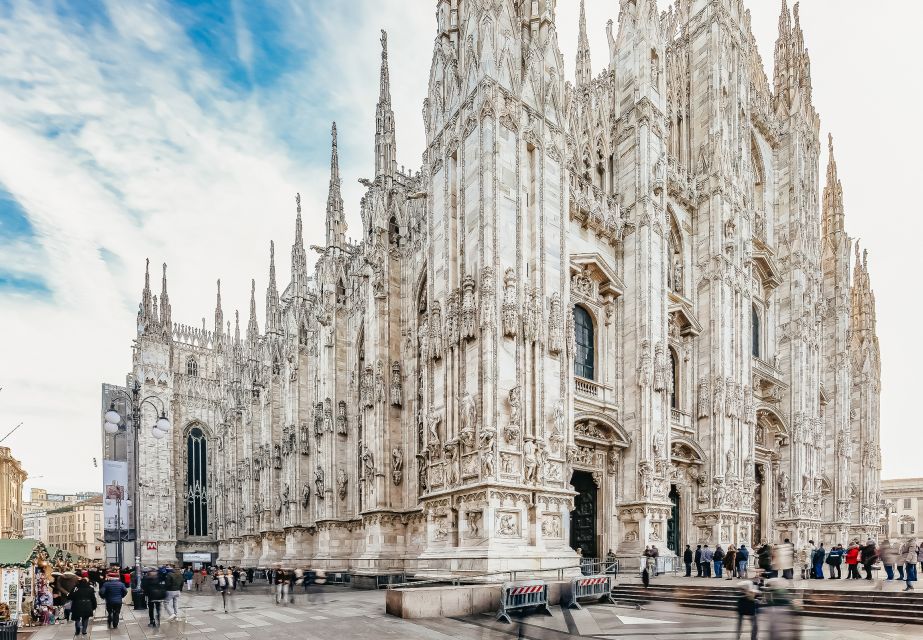
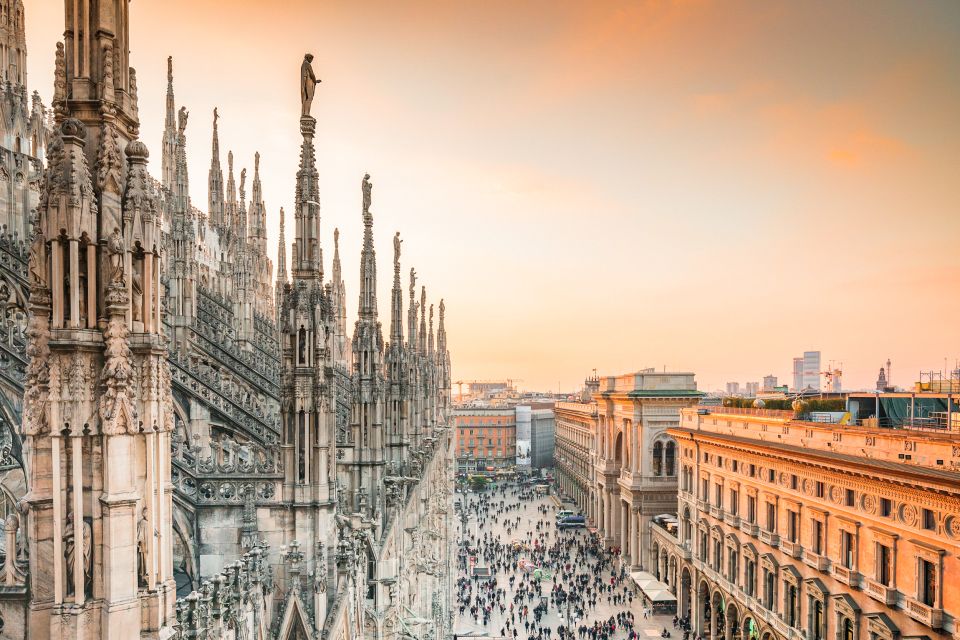
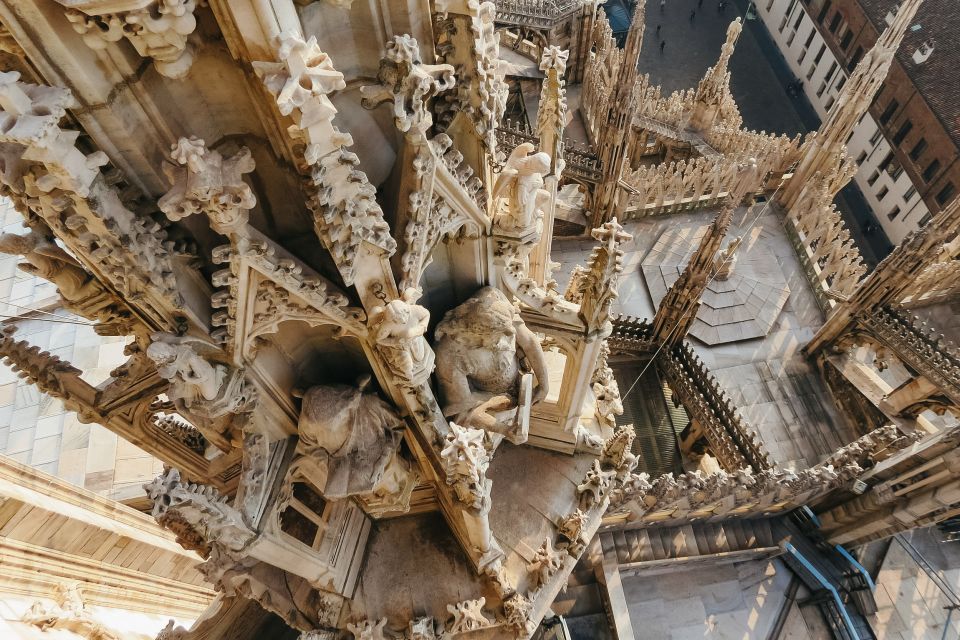
The terraces are the headline. You’re stepping onto the rooftop world of the Duomo, where the marble details you saw from the street suddenly feel close enough to touch with your eyes. On bright days, the views stretch toward the Alps and the Apennines. Even if it’s cloudy, the cathedral’s scale and the city’s geometry still do the heavy lifting.
Now, the practical part: stairs are real. The information you’re given is clear that you’ll climb to reach the top. Reviews from real visits describe roughly 160–200 steps depending on the route, and many people call out that it’s doable but not effortless. If you want the elevator option, consider it. Some people say the wait can be short, and others note it can get long—so the elevator isn’t automatically faster, but it can be easier on your body.
A smart way to enjoy the terraces is to treat them like a viewpoint loop, not a workout. The terraces experience tends to take about 1.5 hours for many visitors, which is long enough for photos and still short enough that you don’t feel trapped up there. If weather turns, you’ll also want to be careful—one review noted terrace surfaces can feel slippery in rain.
You also might find that not every roof area is accessible at all times. Reviews describe limited access in parts of the roof, such as central sections you may not be able to enter. That’s usually tied to maintenance or safety areas, and it’s why you should keep your plan flexible.
Inside the cathedral: stained glass, sculpture details, and the 27-hall scale
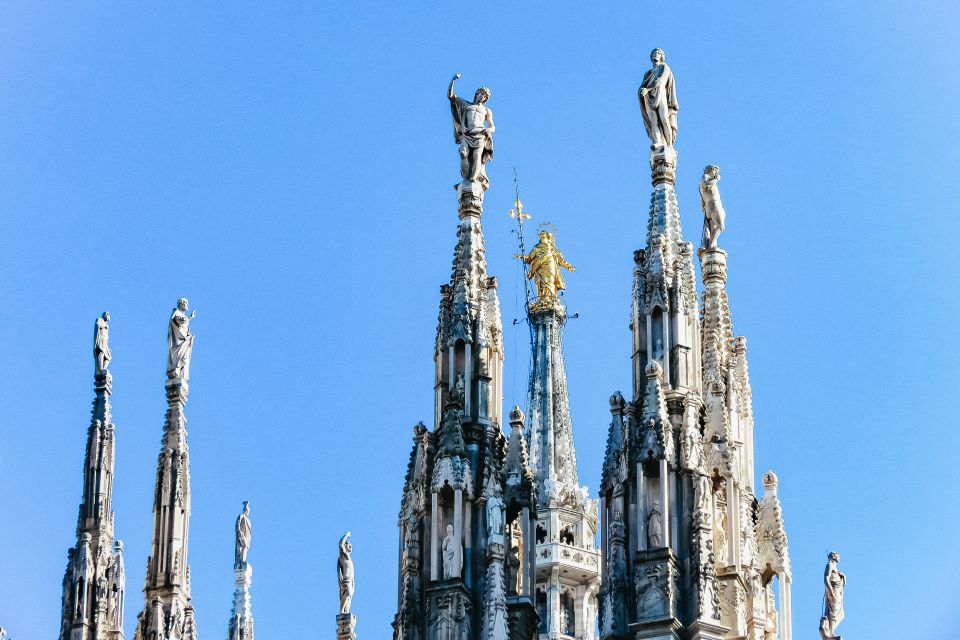
Once you go back inside, the Duomo changes tone fast. From the rooftops, you’re surrounded by architecture. Inside, the cathedral makes you feel small in the best way. The ceilings are high, the interior feels vast, and the light plays tricks through stained glass windows.
The ticket information highlights stained glass and sacred objects, and the museum-side galleries reinforce the cathedral’s artistic ecosystem. Inside, focus on three things:
1) the stained glass windows (they shape the light),
2) the sculptural program (stone figures everywhere), and
3) the sheer room volume (it’s not just pretty; it’s big enough to reset your sense of scale).
You’ll also spend time moving through the cathedral’s interior spaces. The description for this access includes the cathedral’s 27 halls, which signals why this doesn’t feel like a “walk-through.” Even if you’re quick, you’ll want time to stop and look upward.
One useful ordering tip shows up again and again in real visits: some people recommend doing the interior first and the terraces later, so you end with the best air and the widest views. Others reverse it and enjoy the terraces early when crowds are lighter. Either way, keep the terrace “once-only” rule in mind.
Duomo Museum in Palazzo Reale: what you’ll actually see
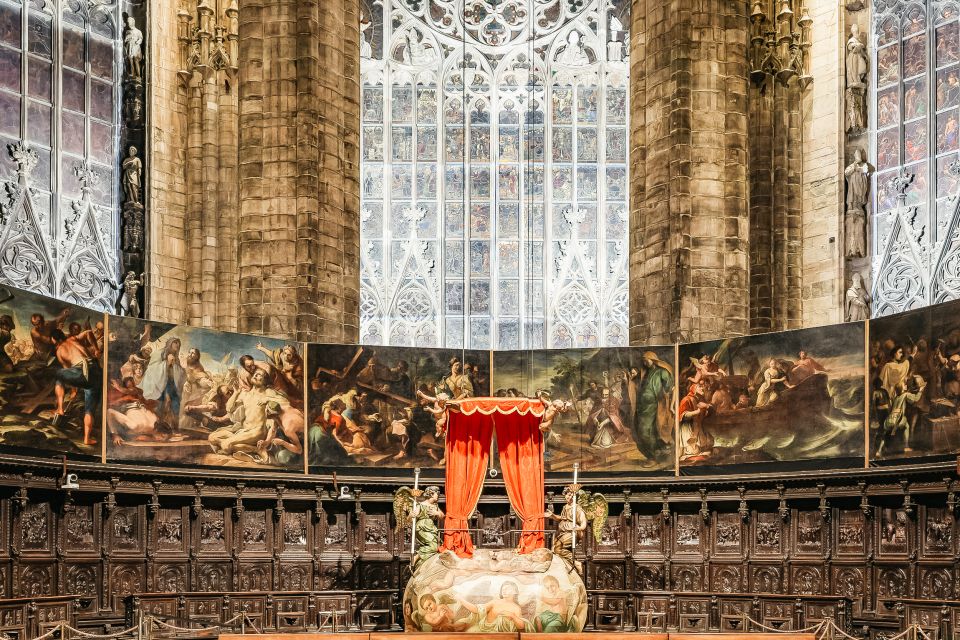
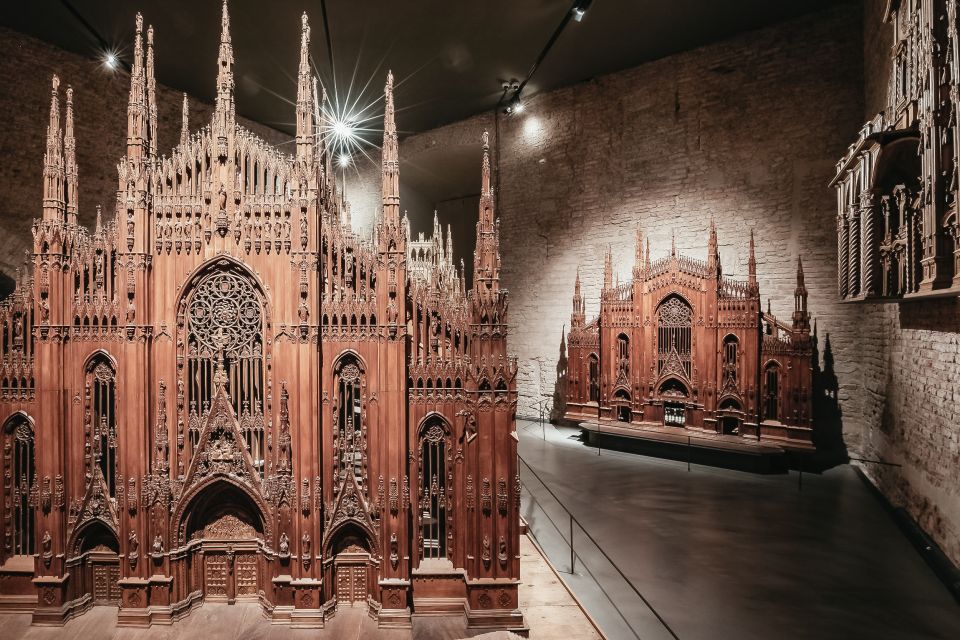
The Duomo Museum is where the ticket earns its keep. You’re not only looking at the building—you’re learning how the Duomo lived as an institution over time. Entry connects the cathedral experience to objects and artworks that support the cathedral’s role in Milan’s spiritual and cultural evolution.
You’ll also be in a setting tied to older Milan. The details mention a 14th-century Palazzo Reale setting inside the museum context, including a stained glass window and exhibits like sculptures and woven textiles. This is the part of the visit that helps you understand why the Duomo isn’t just a pretty exterior; it’s a place of devotion, ritual, and community identity.
The museum highlights sacred relics and liturgical objects. That matters because it gives you a reason to care about the decorative side. If you’ve ever wondered what all the religious symbolism is tied to, the museum is where those meanings show up more clearly than in the open cathedral floor plan.
If you’re short on time, don’t try to speed-run the museum. Even with an audio guide option, give yourself room to pause. The museum works best when you treat it as the “why” portion of the day.




Church of St. Gottardo in Corte: the smaller room that rounds out the story
This ticket doesn’t stop at the big famous spaces. It includes the Church of St. Gottardo in Corte, a smaller stop that helps round out your understanding of the Duomo complex as a living religious world, not just an architectural monument.
The highlights for this church emphasize sacred relics and liturgical objects, so it fits naturally after the museum. You’ll likely feel the contrast: the Duomo overwhelms with scale, and this church adds focus and atmosphere.
One important timing note: the museum and the church are closed on Wednesdays. If your schedule includes a Wednesday, don’t gamble. You may still visit the cathedral/terraces depending on the day rules, but you can lose part of what the ticket promises.
A practical 2-day game plan (so you don’t waste your once-only access)
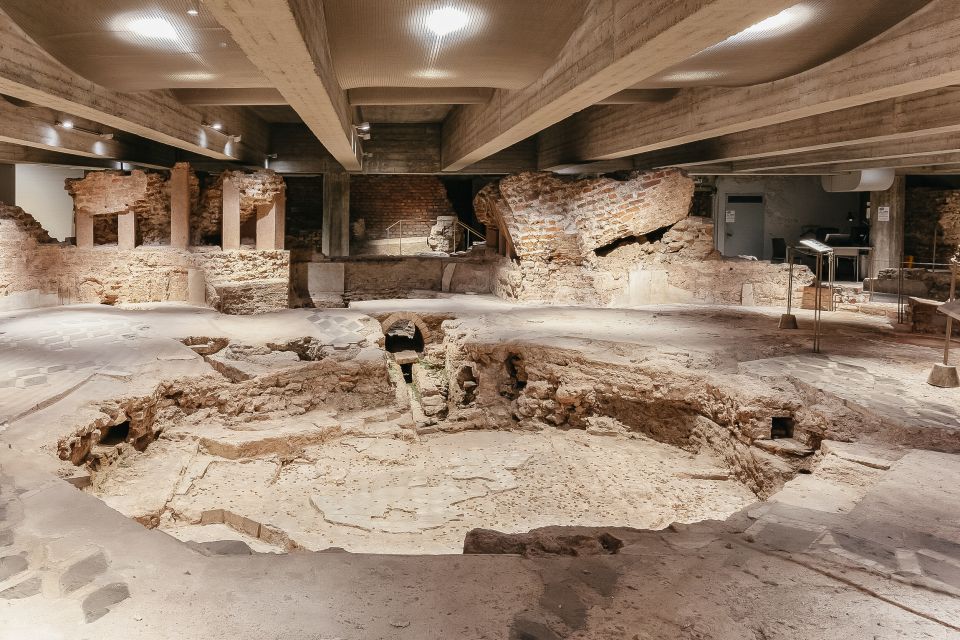
Your voucher is valid for 48 hours from your booking date, and you can use the ticket within opening hours at each site. That means you can spread it out. I like that flexibility because Duomo days can get intense fast, and having a “Plan B” inside your 2-day window reduces stress.
Here’s a simple approach that works for most people:
- Day 1: Start with the cathedral interior. Take your time with stained glass and sculpture details, then hit the museum while you’re still in an “art and faith” mindset.
- Day 2 (or later on Day 1): Do the terraces for the city views. Save the widest panorama moment for when you want a lighter, airier pace.
If you’d rather do it the other way:
- Day 1 terraces first: Do the roof circuit when you’re fresh. Then come back down into the cathedral when you’re ready for close-up beauty.
- Day 2: Use the museum and St. Gottardo when you want a slower indoor day.
Either way, remember: you can’t return to a specific area after you’ve done it. So decide what you want to savor most—roof views or interior light—and build your order around that.
If you choose the optional audio guide, use it to keep your pace steady. Audio guides are offered in many languages (including English, Italian, French, German, Spanish, and several Asian and Russian language options). Reviews also suggest you may need to pick up the audio guide early in the late day window, because kiosks can close before the sites fully shut down.
Price and value: is $30 fair for this much access?
At about $30 per person, this ticket can be a strong deal for the amount of access you get. You’re paying for multiple connected experiences: terraces, cathedral interior, museum, and the Church of St. Gottardo in Corte. In cities like Milan, separate entries for big monuments add up quickly, so bundling access is where the value lives.
The real value question isn’t just price—it’s whether the format fits your style. This ticket is not a guided tour. That’s great if you like independent exploring and you’re comfortable navigating entrances and routes yourself. It can feel frustrating if you want someone to narrate every detail or keep you on schedule.
Also consider the “hidden” costs of time and energy. The terraces require stairs. The cathedral complex requires walking. If you know you need help for mobility or stamina, selecting the elevator option can make the experience more enjoyable (and less draining) even if it costs more than the base ticket. Reviews show people who used elevator options often felt it improved convenience, while others said walking was worth it for extra views on the way.
For roughly the price range listed, I think this is good value if you:
- want one ticket that covers the main Duomo spaces,
- enjoy architecture and religious art,
- are visiting for long enough to enjoy the terraces and interior without rushing.
Who this Duomo ticket suits best (and who should rethink it)
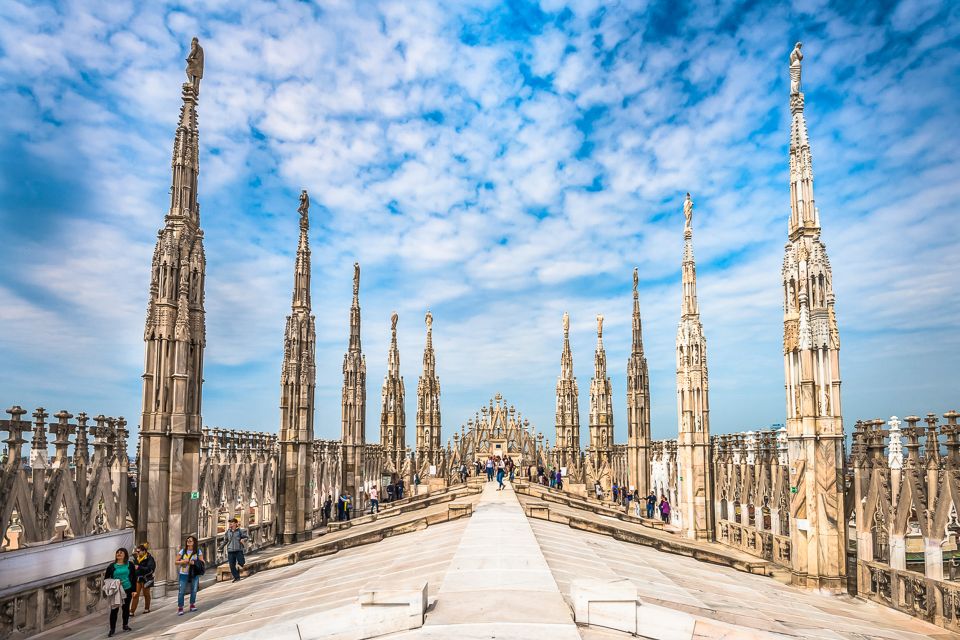
This ticket is a great match if you love architecture and want the payoff of being above the city and then inside one of Europe’s most famous cathedrals. You’ll likely enjoy the mix of rooftop viewpoints and indoor stained glass, plus the museum’s objects that explain the cathedral’s role over time.
It’s also a solid pick for people who travel independently. The whole thing is designed to work without a guide, which means you can go at your own speed and stop when something catches your eye.
You might rethink it if:
- stairs are a dealbreaker for you (terraces involve climbing, and elevators may be an option but not a guarantee for everyone’s comfort),
- you need a guide to interpret details, since this is still self-guided entry,
- you’re visiting on a Wednesday and planned to rely on museum + St. Gottardo, since those are closed.
If you’re traveling as a family, it can work well, but help your group plan. The Duomo is a big walking day, and the stairs to the roof require realistic expectations.
FAQ
What areas does this Milan Duomo ticket include?
It includes entrance to the Duomo and terraces, the Duomo Museum, and the Church of St. Gottardo in Corte.
How long is the voucher valid after booking?
The voucher is valid for 48 hours from the date booked.
Is there an option for an audio guide?
Yes. An optional audio guide is available in multiple languages such as English, Italian, French, German, Spanish, and others.
Can I visit all parts on a Wednesday?
No. The Duomo Museum and the Church of St. Gottardo in Corte are closed on Wednesdays.
Are there stairs to reach the terraces?
Yes. There are stairs to get to the top of the Duomo, and elevator access may be offered depending on the option selected.
What time should I plan to enter?
The last entry for all sites is at 5:50 PM, so it’s best to arrive earlier if you want a relaxed visit.
What clothing is not allowed?
Shorts and tank tops are not allowed. Short skirts are also not allowed.
What items are prohibited?
Food and drinks are not allowed, and there are restrictions on large bags/luggage, drones, pets (assistance dogs allowed), weapons or sharp objects, sprays/aerosols, and several other categories of items.
Should you book this Milan Duomo access ticket?
Yes, if you want a do-it-yourself Duomo day that covers the terraces, cathedral, museum, and St. Gottardo in one ticket. The value comes from the access: you get roof views plus the context pieces that make the cathedral feel more meaningful than a single photo moment.
Book it confidently if you’re okay managing your own route and following the rules, and if you can handle stairs for the terrace circuit. If stairs are your biggest concern, choose the elevator option when available, and go early to reduce stress. If your trip includes a Wednesday, double-check your plan because the museum and St. Gottardo are closed that day.