REVIEW · MILAN
Milan: Navigli Canal Boat Cruise
Book on GetYourGuide →Operated by Z V SRL · Bookable on GetYourGuide
Milan’s canal views are a sharp change of pace. This 50-minute Navigli canal boat cruise lets you see working-class Milan and nightlife hotspots from the water, with an audio story you can control via a QR code. I like that the boat is electric and easygoing, so the ride feels smooth rather than rushed. I also like the route’s specific sights, from Vicolo dei Lavandai to Darsena, plus the Leonardo da Vinci connection at Conchetta. One thing to consider: the commentary is delivered through your phone, so if you don’t use headphones well (or sound is low), you might miss parts of it.
You’ll start at Alzaia Naviglio Grande 4, board a small boat (up to 10 people), and glide along the canal toward landmarks your guide points out through the QR audio system. As you go, you’ll hear stories tied to the neighborhoods, including the “case di Ringhiera” houses and local legends along the way. The biggest drawback is that it’s essentially an out-and-back route along the same canal segment, so it’s not a big-distance “sightseeing circuit.”
In This Review
- Key things to know before you go
- Navigli by electric boat: what you’re really paying for
- Getting on at Alzaia Naviglio Grande 4 (and how the QR audio behaves)
- Naviglio Grande: starting the cruise with Milan’s working-class houses
- Vicolo dei Lavandai: the canal alley you can actually place in your mind
- San Cristoforo sul Naviglio: why the church stop matters
- Canottieri Milano Olona 1894: seeing the rowing club from the water
- Cross the Scodellino bridge and hit Darsena’s nightlife zone
- Trophy bridge to Conchetta: Leonardo’s navigation system at the end
- Best timing, weather, and what to bring for comfort
- Is the 50-minute out-and-back route worth it?
- Who should book this Milan Navigli canal boat cruise?
- Quick call on value: $25 for 50 minutes of Milan from the water
- Should you book this canal cruise?
- FAQ
- Where does the cruise start?
- How long is the Milan Navigli canal boat cruise?
- How much does it cost?
- Is hotel pickup or drop-off included?
- Is the boat wheelchair accessible?
- Is there a human guide onboard speaking continuously?
- How does the QR code audio commentary work?
- Are food and drinks included?
- Can I bring luggage or large bags?
- Is there a toilet on the boat?
Key things to know before you go
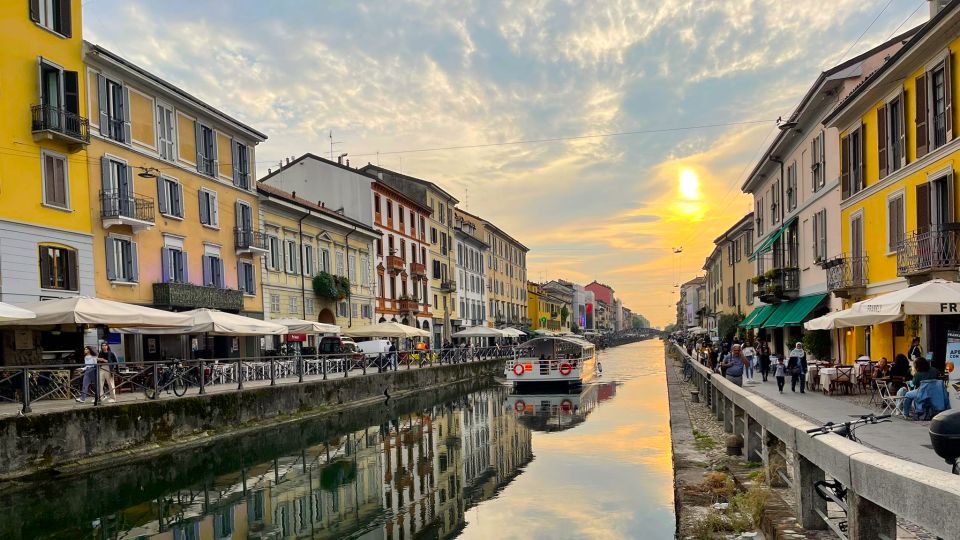
- Electric boat + short ride: A relaxed 50 minutes that fits easily between meals and aperitivo.
- QR audio, no guide onboard: You connect to a QR code on your phone and use your own headphones.
- Navigli’s highlights on the water: You pass Darsena nightlife docks plus Vicolo dei Lavandai.
- Legends and real landmarks: The commentary links sites with stories, including Marscarpone cheese folklore.
- Conchetta is the wow moment: Leonardo da Vinci’s navigation basins at the end of the loop.
- Small group feel: Limited to 10 participants, which helps the ride stay calm for photos.
Navigli by electric boat: what you’re really paying for
For $25, you’re buying one of the simplest kinds of Milan sightseeing: sit back, look sideways, and let the canal do the work. Milan’s famous for marble and monuments, sure. But the Navigli waterways show a different rhythm—locals walking along the banks, restaurants and bars lining the canal edge, and bridges that feel made for slow wandering.
This cruise earns its place because it’s not trying to be an all-day program. It’s 50 minutes of canal time with enough stops and named points to give your photos context. The electric boat also helps the experience feel modern and easy, which matters on a water ride where you’re mostly focused on views and the sound of your audio.
The other big value point is the structure of the storytelling. You’re not just floating past generic “pretty water.” The commentary is built around recognizable landmarks—churches, bridges, and specific canal features—so you leave with mental bookmarks, not just pretty footage.
You can also read our reviews of more boat tours in Milan
Getting on at Alzaia Naviglio Grande 4 (and how the QR audio behaves)
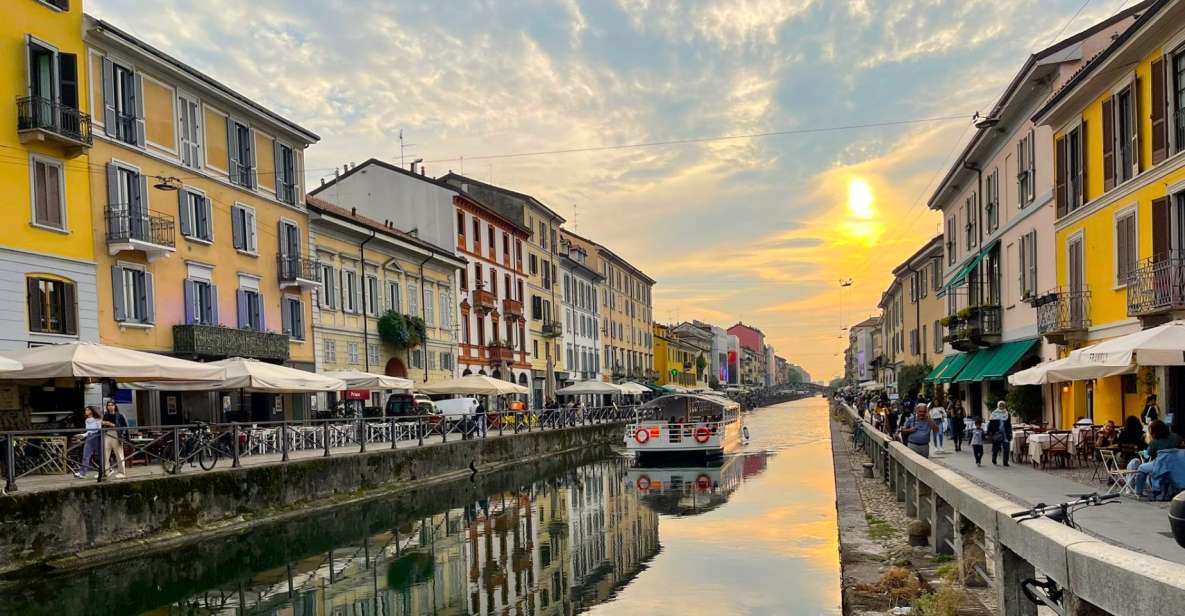
Your starting point is Alzaia Naviglio Grande 4. From there you head onto the canal and follow the route out and back along the same waterway. That might sound repetitive on paper, but the commentary is designed to describe different points of interest on the way back, so it doesn’t feel like you’re hearing the exact same content twice.
Here’s the practical thing to plan for: the host can help you board, but the “guide” experience is delivered as 45-minute audio via a QR code. You scan the code with your mobile device and connect in your chosen language. There’s no requirement to download an app. The host is available in Italian and English to help you get started, but you’ll be the one managing the sound.
If you’ve got Bluetooth headphones, bring them. Several people noted that without good headphone setup, it’s hard to hear the commentary—especially if you’re standing outside for photos. Also note that there’s no toilet on board, so quick bathroom checks before you go are smart.
One more small rule that affects the onboard feel: no luggage or large bags are allowed. That keeps the boat tidy and comfortable, but it means you’ll want to travel light.
Naviglio Grande: starting the cruise with Milan’s working-class houses
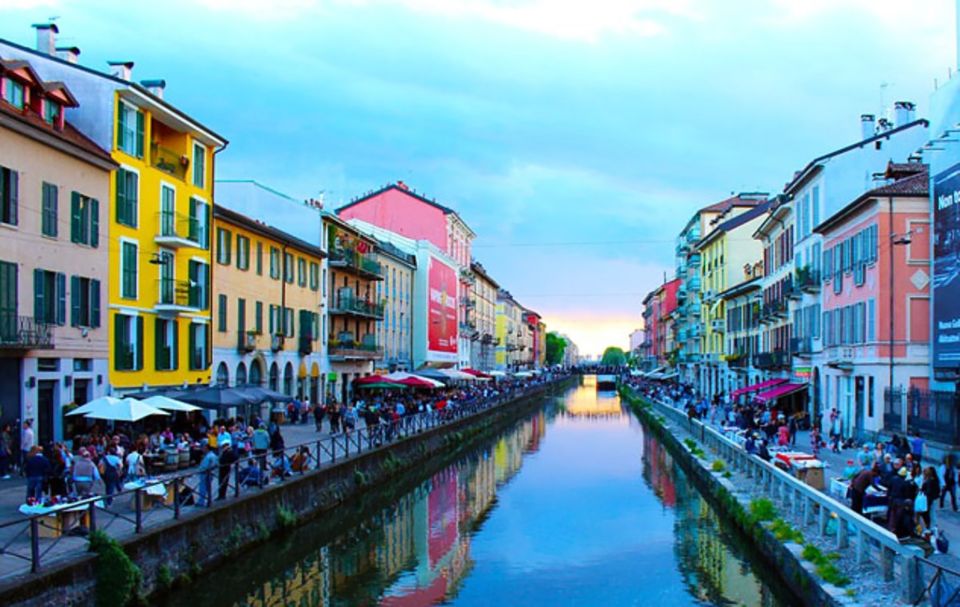
Right as the boat sets off, the commentary frames what you’re seeing. One of the first image-based stories is the “case di Ringhiera”—typical houses tied to working-class districts. It’s the kind of detail you’d miss if you walked past the buildings, because from the sidewalk you’d likely just register facades.
This early stretch is also a good time to settle into the ride. People often want to see canals in a calm way, not from the rush of crowds. Here you can sit or stand, rotate for pictures, and let the canal guide your pace.
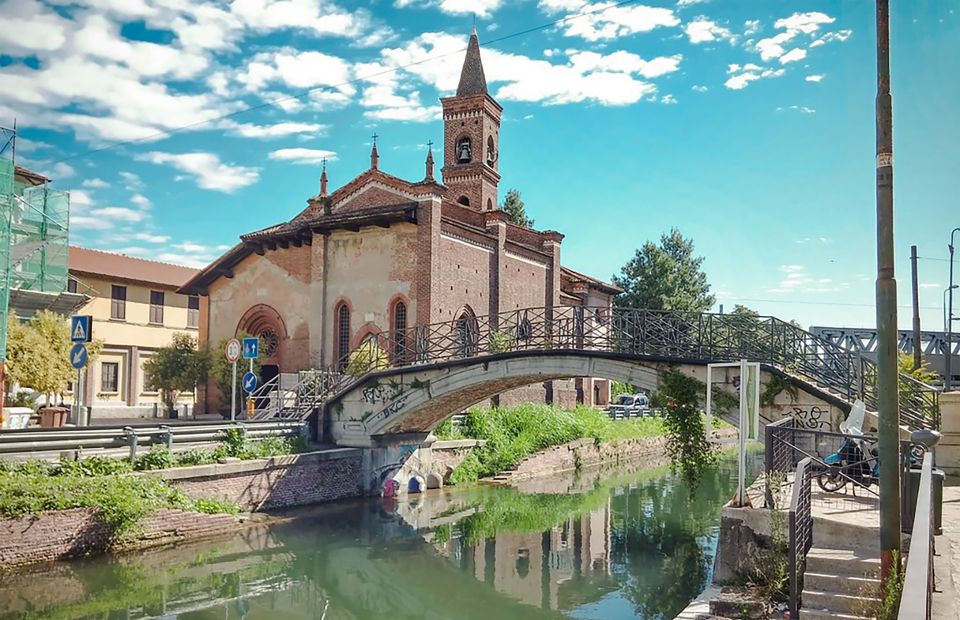
You’ll then cruise toward the 13th-century church of San Cristoforo. The value of having a named stop like this is that it turns “I see a church” into “I know what kind of place this is and why it matters,” even if you’re not stepping inside.
Vicolo dei Lavandai: the canal alley you can actually place in your mind
The next highlight is Vicolo dei Lavandai, described as an architectural jewel. On a boat, you get a different perspective on narrow, canal-linked spaces. An alley you might not notice from street level becomes readable as a shape and setting from the water.
What makes this stop worth your attention is that it’s tied to a specific use from the past: in the 18th century, it was responsible for washing linen for wealthy families. That’s one of those details that makes a photo feel like more than a backdrop. It tells you why the space exists and how the canal worked as a practical piece of city life.
If you’re someone who likes architecture, this is the part where you can slow down your camera and look more closely at the building rhythm.
San Cristoforo sul Naviglio: why the church stop matters
San Cristoforo sul Naviglio isn’t just a pretty church silhouette from the canal. The cruise builds toward it like a storytelling beat, so it feels like a landmark with purpose inside the narrative.
This is also where the audio setup becomes important. You’ll be listening to a guided explanation while moving, which is exactly why headphones matter. If you’re sitting inside to get out of wind or cold, you’ll likely hear better. If you’re outside, you may need to adjust volume and positioning.
The practical win: this is a Milan sight that’s hard to “patch in” on your own unless you already know where to look. From the water, it becomes easy.



Canottieri Milano Olona 1894: seeing the rowing club from the water
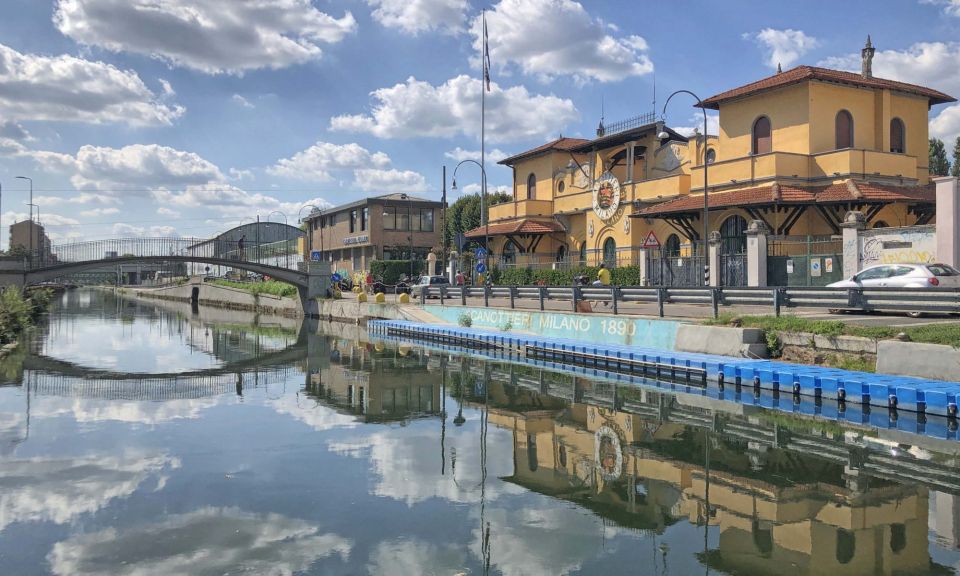
Not every canal cruise includes a sports club with longevity baked into the route. You pass the historic headquarters of Canottieri Milano Olona 1894, one of the longest-running rowing clubs in Milan with a history of over 100 years.
Even if you don’t care about rowing, the benefit is simple: it adds a modern layer to a canal scene that could otherwise feel purely decorative. It also helps you understand how the canal isn’t only for sightseeing. It’s part of the city’s daily infrastructure and community spaces.
This section is a good “breather” in the storyline—less about one single building and more about what the canal supports over time.
Cross the Scodellino bridge and hit Darsena’s nightlife zone
Then you reach the area around Darsena, described as one of Milan’s main centers for nightlife. Darsena is where the vibe shifts. From the water, the bar and restaurant edge looks like a continuous entertainment front—an easy place to connect the canal to the city’s evening culture.
The cruise crosses toward the Scodellino bridge before reaching the modern Darsena area, so you get a clear sense of movement: landmark bridge, then the “stage” of nightlife.
Darsena is especially worth it if you’re already planning an evening in Navigli. Think of the boat ride as a warm-up act. You see the area from a new angle first, then you can walk and eat afterward with better orientation—knowing which corners you actually want to explore.
If you want the best atmosphere, many people recommend going near sunset or in the evening. Lighting changes along the canal and makes even a short ride feel longer and more cinematic.
Trophy bridge to Conchetta: Leonardo’s navigation system at the end
The final landmark moment is Conchetta, designed by Leonardo da Vinci. You’ll float toward the Trophy bridge and then arrive at the Conchetta, which connects navigation basins used to link Milan and Pavia.
The commentary highlights an impressive detail: the structure has 14 navigation basins, and it’s still operational five centuries after construction. Even if you’ve never studied canal engineering, the idea lands quickly when you’re looking at a designed water system instead of just a canal corridor.
This is the kind of stop that changes how you view the whole day. Earlier you’re thinking neighborhoods and buildings. At Conchetta, the story becomes about why the canal network exists and how people moved goods and people through controlled water levels.
If you’re choosing one “must-listen” section, make it this part. It’s where the cruise earns its strongest educational payoff.
Best timing, weather, and what to bring for comfort
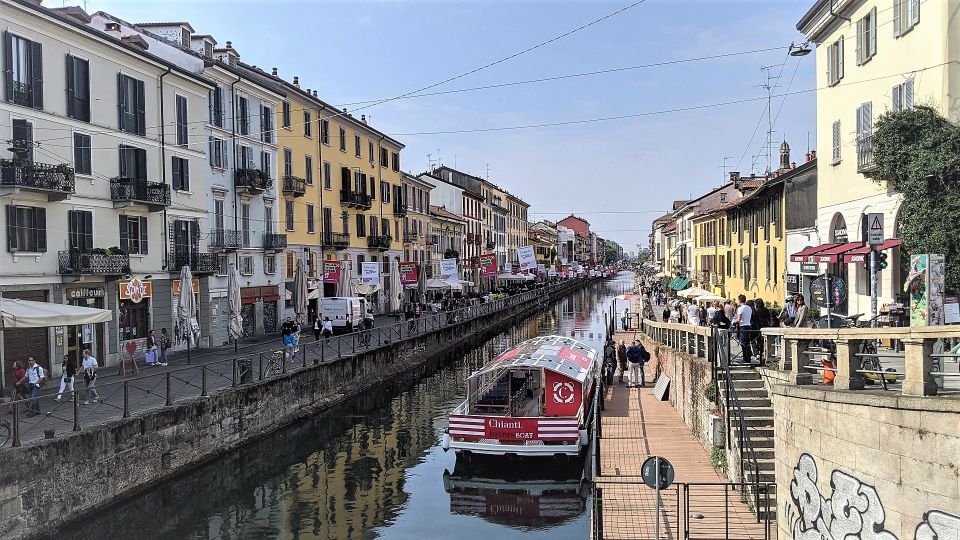
This is one of those cruises where timing affects the feel more than the itinerary does. If you’re aiming for photos, late afternoon into early evening often delivers the best look along the water. Reviews also mention Christmas lights and golden-hour views, which tells you the canal changes personality with the season.
What to bring:
- Headphones (ideally Bluetooth) so you can actually hear the QR audio.
- A layer, even in warmer months, because water rides can feel cooler once you’re moving.
- Small bag only. Large bags and luggage aren’t allowed.
Food and drinks aren’t included. You may be able to buy drinks onboard, but it’s smart to expect extra cost. If you’re budgeting, plan to eat before or after the cruise rather than expecting the boat to be your meal.
Is the 50-minute out-and-back route worth it?
Short answer: yes, if you want a calm, low-effort sightseeing hit.
The cruise goes along the canal and returns the same way. Some people felt that meant limited variety, especially if they were outside and couldn’t hear the audio. But the route is paired with commentary that explains different points on the way back, so the ride has structure, not just motion.
Here’s how I think about it for value:
- If you have limited time in Milan, 50 minutes gives you canal context fast.
- If you’re tired from museum days, the cruise resets your brain.
- If you love neighborhoods and details, the named sites give you something to track.
If you’re the type who wants nonstop action and constant new streets, you might find the route a bit repetitive. But if you want a straightforward Milan change of pace, this is a good fit.
Who should book this Milan Navigli canal boat cruise?
This cruise suits you if:
- You want an easy way to see Navigli without walking every canal block.
- You like having short, labeled stops tied to real places.
- You’re doing Milan on a tighter schedule and need a “light” activity.
- You enjoy evenings out and want to connect the boat views to what you’ll do on foot afterward.
It’s less ideal if:
- You’re planning to rely on audio without headphones.
- You need a longer route with completely different scenery.
- You expect a live human guide speaking constantly throughout the ride.
Quick call on value: $25 for 50 minutes of Milan from the water
At about $25 per person for 50 minutes, you’re paying for comfort, access to the canal, and an organized story via QR audio. The price feels fair as long as you go in prepared to listen through your device.
The biggest reason people love it is simple: it’s relaxing, not exhausting. The biggest reason people rate it less than perfect is also simple: audio clarity and the out-and-back nature can affect what you get from the time.
So the trick is preparation. Bring headphones, sit where you can hear, and treat it as a short visual experience with strong location context.
Should you book this canal cruise?
I’d book it if you want a low-stress, high-view Milan detour. It’s a solid choice for first-timers who want to understand Navigli quickly and for evening planners who want Darsena to feel familiar before you start eating and drinking.
Skip it (or at least reconsider the timing) if you hate audio-based guidance, because the QR system is central to the experience. If you show up with a small bag and headphones ready, you’ll likely get a lot more out of those landmarks—especially Vicolo dei Lavandai and the Leonardo da Vinci Conchetta finale.
FAQ
Where does the cruise start?
The starting location is Alzaia Naviglio Grande, 4.
How long is the Milan Navigli canal boat cruise?
The duration is 50 minutes.
How much does it cost?
The price is $25 per person.
Is hotel pickup or drop-off included?
No. Hotel pickup and drop-off are not included.
Is the boat wheelchair accessible?
Yes, the activity is listed as wheelchair accessible.
Is there a human guide onboard speaking continuously?
The host helps with boarding and is available in Italian and English, but the commentary is provided through QR audio that you listen to on your own mobile device with your own headphones.
How does the QR code audio commentary work?
You scan a QR code on board and connect with your mobile device to listen to a 45-minute commentary. There’s no need to download an app.
Are food and drinks included?
No. Food and drinks are not included.
Can I bring luggage or large bags?
No. Luggage or large bags are not allowed.
Is there a toilet on the boat?
One review notes that there is no toilet on board.