REVIEW · MILAN
Miles and smiles /// Milan’s ride
Book on Viator →Operated by Allride - Milan Bike Tour · Bookable on Viator
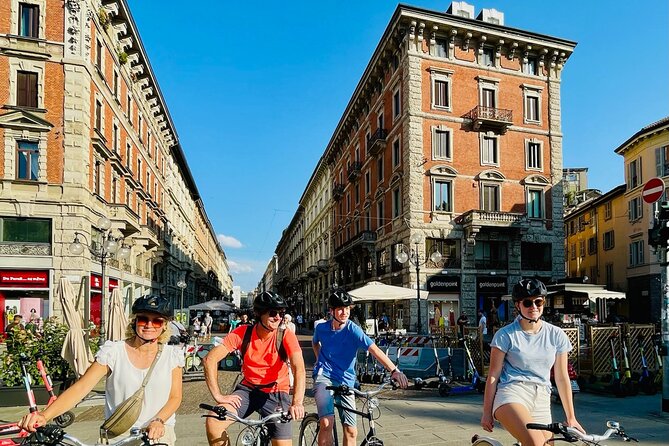
Milan gets easier on two wheels. This small-group Milan bike ride threads together the city’s big icons and lesser-seen corners in just a few hours, using brand-new Rossignol bikes and a guide who keeps the ride smooth and safe. I like that you get frequent stops for photos and explanations, not a long slog in the saddle. I also like the practical touches: a provided helmet and complimentary bottled water. One thing to consider: you’ll be cycling through real urban traffic and park paths, so you need comfort riding in a city.
You start at Via della Moscova and circle through modern Milan (hello, Bosco Verticale), classic central squares, and the river-canal area around Darsena before ending near the Duomo zone and back at the meeting spot. The tour runs about 3 to 4 hours, is offered in English, and stays capped at a small number of people, which helps the pace feel personal instead of hectic. You’ll also want comfortable walking shoes for the sight stops, even though you’re on a bike for most of it.
In This Review
- Key things that make Miles and Smiles Milan’s Ride worth it
- Starting at Moscova: the quickest way to get your bearings
- From Moscova to Piazza Gae Aulenti and Bosco Verticale
- Brera and the central squares: art district vibes on wheels
- Sforzesco, Sempione Park, and the Arch of Peace viewpoint
- Cadorna and Sant’Ambrogio: quieter Milan energy
- Darsena and Navigli: canals and an easy evening-feel
- San Lorenzo columns to Duomo: rolling into the main stage
- Piazza San Fedele, La Scala, Via Manzoni, and the “classic Milan” loop
- Centrale, Pirellone, and the end back near your starting point
- Price and value: what $59 buys you on a Milan bike tour
- Pace and physical demands: when moderate fitness really matters
- Weather reality: the tour depends on conditions
- Who this Milan bike tour suits best
- Should you book Miles and Smiles Milan’s Ride?
- FAQ
- How long is the Milan bike tour?
- What’s the price per person?
- What language is the tour offered in?
- Are helmets and water included?
- Where does the tour start and end?
- Is the tour dependent on weather?
Key things that make Miles and Smiles Milan’s Ride worth it
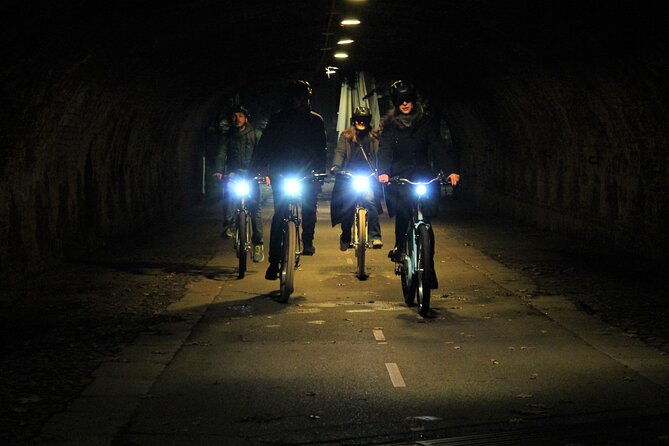
- Brand-new Rossignol bikes mean you’re not fighting an old ride halfway through the tour
- Helmets and bottled water are included, which makes hot days easier
- A tight group keeps you from getting lost in a crowd at the busiest sights
- Route coverage hits both the Duomo core and the canal area around Darsena/Navigli
- Multiple guide styles, including Giacomo, Stefano, Andrea, and others, bring lots of city stories and practical tips
- Frequent stops make the ride feel like touring, not commuting
Starting at Moscova: the quickest way to get your bearings
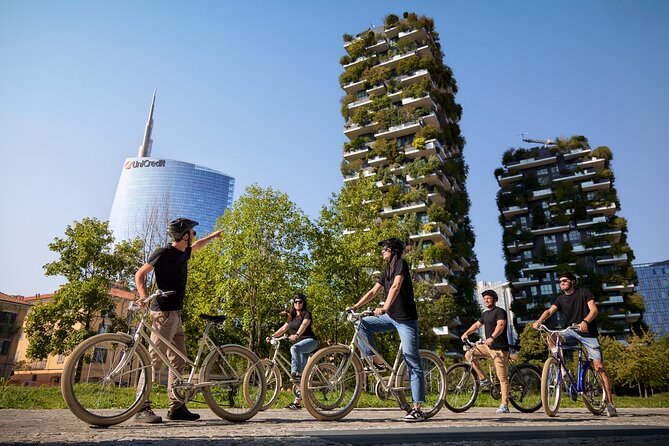
The tour begins at Via della Moscova 26 (near the Moscova area), and it’s easy to reach using public transportation. I like start-point clarity on tours, and this one is generally straightforward, but I’d still plan to arrive a few minutes early to avoid any awkward delay when you’re standing around with a helmet in hand.
Once everyone’s together, the ride typically starts at a calm, controlled pace. You’ll get the basics for cycling in a group, especially how to stay safe when streets get narrow or when you’re mixing bikes with pedestrians. Milan is flat, which helps a lot—this isn’t the kind of bike tour where you’re grinding up hills for a reward at the top.
What you should bring is simple: comfy shoes, sun protection, and a willingness to ride through city streets for short stretches. You don’t need to be an athlete, but you do need to feel okay balancing on a bike while stopping and starting at intersections and park entrances.
Why it’s valuable for your trip: if you’re only in Milan for a couple days, this tour helps you understand where everything sits relative to each other. After that, your self-guided day plans get easier fast—less guessing, fewer “where is that again?” moments.
You can also read our reviews of more tours and experiences in Milan.
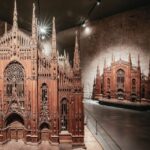
From Moscova to Piazza Gae Aulenti and Bosco Verticale
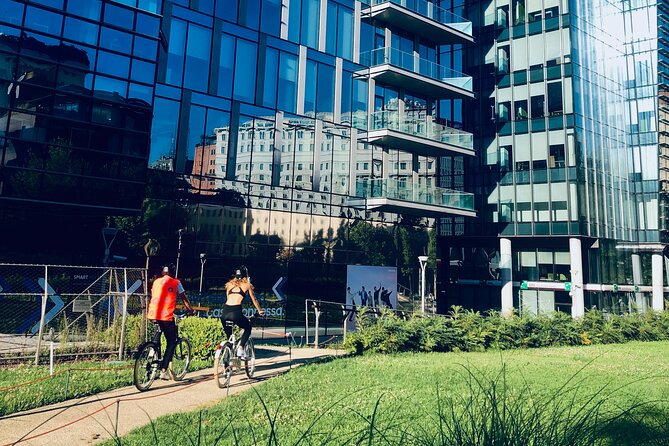
Early on, the route heads toward Piazza Gae Aulenti and the famous Bosco Verticale (Vertical Forest). This is modern Milan: clean lines, dramatic architecture, and the kind of skyline you don’t get from walking the older lanes alone.
The bonus here is pacing. You’re cycling, so you can cover ground without spending your day tied to traffic lights. But you’re also stopping enough to actually look at what you’ve arrived at, instead of turning the whole visit into a moving blur.
What to watch for: the excitement level at Bosco Verticale can make people slow down mentally—then the group has to re-form while you’re still processing the view. If you’re the type who wants to photograph everything, just keep one eye on the guide and the group so you don’t fall behind.
This stretch sets the tone for the whole tour: you see a big “Milan moment,” but you don’t lose time getting from one district to the next.
Brera and the central squares: art district vibes on wheels
Next comes Brera and a run of central squares that help you connect Milan’s different layers. Brera is the area that many visitors associate with character and wandering, and the bike format helps you move between viewpoints without squeezing into the busiest walking lanes for every single transfer.
As you head deeper, you’ll pass by key squares such as Piazza dei Mercanti and Piazza della Borsa, which work like visual signposts. Even if you’re not memorizing every date or dynasty, you’ll start noticing how public spaces shape daily life in Milan—the way cafes spill outward, how streets funnel into plazas, and where foot traffic naturally slows down.
Then comes Sforzesco Castle and the surrounding parkland area. That shift—from dense streets to greener space—helps you reset without ending the tour. If you’re doing this earlier in your trip, this part is also useful because it shows you where you’ll likely want to return later on foot.
Possible drawback: central Milan can be busy, and cycling means you’re sharing space with both cars and pedestrians in some stretches. The good news is you’ll be in a small group and the guide keeps you moving in a way that feels manageable, not chaotic.
Sforzesco, Sempione Park, and the Arch of Peace viewpoint
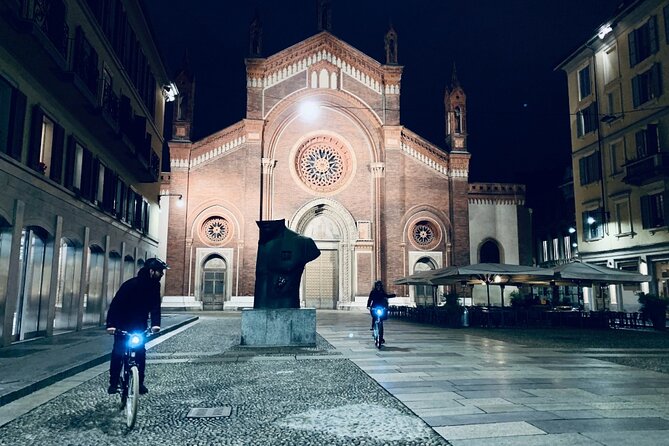
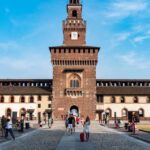
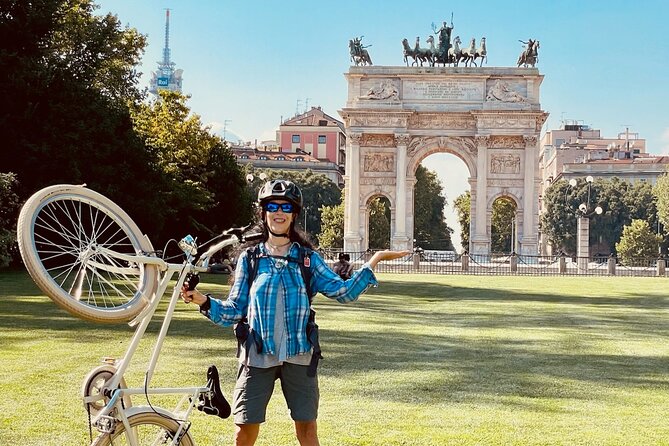
Sforzesco Castle is a major anchor on this route, and the tour uses it the way it should be used: as a stop that gives you scale. From there, you move into Sempione Park and the area around the Arco della Pace (Arch of Peace).
I like this segment because it gives you a break from the heavy city grid. Park paths let you feel the “Milan by bike” rhythm—less friction, more open viewing space, and a more relaxed pace for photos.
The Arch of Peace stop is especially good for orientation. It’s not just a pretty monument; it also helps you understand the direction Milan points when you look outward from the center. You’ll likely recognize it later when you’re walking or commuting on your own.
Why you’ll enjoy this even if you’re not a monument hunter: it’s one of those moments where you start seeing Milan as a set of connected viewpoints rather than random attractions. That mental map pays off for the rest of your days.
Cadorna and Sant’Ambrogio: quieter Milan energy
As the route turns toward the Cadorna and Sant’Ambrogio areas, the feel changes again. This part is less about big photo backdrops and more about experiencing another slice of the city’s flow.
Sant’Ambrogio (Basilica area) and the nearby streets create a calmer contrast to the most tourist-heavy zones. Even when you’re still in the core, you get a sense of local rhythm: people moving between neighborhood errands and the daily beat of Milan life.
If you’ve been jet-lagged or you’re arriving mid-day, this segment can be a relief. It’s still central, but it doesn’t demand constant “big moment” attention. You can settle into the ride and let the tour do the heavy lifting of connecting sights.

Darsena and Navigli: canals and an easy evening-feel
Then you reach Darsena, and from there you’re in the atmosphere that people associate with the Navigli waterways. This is the part of Milan that feels most “stroll-friendly” even if you’re still on a bike.
The tour’s approach is smart: you don’t just pass by the canal area as a checklist item. You ride in, stop for the key views, and keep momentum without turning it into a slow walk. That matters because Navigli-area streets can get busy fast, and standing around too long is how bike tours turn into endurance tests.
What to consider: the canal areas can be crowded depending on day and time. You may have to slow down slightly while the group navigates foot traffic. The guide’s job is to keep you safe, so follow instructions closely and don’t rush ahead for a better angle.
This is also a strong segment for questions. If you ask where locals actually eat or which canal stretch is best for an afternoon walk, you’ll likely get answers that help you plan your next few hours.
San Lorenzo columns to Duomo: rolling into the main stage
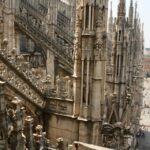
From there, you move toward San Lorenzo and the columns in that area, then continue until you reach Duomo. I like this “build-up” structure. You start with modern and district-level variety, then gradually close in on the most famous skyline in Italy.
San Lorenzo is one of those stops that feels like a living neighborhood landmark. Even if your main goal is the Duomo, this gives you a break from “major monument focus.” Then you transition into the area where you’ll get your first real wow-factor from the Duomo zone.
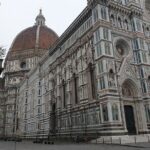
Approaching the Duomo area by bike changes how you experience it. Walking tours hit Duomo head-on; this tour gives you the sense of arriving from multiple directions, which helps the building register as part of the city fabric, not a distant destination.
Possible drawback: the Duomo area is crowded. Expect slower-moving moments and extra attention to intersections and pedestrian zones. The payoff is worth it if you want a trip that feels efficient but not rushed.
Piazza San Fedele, La Scala, Via Manzoni, and the “classic Milan” loop
After the Duomo area, the route continues through Piazza San Fedele, La Scala, and Via Manzoni, plus additional stops near Palestro and Repubblica.
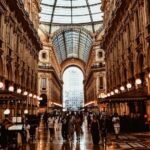
This is the classic Milan arc: grand facades, busy sidewalks, and streets that feel like they exist for shopping, conversation, and people-watching. On a bike, you can cover the distance between these spots without adding extra taxis or public transport transfers.
La Scala is also a good emotional stop. Even if you don’t plan to attend a performance, seeing it in context helps you understand why people talk about Milan’s cultural identity so often. You get the “center stage” vibe without committing to a formal event.
How to make this segment work for you: if there’s a stop you want to return to later, note it while you’re there. The bike tour gives you the big picture; your follow-up walk turns it into a deeper experience.
Centrale, Pirellone, and the end back near your starting point
The ride doesn’t stop at the most tourist-heavy points. It also swings toward Central Station and the Pirellone area, then cycles back to the meeting point area at Via della Moscova.
This is one of the most useful parts of the whole experience: you see the city not just as an attraction cluster, but as a place with transportation arteries and business architecture. Central Station is a reminder that Milan moves quickly and efficiently, and Pirellone gives you another visual marker of the skyline and modern identity.
Finishing near the start point matters. You’re not stranded in a distant neighborhood with no clear way home. You’ll be able to re-enter your own plans smoothly, whether you’re heading to dinner, catching a late show, or just wandering until your feet give up.
Price and value: what $59 buys you on a Milan bike tour
At about $59.13 per person for roughly 3 to 4 hours, this tour is priced like a solid “see a lot, understand a lot” experience rather than a pure sightseeing taxi replacement. The value is in how the tour compresses time and geography.
Here’s what you get that tends to be costly or slow on your own:
- Efficient route coverage across multiple Milan districts in one go
- A guided pacing system so you’re not stuck planning every transfer
- Helmet and bottled water included, which reduces the tiny expenses that add up
- Small-group format, which usually means you’re not watching a guide from the back of a line
It’s also listed as admission-ticket free for the tour itself, so you’re not forced into extra paid entrances just to keep the schedule moving. That’s a win if you’re trying to keep your Milan costs under control.
One practical thought: if you’re a beginner cyclist, this tour is still an option as long as you can handle urban biking. It’s not a leisurely countryside ride, so don’t book it hoping for a totally car-free route.
Pace and physical demands: when moderate fitness really matters
The tour is labeled for moderate physical fitness, and the key phrase is moderate. You’re not doing long hill climbs, but you are cycling through streets, stopping, starting, and riding long enough that you should be comfortable staying balanced for extended periods.
The route includes both park sections and city streets. That mix is good because it breaks up the ride, but it also means you’ll need basic bike control and comfort around pedestrians and cars in built-up areas.
Comfort tip: wear clothes you can move in, and bring layers if the weather shifts. Milan can change its mood fast in shoulder seasons, and you’ll be outside for most of those hours.
Weather reality: the tour depends on conditions
This experience requires good weather. If conditions are poor, you’ll either get an alternate date or a full refund. For biking, that’s exactly what you want to hear—cold rain and wet roads are no fun on any city tour.
If you’re booking early in your trip, keep an eye on your schedule. This tour works best when it lands on a day you don’t absolutely need for something indoors-only.
Who this Milan bike tour suits best
This tour is a great match if you:
- want a fast overview of Milan with more than just the Duomo
- like getting orientation early, then building your own days after
- feel comfortable biking in a city setting for a few hours
- prefer a small group where you can actually ask questions
It may be less ideal if you:
- don’t feel confident cycling around intersections and pedestrians
- want a totally car-free environment
- get exhausted quickly by frequent stops and re-starts
Should you book Miles and Smiles Milan’s Ride?
Yes, if you want a practical introduction to Milan that isn’t locked into one neighborhood. The best reason to book is the balance: you cover the city’s highlights—Duomo, Brera, La Scala—and you also get through to the canal mood around Darsena/Navigli, plus modern sights like Bosco Verticale. Add in brand-new bikes, helmet and water, and a genuinely small-group feel, and it lands in the sweet spot between efficiency and personality.
If you’re unsure about biking confidence, don’t overthink it—just be honest about your comfort on city streets. If you can handle that, you’ll likely come away with a clearer mental map of Milan and a handful of ideas for what to revisit later on foot.
FAQ
How long is the Milan bike tour?
It runs about 3 to 4 hours.
What’s the price per person?
The price is $59.13 per person.
What language is the tour offered in?
The tour is offered in English.
Are helmets and water included?
Yes. You get a provided cycle helmet and complimentary bottled water.
Where does the tour start and end?
It starts at Via della Moscova, 26, 20121 Milano MI, Italy and ends back at the meeting point.
Is the tour dependent on weather?
Yes. It requires good weather, and if it’s canceled due to poor weather you’ll be offered a different date or a full refund.