REVIEW · MILAN
Milan: Best of the Highlights Walking Tour
Book on GetYourGuide →Operated by Ways Tours | B Corp company · Bookable on GetYourGuide
Milan in two hours? Totally doable, and fun. This Best of the Highlights walking tour gives you an efficient path through Castello Sforzesco and the Duomo, with plenty of real city context from an English-speaking local guide. One thing to plan for: it’s only 2 hours, so you’ll cover a lot of ground on foot rather than linger.
I like that the route mixes old Milan and modern Milan in a way that makes sense. You’ll start at Piazzale Cadorna and get oriented fast, then you’ll move through financial landmarks like Piazza Affari before you hit medieval squares like Piazza dei Mercanti. In one example guide experience, Daniela stood out as kind and intelligent, and it shows how much the guide’s storytelling can shape the whole walk.
This tour runs rain or shine, so it’s a smart choice when your schedule is tight. Just note that some parts may be tricky for reduced mobility, so if that’s a concern, check details before you go.
In This Review
- Quick hits that matter
- Piazzale Luigi Cadorna: start with a symbol of Milan
- Castello Sforzesco: a fortress that turned cultural
- Piazza Affari and the finance-meets-history moment
- Piazza Cordusio to Piazza dei Mercanti: time travel for your eyes
- La Scala area: the Opera House streets and the Temple of Opera label
- Galleria Vittorio Emanuele II: shopping arcade, glass vaults, iron drama
- Piazza Duomo finale: Gothic details in real life
- What the 2-hour pace feels like for your day
- Price and value: $44.41 for a guided highlight loop
- Weather, timing, and the English guide experience
- Meeting point reality: no pickup, back to the start
- Who this walking tour suits best
- Should you book the Milan Best of the Highlights Walking Tour?
- FAQ
- How long is the Milan Best of the Highlights walking tour?
- Where is the meeting point?
- What is included in the price?
- Are food and drinks included?
- Is the tour in English?
- Does the tour run in bad weather?
- Are unaccompanied minors allowed?
Quick hits that matter
- Piazzale Cadorna start point: meet under the Needle and Thread landmark and get going right away
- Castello Sforzesco context: a medieval fortress with a cultural life that includes Michelangelo and Leonardo da Vinci
- Piazza Affari + Piazza dei Mercanti contrast: finance right next to medieval atmosphere
- La Scala area stops: you’ll see the Opera House area and the Temple of Opera nickname in the tour flow
- Galleria Vittorio Emanuele II on the list: vaulted glass and iron arcade details on a walking-friendly route
- Duomo finale at Piazza Duomo: Gothic cathedral focus with time to notice intricate details
Piazzale Luigi Cadorna: start with a symbol of Milan
You’ll begin in the city center at Piazzale Luigi Cadorna, right under the colored Needle and Thread sculpture. It’s a recognizable meeting moment: your guide will be holding a yellow sign with Tour written on it.
This first stretch is more than a location fix. That sculpture, the Needle, Thread and Knot, is meant to reflect how Milan connects different parts of its identity—craft, industry, and the idea of things being tied together. I like starting here because it sets the tone: this isn’t just sightseeing. It’s a guided walk meant to explain how Milan works.
You can also read our reviews of more walking tours in Milan

Castello Sforzesco: a fortress that turned cultural
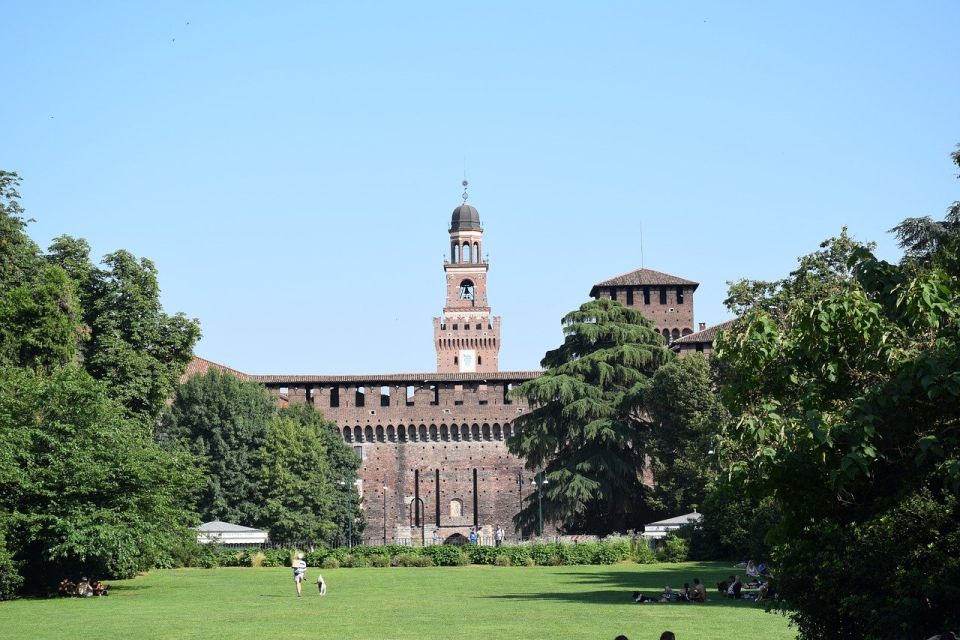
The first big stop is Castello Sforzesco, a medieval fortress. From the outside, your guide will explain how the castle evolved into a cultural hub—specifically pointing out masterpieces associated with Michelangelo and Leonardo da Vinci.
Why this matters: Castello Sforzesco is one of those sights where the building is only half the story. The other half is Milan’s shift over time—from defense to culture, from stone walls to ideas. Even if you’re not planning museum time, this overview gives you a mental map for understanding why the Sforza name appears across the city.
Practical tip: because you’re viewing it from the outside, pay attention to the architecture and scale. A guide-led “what to look for” moment can make you notice details you would normally miss at street level.
Piazza Affari and the finance-meets-history moment
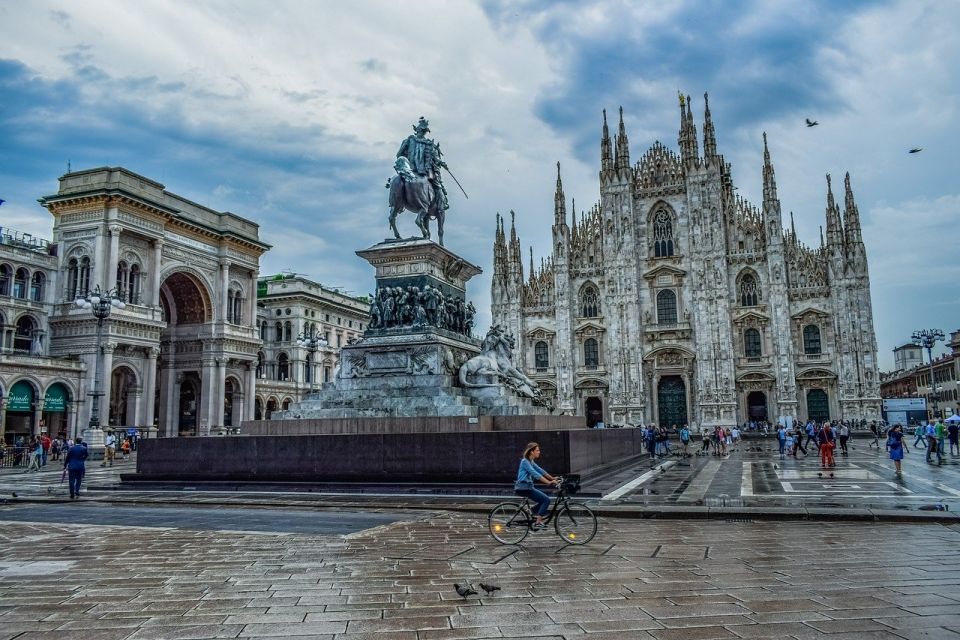
Next you’ll reach Piazza Affari, known for its statue in the middle of the square and for being the center of Milan’s financial district. It’s a quick shift in mood: modern work energy right in the open air, with the guide framing what makes this square important.
This stop works well for first-time visitors because it challenges the common idea of Milan as only fashion and old monuments. You get a glimpse of daily power and the money engine behind the city’s image.
If you’re photo-minded, this is a good area to capture quick skyline-and-street shots—just remember you’re walking, so keep your camera ready but don’t get stuck trying to find the perfect angle.
Piazza Cordusio to Piazza dei Mercanti: time travel for your eyes
From Piazza Cordusio, you’ll arrive at Piazza dei Mercanti, a medieval square that feels like a reset button. Here you can admire well-preserved medieval structures, including the Palazzo della Ragione.
I like this segment because it gives you a clear visual “before and after” within the same tour. You’ll have just looked at a financial center, and then you’ll step into medieval layout and architecture. That contrast is exactly what helps Milan feel like a city of layers rather than a list of landmarks.
The guide’s job here is key. When you understand what you’re looking at—why a square was built a certain way, what survived, what changed—you don’t just see old buildings. You read them.
La Scala area: the Opera House streets and the Temple of Opera label
Your next stops bring you to Scala Opera House, often described as the Temple of Opera, as the tour moves through the surrounding area. Even without going inside on this walking format, this part is still useful because it puts the opera landmark into its street setting.
Why I think this is a strong inclusion: La Scala isn’t just a single building. It’s a cultural anchor, and hearing it described in the tour helps you connect the opera idea to Milan’s broader identity—art, performance, prestige, and tradition.
If you care about music history, this is a good moment to slow down mentally. Let the guide’s context do the heavy lifting, since you only have a limited tour window.


Galleria Vittorio Emanuele II: shopping arcade, glass vaults, iron drama
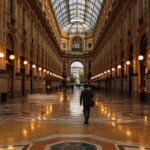
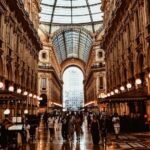
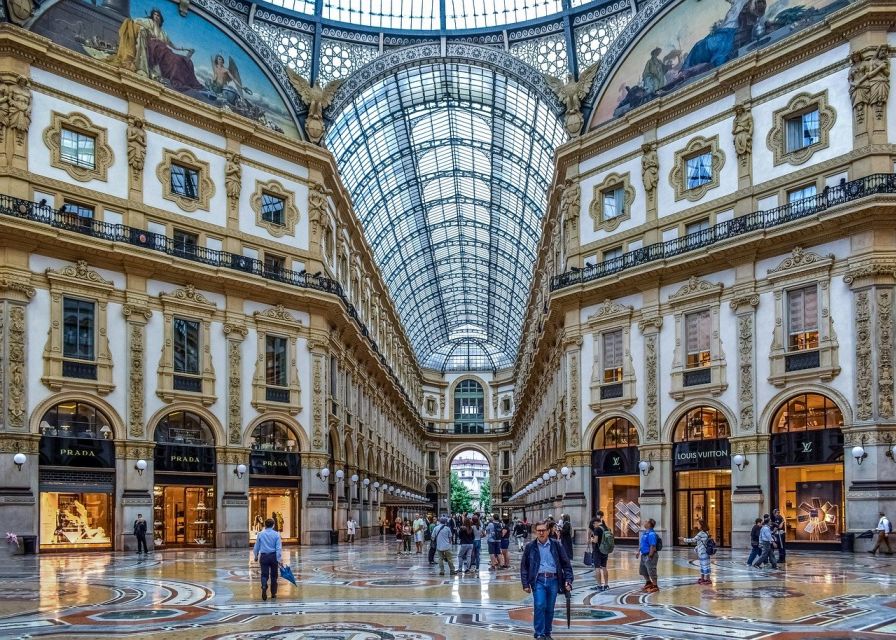
Then comes one of Milan’s most memorable walking stops: Galleria Vittorio Emanuele II. The tour describes it as an opulent shopping mall topped with vaulted glass and iron arcades, and it’s easy to see why that mix of materials matters.
This is where the “innovation and tradition” theme starts to feel real. The place is built for movement and viewing, with an interior architecture style that’s both functional and showy. If you’ve ever wondered why Milan keeps winning design arguments worldwide, this is a great place to notice the details without needing a ticket.
Practical way to enjoy it: during a short walking tour, don’t spend your whole time hunting stores. Instead, look up and around at the vaulted ceiling and iron arcade geometry—the kind of structure the tour is pointing you toward.
Piazza Duomo finale: Gothic details in real life
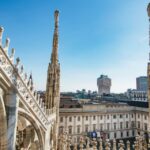
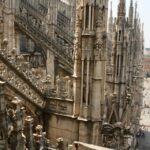
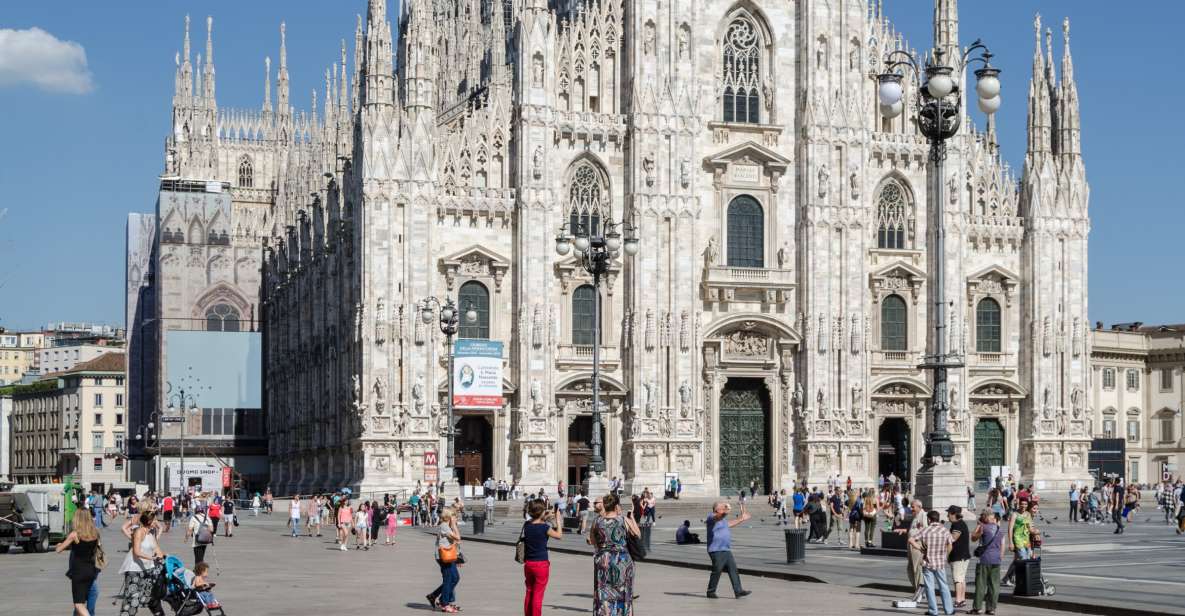
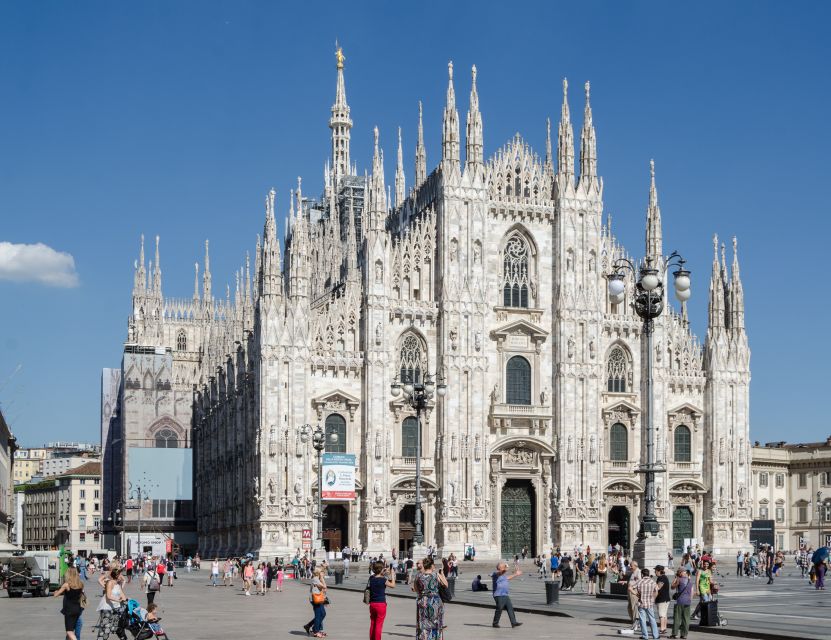
The tour ends at Piazza Duomo, dominated by the magnificent Gothic cathedral known as the Duomo. This is the “wrap it up with your eyes” moment, and the guide focuses on the intricate details of the Gothic masterpiece and the surrounding monuments.
I love Duomo as a final stop because it rewards attention. From the square, you get the scale quickly, but the details take a little time. A good guide makes a difference here by pointing your eyes to what to notice instead of letting you drift into generic awe.
Also, landing at Piazza Duomo is practical. After the tour, you’re positioned for follow-up exploring on your own—whether that means stepping closer for views or continuing your day around the monument-heavy core.
What the 2-hour pace feels like for your day
This is designed for efficiency: about 2 hours, and you’ll cover a clear set of highlights across central Milan. That’s a win if you’re arriving with limited time, or if you want a guided overview before you decide what to do next.
But the trade-off is real: it’s not a slow, photo-session tour. You’ll move from stop to stop with a guide leading the story, which means you’ll get the highlights, not a full deep study of any one site.
Think of it as the “orientation tour” for Milan. Once you’ve got the big shapes in your head—fortress to opera to arcade to cathedral—you can explore afterward with more confidence.
Price and value: $44.41 for a guided highlight loop
The price is $44.41 per person for a 2-hour English walking tour that includes a local guide. Food and drinks aren’t included, and there’s no pickup or drop-off.
Is it worth it? For me, it hinges on what you want from Milan on day one. If you’re the type who benefits from a guide explaining how the city’s layers connect—medieval squares next to financial power next to Gothic grandeur—then the cost makes sense. You’re paying for context and a focused route, not for entrances or museum time.
If you’re hoping for a full day of admissions, this isn’t that. It’s a highlight walk—strong at giving you orientation and stories, less strong for anyone wanting indoor stops.
Weather, timing, and the English guide experience
The tour runs rain or shine, so you can plan without waiting for perfect weather. That said, it also means you should dress for wet conditions if there’s a chance of it—because you’ll still be walking outside.
The guide is English-speaking, and the experience is guaranteed with a minimum of 2 participants. That guarantee matters when you want consistency and you don’t want to gamble on a last-minute cancellation.
And if you get a guide like Daniela—described as kind and intelligent—you’re likely to walk away with facts that stick, not just photos.
Meeting point reality: no pickup, back to the start
You meet in Piazzale Luigi Cadorna, under the colored Needle and Thread sculpture. The guide will hold a yellow sign with Tour written on it. The tour ends back at the meeting point, with no pickup/drop-off included.
This setup is simple and budget-friendly. Just build your schedule around the meeting time and location, and plan to walk back or take local transit from there afterward.
Who this walking tour suits best
This tour is a good fit if you:
- want a first-or-second day overview of Milan’s biggest names
- like history explained in plain language while you walk
- want both old-world sights and modern identity elements (finance, design, architecture)
- prefer an organized route instead of building your own in a short window
It may be less ideal if you:
- need lots of wheelchair-friendly access throughout (some parts may not be easily accessible)
- want indoor time or long stays at each stop
- are traveling with an unaccompanied minor (unaccompanied minors aren’t allowed)
Should you book the Milan Best of the Highlights Walking Tour?
If you’re trying to make Milan feel manageable, I’d book it. The route hits the key visuals—Castello Sforzesco, Piazza Affari, Piazza dei Mercanti, Scala Opera House, Galleria Vittorio Emanuele II, and the Duomo—and it does so in a way that connects themes of tradition, creativity, and modern life.
Book it especially if you’ll use the tour as a springboard for the rest of your day. Once you’re standing near Duomo and you’ve got the city’s story mapped in your head, it’s much easier to choose what to revisit and what to skip.
If you want slow pacing, indoor tickets, or step-free access everywhere, you may be better off with a different plan. But for a focused highlight walk in central Milan, this is a solid value and a smart use of time.
FAQ
How long is the Milan Best of the Highlights walking tour?
It lasts about 2 hours.
Where is the meeting point?
You meet in Piazzale Luigi Cadorna, under the colored Needle and Thread sculpture. The guide holds a yellow sign with Tour written on it.
What is included in the price?
The tour includes a local guide.
Are food and drinks included?
No, food and drinks are not included.
Is the tour in English?
Yes, the live tour guide is in English.
Does the tour run in bad weather?
Yes, it takes place in rain or shine.
Are unaccompanied minors allowed?
No, unaccompanied minors are not allowed.