REVIEW · MILAN
Milan | In the Crypt of time, holographic tour
Book on GetYourGuide →Operated by Veneranda Biblioteca Ambrosiana · Bookable on GetYourGuide
Milan suddenly feels bigger when you add a clock to your eyes. This mixed reality experience lets you stand in the Crypt of San Sepolcro and watch Milan’s past appear around you through a chronovisor—part guide, part tech, all short and focused.
I really like two things: the idea of starting from the Crypt of San Sepolcro, treated as the true center of the city, and the way the story blends past and present right in the same space. One caution: the meeting point is specific, and if you show up looking in the wrong direction, you could waste time before you even start.
In This Review
- Key highlights to look for
- A 20-minute Milan time machine in the crypt
- What the experience actually feels like
- Where you start: Pinacoteca Ambrosiana courtyard meeting point
- The core moment: chronovisor-guided history in the Crypt of San Sepolcro
- A good fit if you want “guided + hands-on”
- Audio guide languages: a comfort blanket in a tech setting
- How the mixed reality actually helps (and where it might not)
- Pricing and value: $17 for tech + a real underground site
- Timing: 20 minutes that fit real sightseeing days
- Location logistics: what you can bring (and what you can’t)
- Who should book this mixed reality crypt tour
- A quick word on meeting point confusion
- Should you book it?
- FAQ
- What is the location of this experience?
- How much does it cost per person?
- How long is the tour?
- Where do I meet for the tour?
- What happens at the end of the experience?
- What language options are available for the audio guide?
- Is this experience suitable for children?
- What can’t I bring with me?
- Do I need to arrive early?
Key highlights to look for
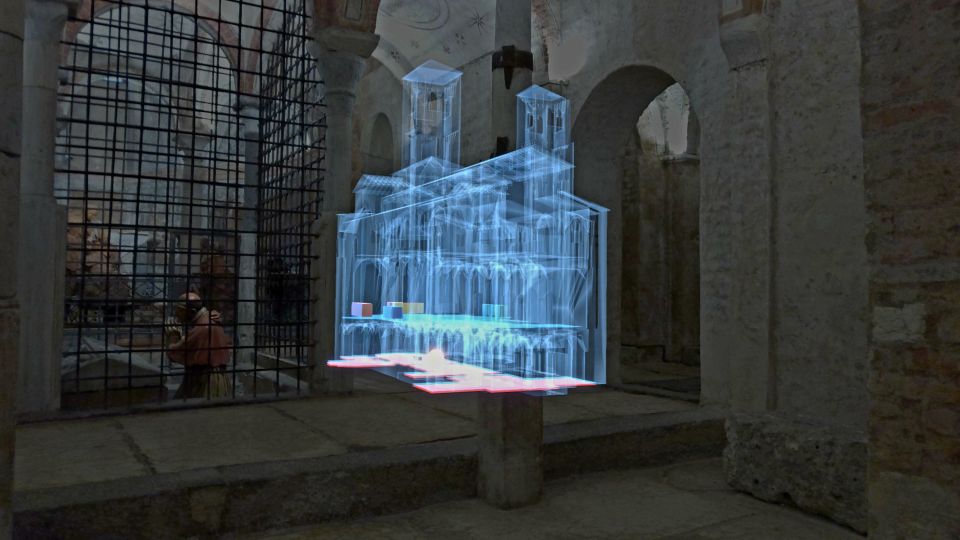
- Chronovisors: technological glasses that project holograms into the surroundings
- Crypt of San Sepolcro setting: you begin in a real historical underground space
- Past meets present: the guided story is built around seeing different time layers in place
- Short format (20 minutes): easy to fit between bigger sights
- Audio guide in 4 languages: Italian, English, French, Spanish
- Skip the ticket line: you spend more time on the experience than waiting
A 20-minute Milan time machine in the crypt
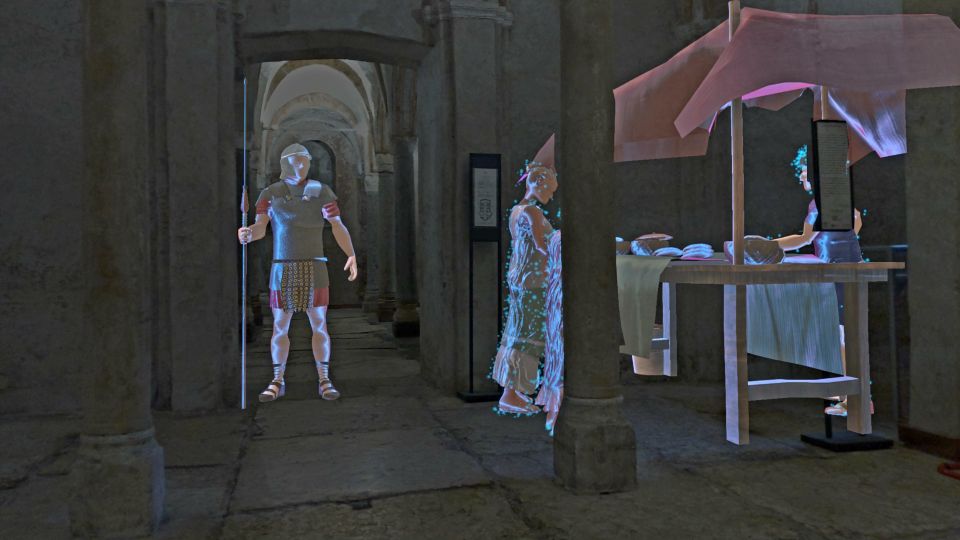
This isn’t a long museum slog. The format is 20 minutes, which matters in Milan because you’ll often be bouncing between churches, art stops, and a lot of walking. Here, the payoff is designed to be fast: you get geared up, you see Milan through a different time layer, and you’re back where you started.
The heart of the experience is the Crypt of San Sepolcro, which the tour frames as the city’s true center. Even if you know Milan only from the surface-level sights, this setting gives you a fresh way to understand why the city developed where it did. Instead of just hearing about history, you’re meant to visually connect it to your location.
And yes, you’ll be wearing a chronovisor. Think of it like guided glasses that let you see into the past, with holograms projected into the spaces around you. It’s a cultural experience built for a “hybrid world” moment—one foot in the present, the other in the past.
You can also read our reviews of more tours and experiences in Milan.


What the experience actually feels like
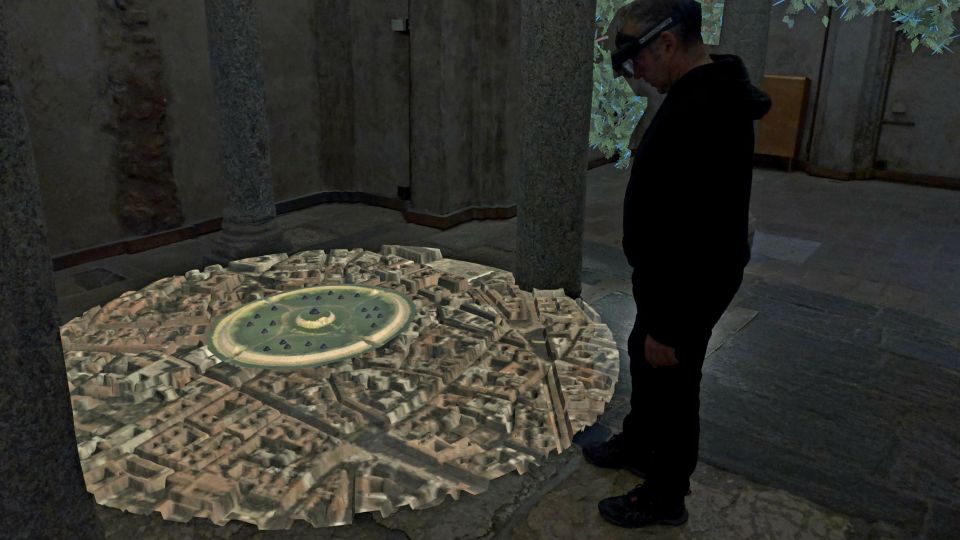
You put on the chronovisor and follow the guided approach as the story moves through time. The key thing is that the holograms are not just floating in front of you like a screen. The projections are designed to appear in the surrounding environments, so your brain has to do a quick pivot: this place isn’t only what you see with your eyes right now—it can also look different by design.
That’s why this is one of the earliest culture-focused mixed reality concepts, at least in the way it’s presented here. It’s not “tech as a gimmick.” It’s tech as a storytelling method.
Where you start: Pinacoteca Ambrosiana courtyard meeting point
You’ll meet at the entrance inside the exit courtyard of the Pinacoteca Ambrosiana. The entrance is described as having a staircase on the right of Cardinal Federico Borromeo’s Statue.
This detail isn’t just trivia—it affects whether your first five minutes go smoothly. If you arrive near the Pinacoteca and you don’t spot the statue or the right-hand staircase, slow down and re-check the directions. It’s easy to end up in the wrong corner, especially because the Pinacoteca area can feel like one big cluster of entrances.
Tip that helps: give yourself extra time to orient. The experience asks you to show up 10 minutes earlier than your booked start. In practice, that buffer is what keeps “meeting point anxiety” from eating your experience time.
The core moment: chronovisor-guided history in the Crypt of San Sepolcro
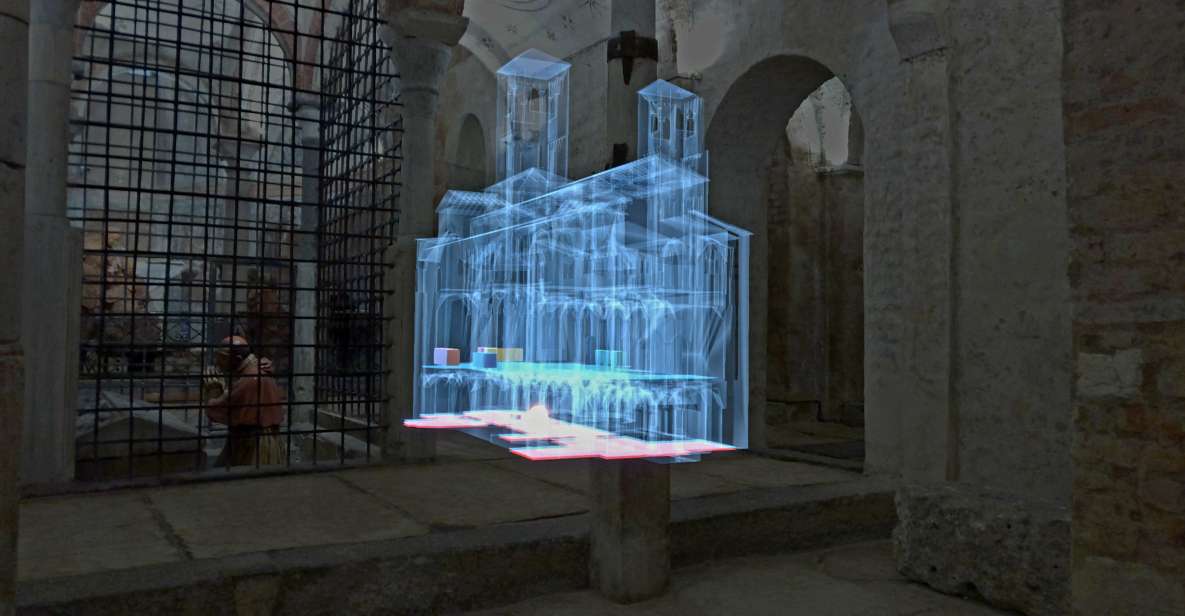
The tour is structured around one main “stage”: the crypt. Once you’re in the Crypt of San Sepolcro, you put on the chronovisor and start the hybrid past/present journey from that exact spot.
Here’s what you should expect, plainly:
- You’ll be guided through Milan’s history using a chronovisor and holograms
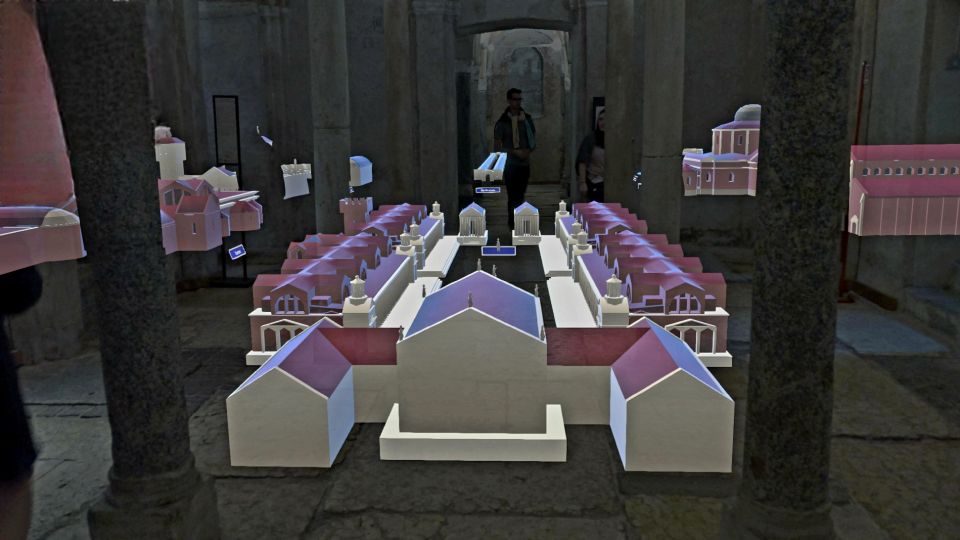
- You’ll look at the crypt space while the past overlays it
- You’ll get a structured narrative via an audio guide
This is where the “why this is valuable” part kicks in. When history lives in a dark room with a sign behind glass, it stays abstract. When history is staged in the same location you’re standing in, it becomes physical—at least in your perception. Even without knowing every specific era beforehand, the experience is designed so the city makes sense in time, not only in geography.
A good fit if you want “guided + hands-on”
If you like tours but hate standing still listening forever, this is a sweet spot. It’s guided, but you’re also actively watching and interpreting what appears around you. The format is short enough that it won’t drag, and the tech keeps your attention.





Audio guide languages: a comfort blanket in a tech setting
The experience includes an audio guide in Italian, English, French, and Spanish. That matters because mixed reality can feel like sensory overload if you don’t have narration to anchor the visuals.
So when you’re wearing the chronovisor, you’re not forced to rely only on what you guess from the holograms. The audio guide is there to give you the story thread while you focus on seeing the time layers.
Practical note: pick the language you know best before you start, and listen for signposts in the narration. Since the guide is built around “what you’re seeing,” switching languages midstream would just cost you context.
How the mixed reality actually helps (and where it might not)
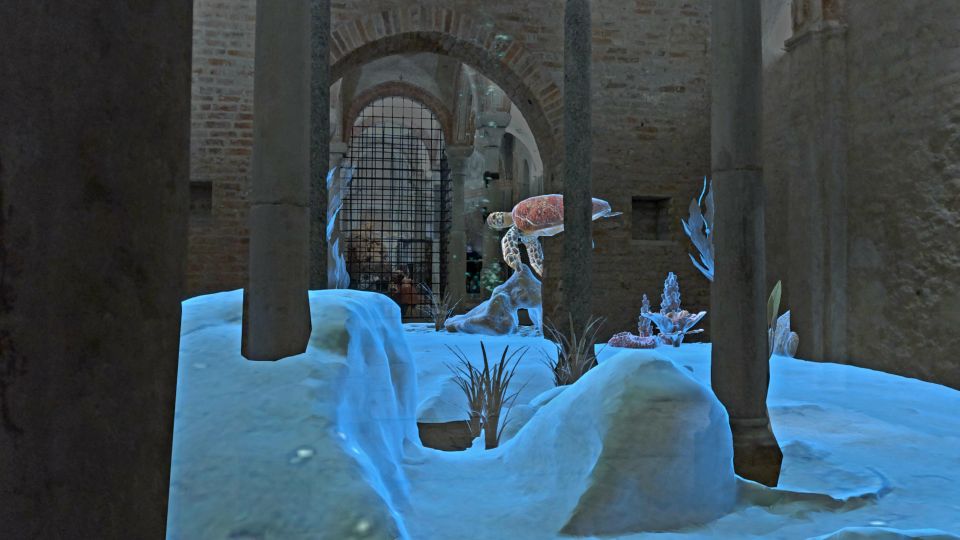
Mixed reality is only useful if it clears up confusion. In this format, the chronovisor is meant to show you the past right where you are, so you can connect the narrative to a real setting.
That said, the experience has one built-in limitation: it’s not a deep, hour-long historical lecture. It’s a concentrated, 20-minute “time travel preview.” If your goal is exhausting detail—dates, full architectural analysis, and a lot of context—you may find yourself wanting more afterward.
If you want both, treat this as a “starter course” for Milan. Do it near the beginning of your trip, and then use it as a lens for everything else you see in the city.
Pricing and value: $17 for tech + a real underground site
At $17 per person, you’re paying for two things at once:
- Access to a specific underground location tied to Milan’s story
- The chronovisor technology and its guided storytelling format
In many cities, a short guided experience can cost more than this, and it might still leave you with nothing you can picture. Here, the hope is that you leave with a vivid mental image—Milan from more than one time period—because the holograms are tied to the crypt space itself.
The value gets even better if you’re trying to balance budget with variety. For a similar price, you might get a standard guided walk, but you wouldn’t get the “past projected into place” effect.
If you’re the type who hates wearable tech, or you’re sensitive to gadgets, that’s the main “payoff risk.” But if you’re curious and open to trying it once, it’s priced like a reasonable experiment.
Timing: 20 minutes that fit real sightseeing days
The duration is 20 minutes, and starting times vary (you’ll need to check availability for your specific date). That’s helpful because Milan schedules can be unpredictable—you may want to slot this between major attractions without locking yourself into a half-day commitment.
Show up 10 minutes early so you aren’t rushed at check-in or orientation. And once it starts, expect it to move at a steady pace. The whole point is that it’s brief.
Location logistics: what you can bring (and what you can’t)
This experience comes with a practical rule set. It’s not allowed to bring:
- Baby strollers
- Luggage or large bags
So if you’re arriving in Milan with a backpack plus an extra “everything bag,” consider traveling light. The crypt and chronovisor staging likely leave little space for oversized items. Better to plan for a hands-free day than to fight with bag limitations right at the start.
Who should book this mixed reality crypt tour
This is a strong choice if:
- You like modern ways of learning history, not only reading plaques
- You want a short activity that still feels special
- You’re okay with wearable tech like the chronovisor
- You want something different from the usual “cathedral + museum” rhythm
It’s not suitable for:
- Children under 9 years
- People with mobility impairments
If you fall into either of those groups, you’ll likely have a frustrating time at check-in or during the experience.
A quick word on meeting point confusion
There’s one clear risk baked into this tour style: if staff point you the wrong direction, the experience can feel unreachable at first. Since the meeting point is inside the exit courtyard of the Pinacoteca Ambrosiana and the entrance is identified by a staircase on the right of Cardinal Federico Borromeo’s Statue, your best defense is simple—use that landmark and give yourself time to find it.
If you’re unsure, ask for the chronovisor experience tied to the Crypt of San Sepolcro, and don’t be afraid to double-check you’re at the correct courtyard entrance before you start your search.
Should you book it?
Yes—if you want a short, memorable way to connect with Milan’s past using real location + guided storytelling + chronovisor tech. For $17 and 20 minutes, it’s priced like a sensible add-on rather than a big commitment, and the multilingual audio guide helps keep you oriented.
If you hate wearable tech, need long-form historical detail, or can’t do the mobility requirements, skip it and choose a classic guided tour instead. But if you’re curious and you can make the meeting point on time, this is one of the most “Milan in a new way” experiences you can fit into a tight schedule.
FAQ
What is the location of this experience?
It takes place in Lombardy, Italy, at the Crypt of San Sepolcro, with the visit connected to the Pinacoteca Ambrosiana area.
How much does it cost per person?
The price listed is $17 per person.
How long is the tour?
The duration is 20 minutes.
Where do I meet for the tour?
The entrance is inside the exit courtyard of the Pinacoteca Ambrosiana, with a staircase on the right of Cardinal Federico Borromeo’s Statue.
What happens at the end of the experience?
The activity ends back at the meeting point.
What language options are available for the audio guide?
The audio guide is available in Italian, English, French, and Spanish.
Is this experience suitable for children?
No. It is not suitable for children under 9 years.
What can’t I bring with me?
You can’t bring baby strollers or luggage/large bags.
Do I need to arrive early?
Yes. You should show up 10 minutes earlier than your booked time.