REVIEW · MILAN
Milan: Sforza Castle and Michelangelo’s Pietà Rondanini Tour
Book on GetYourGuide →Operated by Hidden Experiences · Bookable on GetYourGuide
A fortress you can almost hear. This small-group tour pairs Castello Sforzesco and Michelangelo’s final, unfinished Pietà Rondanini with clear context that makes the place feel human, not just famous.
I especially like the focus on two unforgettable anchor moments: the sculpture itself, and the ducal courtyards where Milan’s power was staged. You’ll get a guide who brings the stories together fast, and you won’t waste time figuring out what matters. One consideration: it’s only 1.5 hours, so if you want to linger in every museum room, you may feel slightly “rushed” even though you’ll hit the main points well.
In This Review
- Key highlights you’ll feel immediately
- Getting Into Castello Sforzesco: The smart start at Piazza Castello
- A quick tip that saves time
- Michelangelo’s Pietà Rondanini: Why the unfinished version hits hardest
- What you should watch for while standing there
- Sforza Castle courtyards: Where ducal power becomes architecture
- The Filarete Tower moment
- Leonardo da Vinci at Sforza Castle: More than Last Supper trivia
- Visconti and Sforza court life: The politics behind the marble
- One reason this tour feels efficient
- Price and value: Is $47 for 1.5 hours fair?
- Making the most of the short route (and the moments you should not rush)
- Who should book this?
- Should you book: My take
- FAQ
- Where is the meeting point for the tour?
- How long is the tour?
- What is included in the price?
- What will I see during the tour?
- Is the tour guided in English?
- Is food included?
- Can I book for a private group?
- Is the tour accessible for wheelchair users?
Key highlights you’ll feel immediately
- Skip-the-friction castle entry: included museum access so you start learning right away.
- Michelangelo’s Pietà Rondanini, up close: his last unfinished work, with an explanation of its emotion and non-finito look.
- Ducal courtyards on the walking route: you’ll move through key spaces connected to Ludovico il Moro and court life.
- Leonardo da Vinci’s nearly 20 years at the castle: the guide connects his role here beyond the usual talk of The Last Supper.
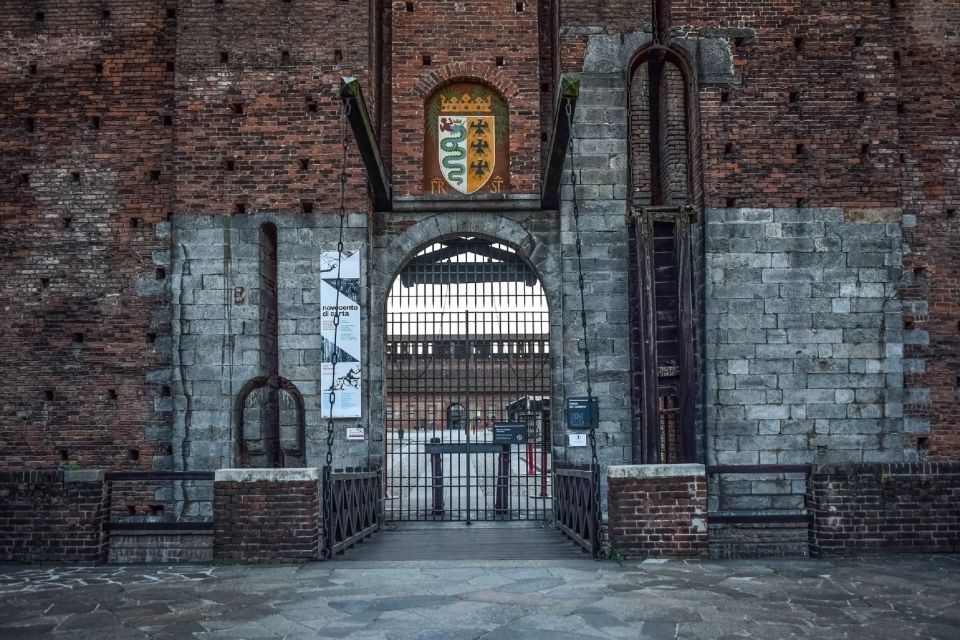
- Sforza-Visconti power made readable: you’ll learn what symbols like the Biscione serpent meant in this world.
- Headphones for small-group clarity: the guide’s voice comes through even in busy areas.
Getting Into Castello Sforzesco: The smart start at Piazza Castello
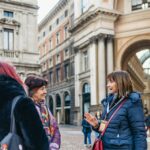
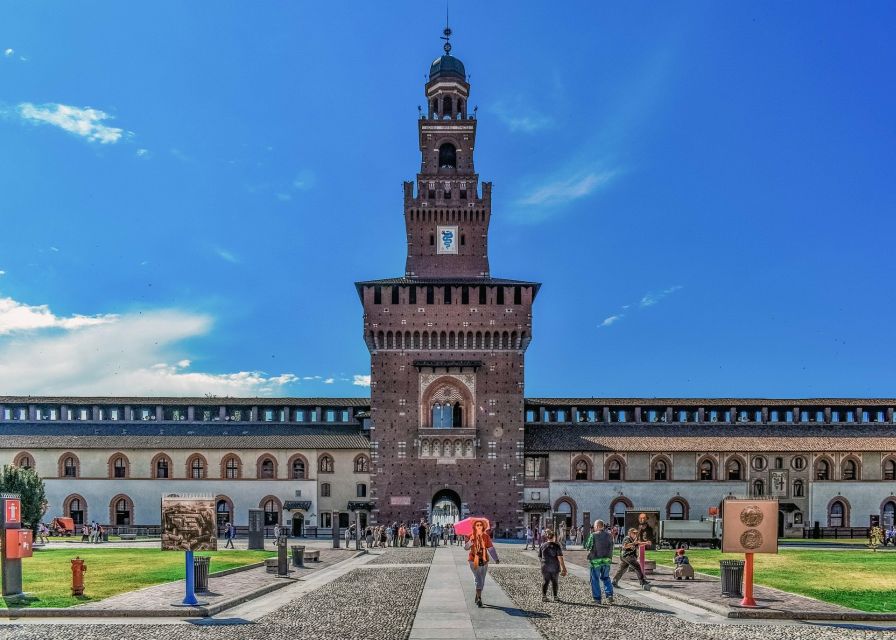
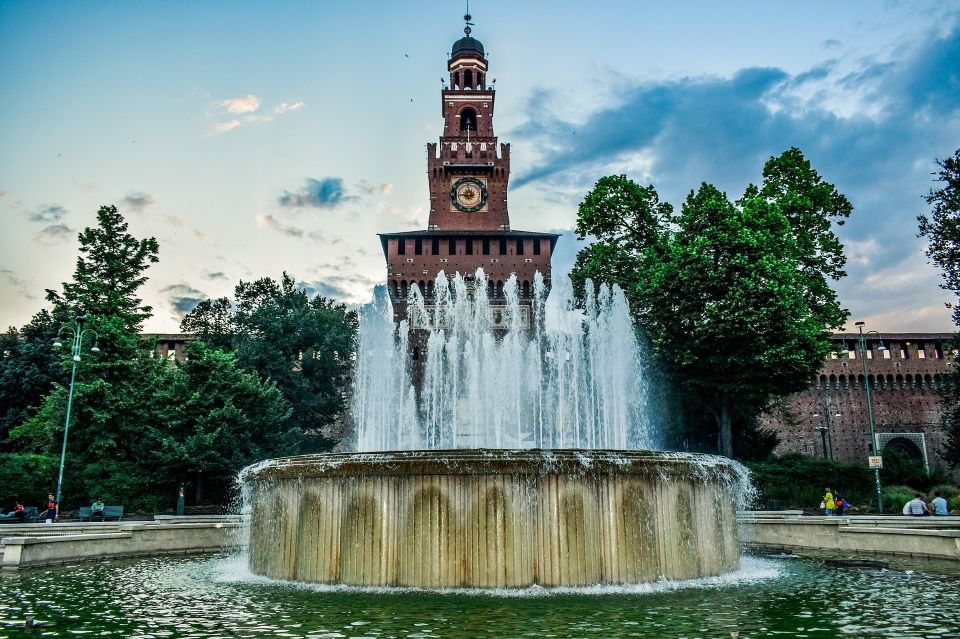
Meet your guide in Piazza Castello, outside the castle, specifically under the Filarete clock tower. The meeting point is in front of Sforza Castle, not inside the courtyards, so you’ll want to show up early enough to orient yourself in the square.
This matters more than it sounds. Sforzesco is big, and wandering without a plan can turn into you sprinting between rooms that don’t connect. Here, you’re handed a storyline from minute one: defensive fortress → ducal seat → Renaissance museum spaces. I like that the tour is designed to help you see the architecture and then understand why those walls mattered politically, not just visually.
Logistics are simple. The tour is 1.5 hours, small-group style, and you get headphones (designed for up to 11 participants) so you can actually hear the guide while walking and standing in galleries. You’ll also be guided in multiple languages, including English, Italian, German, French, and Spanish, so it’s easier to tune in even if your Italian is still warming up.
You can also read our reviews of more tours and experiences in Milan.

A quick tip that saves time
If you’re arriving from the Duomo area, build in extra minutes for foot traffic. Piazza Castello can get busy, and your best “tour energy” comes from not doing a last-minute scramble.
Michelangelo’s Pietà Rondanini: Why the unfinished version hits hardest
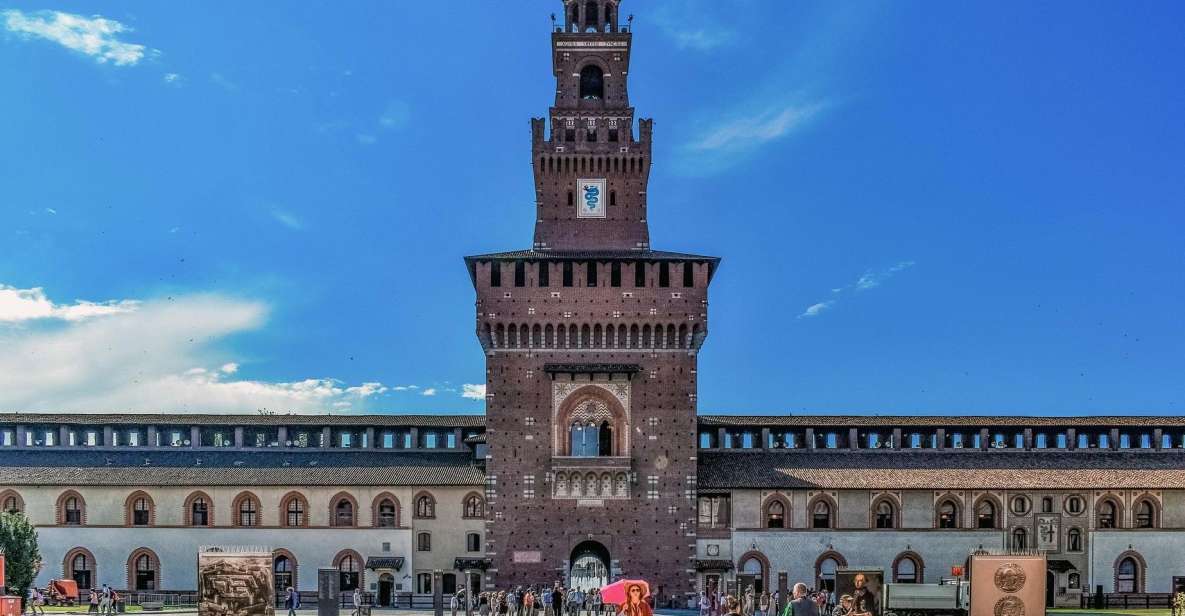
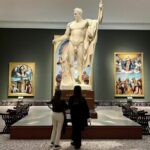
Your tour’s emotional center is Michelangelo’s Pietà Rondanini, housed in a museum setting inside the castle. This is not the polished, early Michelangelo people often picture. It’s his final, unfinished testament—work he kept going right up until just days before his death at age 89.
The point your guide will bring out is the difference between perfection and urgency. The Pietà Rondanini has an unmistakable “non-finito” feel: elongated forms, rawness in the finish, and a mood that seems almost rushed toward expression rather than finish. Instead of serene balance, it reads as spiritual strain—like the work is trying to catch a feeling before life closes the door.
That context changes how you look at the sculpture. Without guidance, it’s easy to treat the unfinished surface as a defect or incompletion. With the tour’s framing, you start reading it as intentional emphasis: Michelangelo choosing emotional transmission over anatomical polish. If you’ve ever wondered why art history sometimes feels like it’s about timing as much as technique, this is a rare, concentrated answer.
What you should watch for while standing there
- The elongated proportions and how they shift the body language away from idealized calm.
- The unfinished surfaces and edges, which can feel more immediate than carefully blended marble.
- How the sculpture’s mood changes as the guide explains Michelangelo’s late-life mindset.
If sculpture is one of your Milan priorities, this stop alone makes the tour worth your time—because it gives you a way to interpret what you’re seeing, not just admire it.
Sforza Castle courtyards: Where ducal power becomes architecture
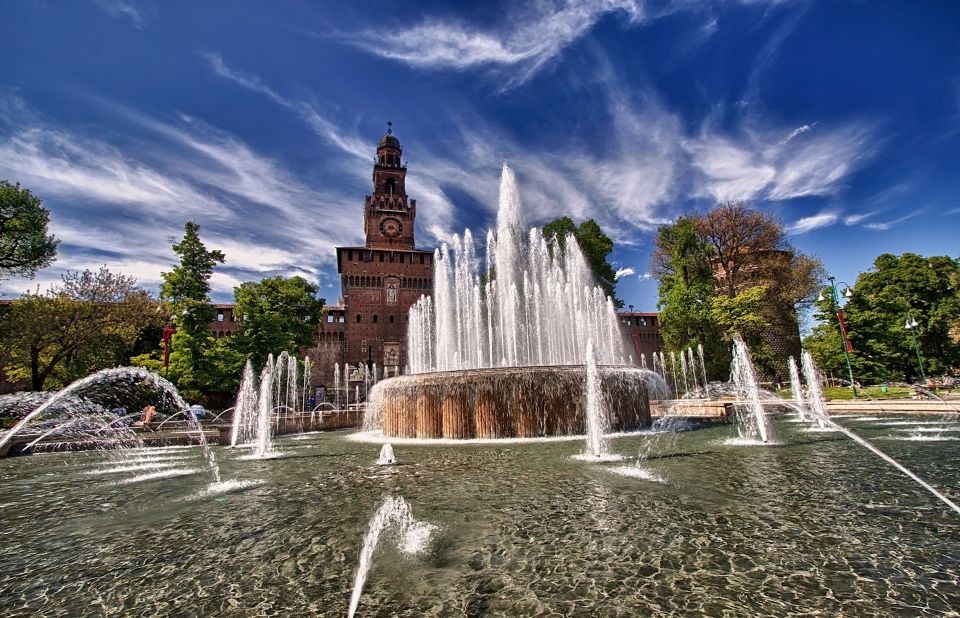
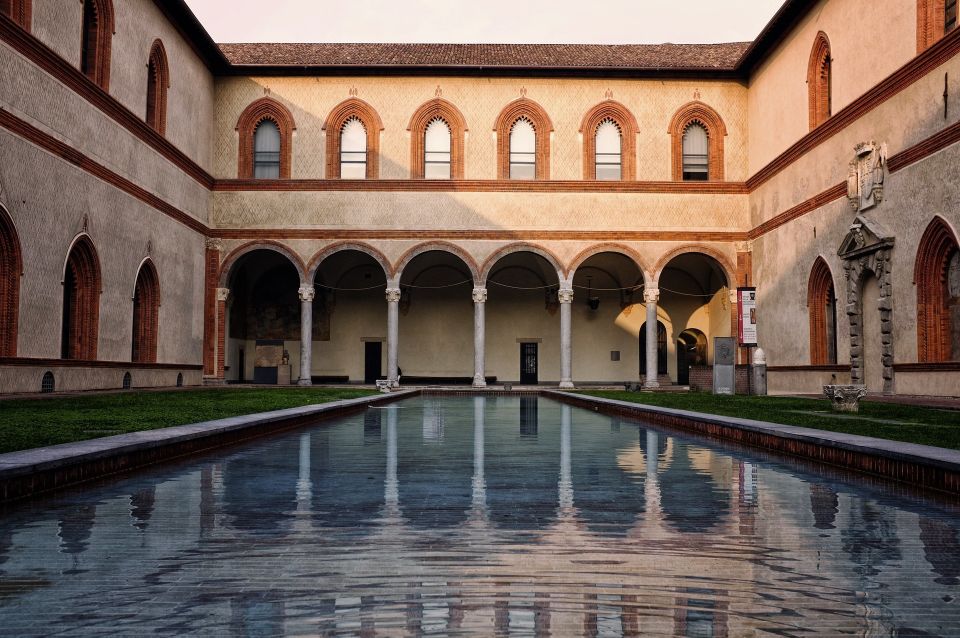
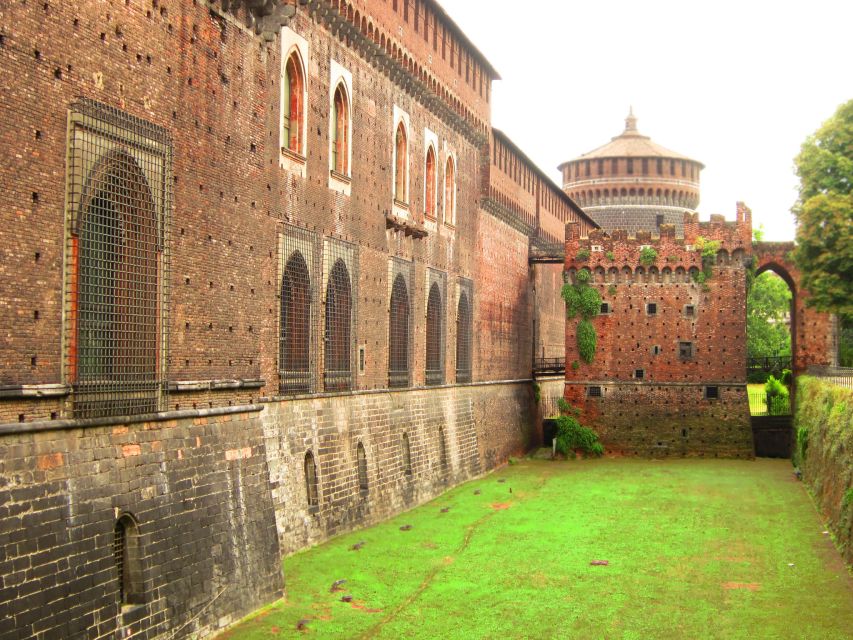
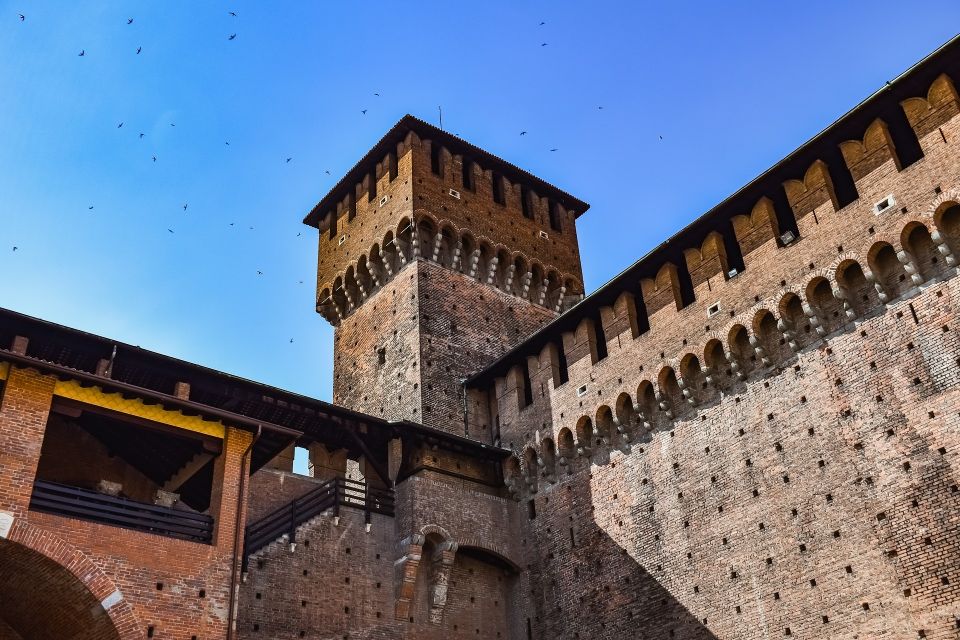
After the Pietà, the tour moves through the castle’s key outdoor and semi-outdoor spaces, where Milan’s ruling families turned space into messaging. You’ll spend time in the Ducal Courtyards, including places like the Corte Ducale and the Cortile della Rocchetta.
This is where the Sforza story stops being a name and starts being a lived environment. The courtyards are built for authority—public movements, private residence, and political display all in the same enclosed geometry. Standing in these spaces, you can begin to understand why castles weren’t only about defense. They were also about theater.
Your guide will connect these areas to the court of Ludovico il Moro, a central figure in Milanese power. You’ll also learn why symbols show up again and again. One that gets attention is the Biscione, the iconic serpent coat of arms tied to the Visconti/Sforza identity. The explanation turns what might look like decoration into something closer to branding—political loyalty expressed through iconography.




The Filarete Tower moment
You’ll also pass under the shadow of the Filarete Tower, and the guide uses that to talk about survival through centuries. This kind of detail matters in Milan, where layers of history sit close together. The castle’s continued presence—reworked, reused, and adapted—becomes a clue about how Milan kept changing while still preserving its core symbols.
Leonardo da Vinci at Sforza Castle: More than Last Supper trivia
Everyone brings up The Last Supper when they say “Leonardo in Milan.” This tour does something better: it anchors Leonardo’s importance to the castle where he actually had a role in court life.
You’ll learn that Leonardo lived and worked in the Sforza environment for nearly twenty years. The key difference here is that your guide won’t treat Leonardo as a distant genius floating above politics. Instead, you’ll see him as a court engineer and architect moving inside the Sforza machine—one foot in art, another in practicality.
As you walk, the guide points out architectural and spatial clues that help connect Leonardo’s type of thinking to the castle’s design and function. Even if you already know Leonardo’s big works, this shift makes you look at the setting as part of the creative process rather than just a backdrop.
If you love “how did they build that” thinking, you’re in good shape. Leonardo’s influence isn’t delivered as a lecture; it’s offered as a relationship between a man, his patrons, and the spaces where he worked.
Visconti and Sforza court life: The politics behind the marble
The tour isn’t only about major art names. It’s also about how Milan’s ruling families—especially the Visconti and Sforza—shaped what people saw, heard, and believed.
Your guide will tell the stories of ducal day-to-day life and the intrigues that came with ambition. You’ll hear what the symbolism meant, how noble power played out, and how culture was influenced by decisions made far from the art galleries—decisions that still affect the visitor experience today.
This is also where the “why” becomes clearer. The castle’s defensive beginnings explain the fortress shape. The ducal period explains the courtyards and ceremonial spaces. The later museum transformation explains why you can stand in front of Michelangelo’s late work inside a building that once prioritized control and protection.
One reason this tour feels efficient
It connects the dots fast, so your brain doesn’t treat Milan like a set of disconnected sights. In 1.5 hours, you’ll walk away with a sharper sense of how political power and art history overlap in real places.
Price and value: Is $47 for 1.5 hours fair?
At $47 per person for a 1.5-hour guided visit, the value comes from what’s included, not just the time.
You’re paying for:
- Entrance fees to the castle and the museum spaces tied to the Pietà
- A certified guide who explains the context while you move
- Headphones (helpful in indoor rooms and busy courtyard areas)
- A small-group format so the pacing stays focused
If you were to do this on your own, you’d still have the major sights. But you might miss the emotional logic of the Pietà Rondanini—why the unfinished look matters—or the court-political meaning embedded in courtyards and symbols like the Biscione. In other words, the guide is doing the translation work.
This is a practical choice if you like concentrated experiences. If you’re the type who prefers slow museum wandering with zero structure, you may find yourself wanting more hours. But if you want the highlights explained in a way that changes how you see the place, the price makes sense.
Making the most of the short route (and the moments you should not rush)
Because the tour is compact, you’ll get the best results if you treat it like an art-history walk-through rather than a checklist.
Here’s how to get more out of it:
- Arrive a few minutes early at Piazza Castello so you start calm.
- Wear comfortable shoes. Courtyards and museum rooms add up, and you’ll be standing at the Pietà when the explanation is most detailed.
- If you’re sensitive to volume or sound, use the headphones right away and keep them properly placed.
- Ask questions when the guide pauses. This kind of tour rewards curiosity, especially on Michelangelo and Leonardo context.
I also appreciate that the pacing is designed for clarity. The guide’s job is to pick the key things you’ll actually remember later: Pietà Rondanini, ducal courtyards, Leonardo’s castle years, and the Visconti/Sforza stories that make the architecture click.
Who should book this?
This tour is a strong match if you:
- Love art with context (not just famous names)
- Want a quick, focused way to understand Sforza Castle without wandering randomly
- Are interested in Leonardo beyond the usual headline work
- Prefer a small-group atmosphere with clear audio support
Should you book: My take
If your Milan day includes the Duomo area, this is an easy add-on that connects Renaissance art and power without wasting time. The standouts are the Pietà Rondanini explanation and the way the guide turns the courtyards into a readable story of the Sforza-Visconti world.
I’d skip it only if you’re looking for a long, free-form museum day or if you want to spend extra time in rooms not emphasized by a tight 1.5-hour route. Otherwise, this is a smart value choice: $47 buys you both access and interpretation, which is exactly what makes Milan’s big-name sites feel personal.
FAQ
Where is the meeting point for the tour?
Meet in Piazza Castello, under the Filarete clock tower, in front of Sforza Castle. The meeting point is not inside the courtyards.
How long is the tour?
The tour lasts about 1.5 hours.
What is included in the price?
Entrance fees to the castle and museum, a certified tour guide, headphones (for groups up to 11 participants), and a small-group guided tour.
What will I see during the tour?
You’ll focus on Sforza Castle and its museum spaces, with a detailed look at Michelangelo’s Pietà Rondanini, plus time in the Ducal Courtyards and key areas connected to Leonardo and the ducal families.
Is the tour guided in English?
Yes. The tour is offered in multiple languages, including English, along with Italian, German, French, and Spanish.
Is food included?
No. Food and drink are not included.
Can I book for a private group?
Yes, a private group option is available.
Is the tour accessible for wheelchair users?
Yes, it is wheelchair accessible.