REVIEW · MILAN
Pinacoteca Ambrosiana and da Vinci’s Codex Atlanticus admission in Milan
Book on Viator →Operated by Veneranda Biblioteca Ambrosiana · Bookable on Viator
Leonardo’s notebook is easier to see than you think. This admission to Pinacoteca Ambrosiana and the Codex Atlanticus gives you a self-guided route through original da Vinci pages and a strong museum collection, plus time flexibility with morning or afternoon entry. I especially like the chance to track Leonardo’s notes and sketches (1478–1519) and the relaxed pace—no herd mentality. The only real catch is that da Vinci’s on-display material is limited to selected pages, so you may want to linger and manage expectations.
You’ll find this museum just minutes on foot from Piazza Duomo, which makes it a practical add-on to a Milan day. I also like that your ticket covers the exhibit plus the museum’s main permanent collections, so you’re not stuck with only the da Vinci part. One more thing to consider: the Codex is rotated regularly, so what you see depends on the current display.
In This Review
- Key takeaways before you go
- Pinacoteca Ambrosiana from Duomo: quick arrival, easy start
- Your ticket’s big promise: Codex Atlanticus pages (1478–1519)
- How the visit flows: what to see in the museum (and what to expect)
- The da Vinci part: why “limited pages” can still be worth it
- How long should you plan? pacing for 1 to 2 hours
- Morning or afternoon entry: choosing the right time slot
- Self-guided details: where people get tripped up
- More art than you expect: the permanent collection payoff
- Price and value: is $19.96 a good deal?
- Who should book this Milan admission?
- Should you book this Pinacoteca Ambrosiana and Codex Atlanticus ticket?
- FAQ
- What does my admission ticket include?
- Where is the Pinacoteca Ambrosiana in Milan?
- How long should I plan to spend inside?
- Is the Last Supper included with this ticket?
- Is this visit guided or self-guided?
- Can I choose a morning or afternoon time?
- Are the Codex pages always the same?
- Do I need an audio guide?
- How many people are in the group?
- Is free cancellation available?
Key takeaways before you go
- Timed entry, self-guided freedom so you can move at your pace instead of matching a group’s footsteps.
- Codex pages rotated regularly, with selected sheets on display and more material stored in the library.
- Museum-quality art alongside Leonardo, including works by Botticelli, Titian, Raphael, and Caravaggio.
- Great for pairing with other Milan sights because it’s close to Duomo and works well in the middle of your schedule.
- Small group setting (maximum 10 travelers), which usually keeps the experience calm.
Pinacoteca Ambrosiana from Duomo: quick arrival, easy start
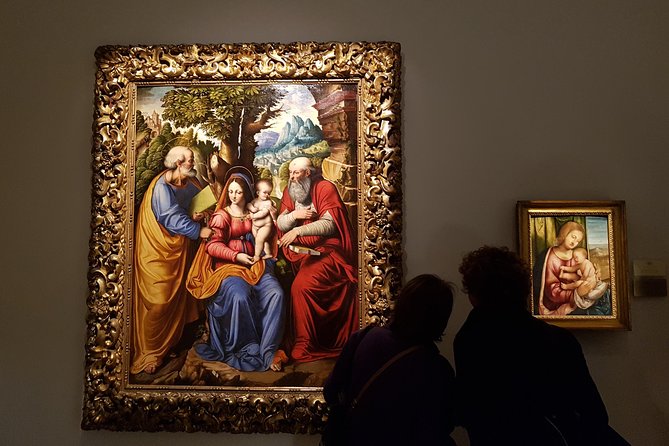
This ticket starts with a simple win: location. The Pinacoteca Ambrosiana sits about a five-minute walk from Piazza Duomo, so you’re not spending your precious first Milan hour getting lost. If your trip plan already revolves around the Duomo area, this is an easy “add-on” that doesn’t require a special detour.
You’ll enter with your general admission ticket, then head straight into the museum experience that includes the Codex Atlanticus display and access to the museum’s permanent collection. Because you can choose an entry time in the morning or afternoon, you can align the visit with the rest of your day—before lines build, or later when you want a slower pace.
Practical note: one piece of advice that shows up again and again is to give yourself a few extra minutes to locate the right entrance and zone inside. Even when it’s close by, the museum layout can take a moment to orient yourself once you’re inside.
You can also read our reviews of more tours and experiences in Milan.


Your ticket’s big promise: Codex Atlanticus pages (1478–1519)
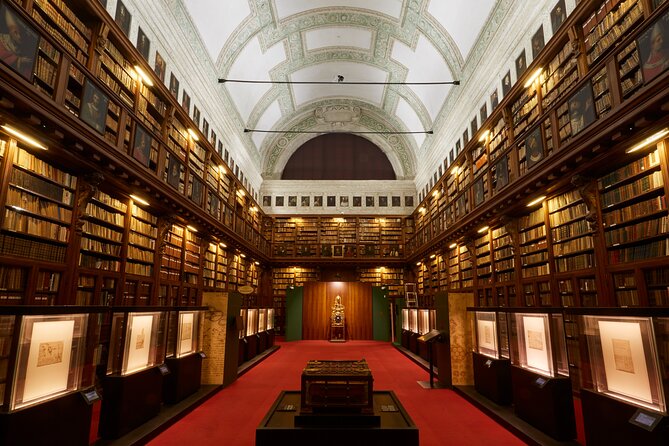
The star is Leonardo da Vinci’s Codex Atlanticus, and what makes it special is how “process” shows up on the page. This isn’t only finished art—it’s notebook thinking. You’ll see da Vinci notes and sketches from the period between 1478 and 1519, presented in pages drawn from the personal collection housed at the library.
The exhibit portion shows selected pages, and the display is rotated regularly. That matters because it means the museum isn’t trying to squeeze the entire Codex into one room. Instead, you get a focused window that can change between visits, which also explains why people who love paper, pencil work, and visual problem-solving tend to leave happy.
If you want the fuller feel of the Codex scale, remember the notebook is more than 1,000 pages long. What’s on show in the exhibit is just a subset, while more pages can be accessed via the museum’s library areas. Your admission includes access to the main areas of the Pinacoteca Ambrosiana, so you can decide how deeply to go.
How the visit flows: what to see in the museum (and what to expect)
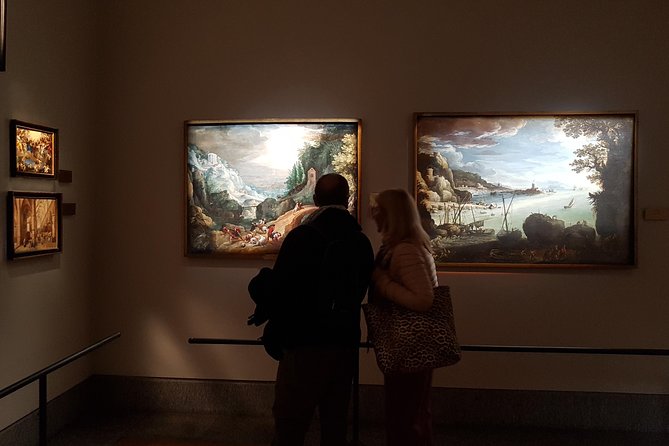
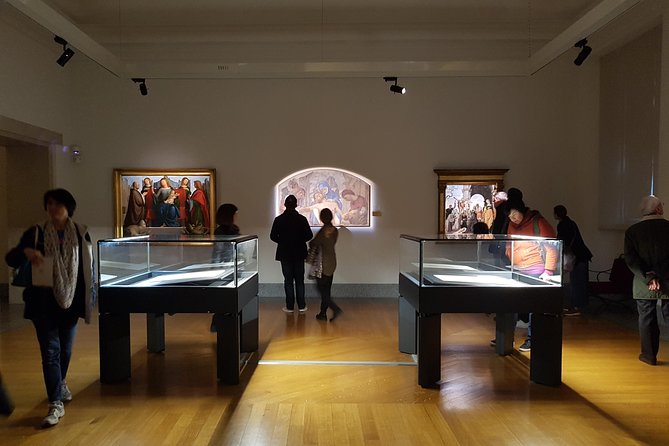
Once you’re inside, the experience is set up so you can build your own route. The visit includes the Codex Atlanticus exhibit and the museum’s permanent art collection, where you’ll move through halls featuring major names from Italian Renaissance and Baroque art.
Here’s the kind of visual lineup you’re dealing with:
- Botticelli’s Madonna del Padiglione
- Titian’s Adoration of the Magi
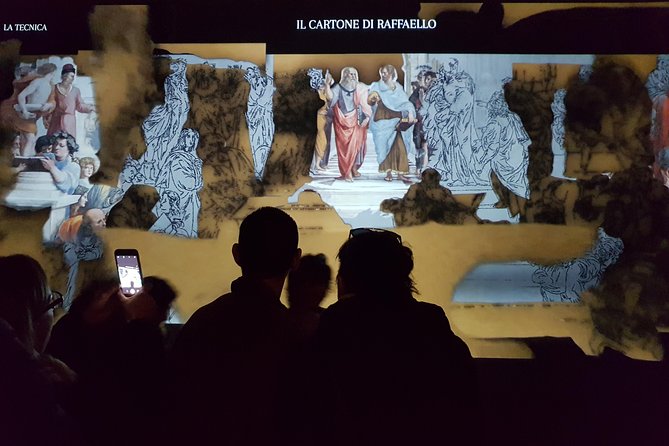
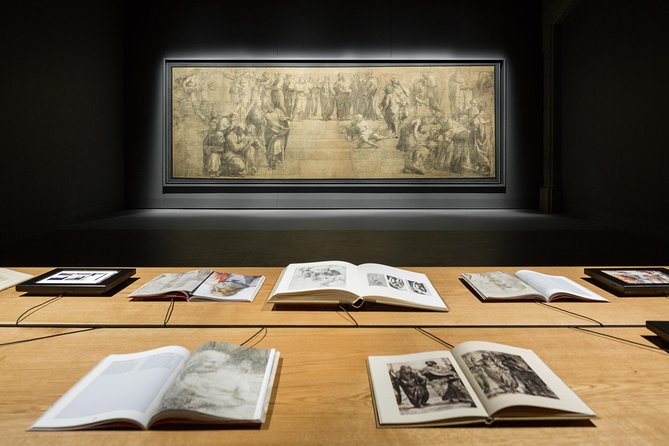
- Raphael’s Cartoon for the School of Athens
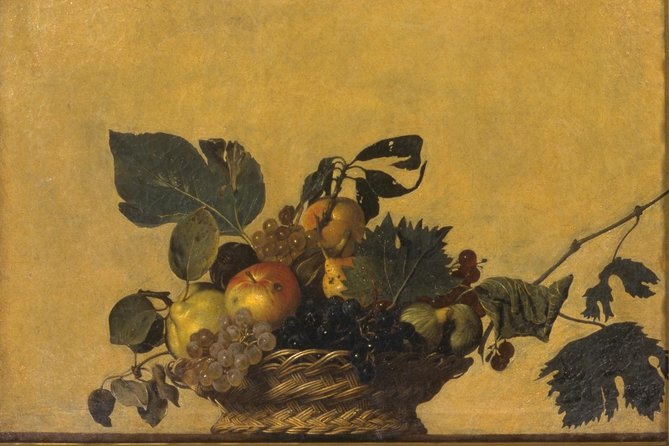
- Caravaggio’s Basket of Fruit
This mix is useful for your mental picture of the Renaissance. Da Vinci’s notebook gives you the inventor-artist way of thinking, while these paintings and cartoons anchor you in the broader art world of the time—composition, sacred subjects, human forms, and that sharper edge of realism that comes into focus as you move through the collection.
Also keep an eye out for odd historical curiosities. People have mentioned highlights like a lock of Lucrezia Borgia’s hair and even Dante’s writings appearing among the museum treasures. If you like museums that surprise you with objects beyond the “usual suspects,” this tends to land well.
The da Vinci part: why “limited pages” can still be worth it
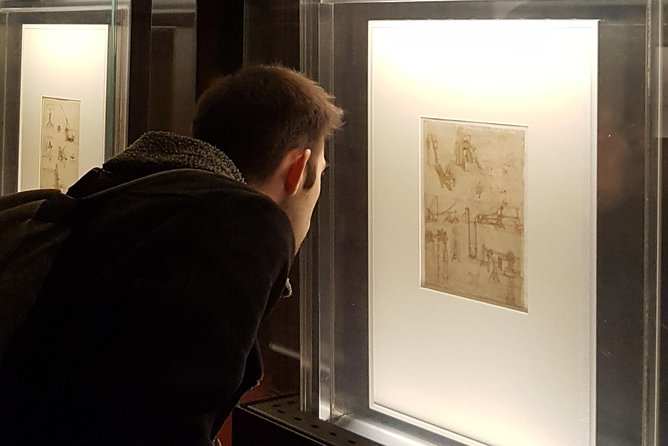
A few visitors point out that da Vinci’s display can feel small compared to the Codex’s huge reputation. That’s a fair concern, because the Codex Atlanticus is famously massive.
But here’s how to turn that into a smart strategy for your own visit: don’t treat it like a single-room checklist. Treat it like a close-up on how Leonardo worked. The pages that are shown are the point. In many cases, it’s the handwriting, the cross-hatching, the diagram-like thinking, and the sense of experimentation that you’ll remember—not an overwhelming quantity of pages.
If you’re someone who wants maximum da Vinci time, plan to spend extra minutes beyond the first exhibit room and head toward the library access areas if you can. The museum rotates pages regularly, so it’s not just about quantity—it’s about catching the quality of the specific pages on display.
How long should you plan? pacing for 1 to 2 hours
The recommended visit time is about 1.5 hours, and the experience typically runs 1 to 2 hours depending on how long you stay with each area. I think that sweet spot works well here: long enough to see the Codex exhibit, browse the permanent collections, and still have room to stop when something grabs you.
If you’re short on time, you can focus on:
1) Codex Atlanticus pages first, then
2) the big-ticket paintings that are listed above.
If you have more time, don’t rush. Several people mention taking their time with the Leonardo pages and enjoying the rest of the museum in a more relaxed, unhurried way. Since this is self-guided, you can extend without worrying about catching a group.
Tip for pacing: start with da Vinci, then let the rest of the art be a follow-up. It keeps the experience anchored, and it prevents the rest of the museum from swallowing your attention before you’ve seen the main attraction.





Morning or afternoon entry: choosing the right time slot
You can choose an entry time in the morning or afternoon, and that flexibility helps because Milan can be unpredictable in terms of weather and how your other plans land. A morning entry is often a good fit if you want a calmer start and fewer interruptions as you get oriented in the museum.
Afternoon works too—especially if you’re pairing this with other sights in the center and your schedule naturally pushes toward later museum hours. Since the da Vinci exhibit involves close looking, the best time is the time when you can slow down rather than sprint.
If you’re making a full Duomo-area day, consider placing the Pinacoteca Ambrosiana around your “thinking time.” It’s not the kind of museum where you’ll benefit from a fast walk-through.
Self-guided details: where people get tripped up
This is a self-guided visit, which is great because you can linger as long as you want. Your ticket includes admission, but it does not include an audio guide (about 3 EUR), and some visitors have noted mixed usefulness with headsets.
If you’re the type who learns best from narration, you might consider an audio guide option on-site. Just plan to use it strategically, not as a crutch—because the Codex experience is about looking closely. Also, note that one review mentioned language issues with the museum’s information being Italian-only in that person’s experience, so if English is your primary need, verify how language support is presented before you commit to just the audio.
A practical move: when you arrive, take a moment to identify where the Codex display is located before you settle in. Several people reported initial confusion about finding the Codex area, so starting with a quick orientation can save you time and frustration.
More art than you expect: the permanent collection payoff
One of the reasons this works so well is that you’re not paying mainly for one room. Your ticket includes access to the museum’s permanent collection, which is where the “Milan value” shows up.
Yes, Leonardo is the headline. But the permanent collection gives you context and variety: religious themes, major Renaissance names, and Baroque realism. Even if you spend most of your time on da Vinci pages, you’re still likely to feel like the museum delivered more than a single moment.
If you love museums for their atmosphere, you’ll probably enjoy what people have described about the building and display style—beautiful lighting, thoughtful framing, and a sense of material richness (wood and tiles). That matters because the Codex pages aren’t just information; they’re also objects you read with your eyes.
Price and value: is $19.96 a good deal?
At $19.96 per person, this ticket is priced like an “anchor museum” visit rather than a budget add-on. In other words: you’re paying for access to both the Codex Atlanticus display and the permanent Pinacoteca collection, and that combo makes the cost feel reasonable.
Here’s how I’d think about value:
- If da Vinci notebooks are your priority, you get original pages (in select form) plus the chance to spend real time with them.
- If you’re not obsessed with da Vinci, you still get major artworks by Botticelli, Titian, Raphael, and Caravaggio, so the museum doesn’t collapse into a short da Vinci detour.
- You’re not required to buy more for core enjoyment. Audio guide is extra, and the Last Supper is not included.
Also remember the Last Supper entrance isn’t part of this admission. If you’re trying to see multiple mega-attractions in the same trip, this can help you plan value: you’re not paying for something you still need to book separately.
Who should book this Milan admission?
I’d book this if you fit one (or more) of these:
- You like process in art—sketches, diagrams, notes—because the Codex is about how Leonardo thought.
- You want a self-guided museum that works inside a tight Milan schedule near Duomo.
- You like a museum that offers both a headline attraction and real “supporting art” by other masters.
- You prefer smaller, calmer experiences, since the group size is capped at 10 travelers.
It may not be the best fit if you expect the entire Codex Atlanticus on display at once. The exhibit shows selected pages, and the Codex’s full size exists beyond the exhibit space.
Should you book this Pinacoteca Ambrosiana and Codex Atlanticus ticket?
Yes—if your plan includes time near Piazza Duomo and you want a museum that’s both readable and rewarding. This admission is strong value because it combines da Vinci’s notebook thinking with a serious permanent collection by major masters, all in a self-guided format.
I’d call it a smart booking for first-timers in Milan who want one cultural stop that doesn’t feel like a rushed checklist. Just go in expecting selected Codex pages, and plan to take your time with what’s on display—especially the handwriting and sketching work.
If you want a single-ticket Milan “win,” this is a very solid choice.
FAQ
What does my admission ticket include?
Your ticket includes entry to the Codex Atlanticus exhibit and access to the Pinacoteca Ambrosiana’s permanent collection.
Where is the Pinacoteca Ambrosiana in Milan?
It’s located just minutes walking distance from Piazza Duomo.
How long should I plan to spend inside?
The recommended visit time is about 1.5 hours, with the visit typically lasting 1 to 2 hours depending on how long you stay.
Is the Last Supper included with this ticket?
No. Entrance to the Last Supper is not included.
Is this visit guided or self-guided?
This experience is self-guided, so you can linger as long as you like rather than follow a group.
Can I choose a morning or afternoon time?
Yes, you can choose an entry time in the morning or afternoon to fit your schedule.
Are the Codex pages always the same?
No. Select pages from the Codex Atlanticus are rotated regularly.
Do I need an audio guide?
An audio guide is not included. It’s offered as an add-on (about 3 EUR), and it may help if you want more narration.
How many people are in the group?
The experience has a maximum of 10 travelers.
Is free cancellation available?
Yes. You can cancel up to 24 hours in advance for a full refund. If you cancel less than 24 hours before, the amount paid isn’t refunded.