REVIEW · MILAN
Step Into History: Leonardo Vinci’s Last Supper Tour
Book on Viator →Operated by Decathlon DMC TOUR OPERATOR · Bookable on Viator
Milan’s Last Supper runs on strict timing. This is one of the few ways to see Leonardo’s mural without spending half your day guessing lines and rules, because you get organized entry into Santa Maria delle Grazie and Il Cenacolo in a tight 1-hour window. It’s also the kind of visit where your guide’s pacing matters, since the painting time is short.
What I like most is how the tour sets the scene first, then gives you time where it counts. You start inside the church, not just at the painting, and the guide talks through the building and the fresco’s context. I also like the practical format: you see both places, you’re not stuck in an all-day tour, and you leave knowing what you just looked at.
The main drawback to keep in mind is that the visit is quick, and timing details can feel confusing if you’re relying only on what’s printed in your head. When the slots change, the experience can feel a little rushed at the end, and you’ll need to be ready for a fast exit so the next group can go in.
In This Review
- Key things to know before you go
- Why Milan’s Last Supper needs a timing strategy
- Meeting point: where you should actually show up
- Stop inside Santa Maria delle Grazie: the church context you don’t want to miss
- Il Cenacolo visit: 15 minutes with Leonardo’s Last Supper
- The English guide factor: what makes the commentary pay off
- Tickets, names, and the phone-entry rule from Nov 1, 2024
- Group flow and the reality of a short, controlled visit
- Price and value: is $114.65 per person fair?
- Practical tips so your visit feels smooth
- Who this tour suits best (and who should think twice)
- Should you book this Last Supper tour?
- FAQ
- How long is the Last Supper tour?
- Is the tour offered in English?
- What are the main stops?
- Are admission tickets included?
- Where does the tour start?
- Do I need a phone ticket for the Cenacolo visit after Nov 1, 2024?
- What is the Ticket Office procedure for the Cenacolo?
- Do I have to provide names and dates of birth when booking?
- Can I change the participant name after booking?
- Is the tour refundable if I cancel?
- Is it a private tour?
Key things to know before you go
- Admission tickets included for both the church stop and the Cenacolo slot, so you’re not juggling extra purchases.
- English-only guiding with a short total duration (about 1 hour), built for a scheduled visit.
- The Cenacolo visit is brief (about 15 minutes in the painting room), so you’ll want your focus on the details the guide points out.
- You must provide names and dates of birth at booking, with limited ability to change names later.
- From Nov 1, 2024 you need an individual phone/e-ticket and a mandatory name-check at the Ticket Office before entry.
- Private tour format means it’s only your group, not strangers piled into the same experience.
Why Milan’s Last Supper needs a timing strategy
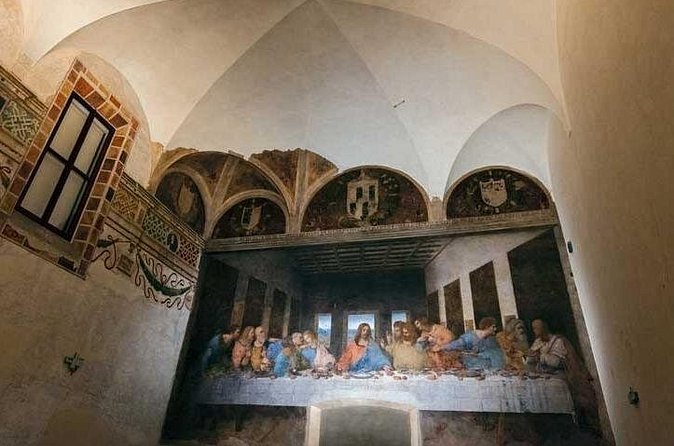
The Last Supper is famous for one reason: it’s unforgettable in person. It’s also famous for being hard to visit smoothly, because the site controls access like it’s an operating room. That’s exactly why a guided, timed plan helps.
This tour is designed around that reality. You get a secure ticket component built into the experience, and you move through the stops in a way that matches how the venue actually runs. With about 1 hour total, it fits neatly into a day even if you’ve got other Milan plans (cathedral, shopping, aperitivo, you name it).
Also, the tour is in English only. If you’re not comfortable in Italian, that matters, because the rules at the site are the part you least want to interpret with gestures.
You can also read our reviews of more historical tours in Milan

Meeting point: where you should actually show up
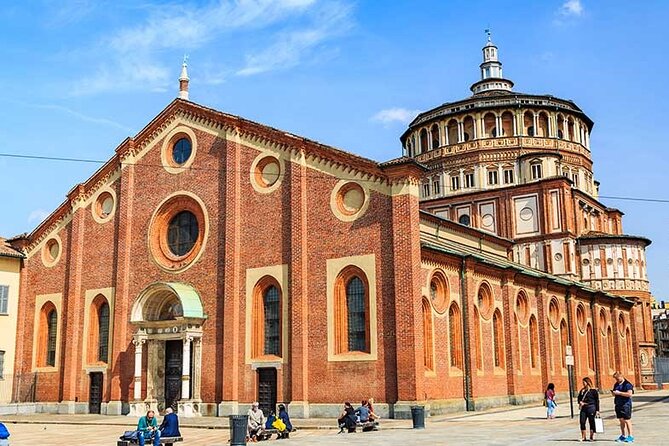
You meet at Leonardo’s Last Supper Museum, Piazza di Santa Maria delle Grazie, 2, 20123 Milano MI, Italy. The tour ends back at that same meeting point, so you’re not left wandering afterward with only vague directions.
Since this is a timed experience, treat the meeting location as a do-or-die detail. Aim to arrive with buffer time, especially if you’re coming by tram/metro and you need to locate your guide in a busy area.
Stop inside Santa Maria delle Grazie: the church context you don’t want to miss
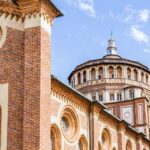
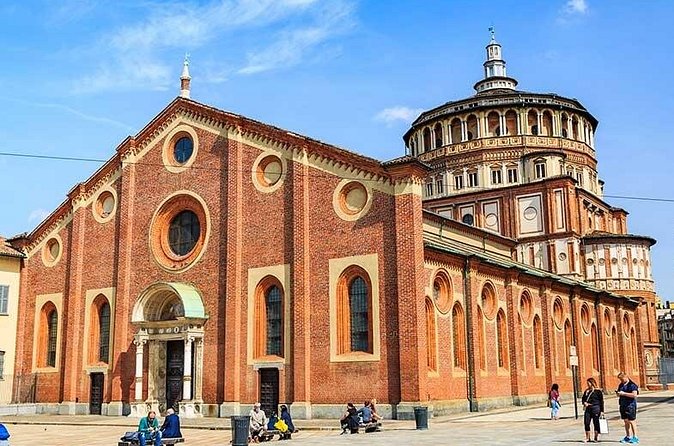
The first stop is Santa Maria delle Grazie. You’ll go in with your guide, and you’ll spend about 45 minutes there, with admission included. This part matters because the fresco isn’t floating in space—it’s tied to the church and the religious setting that shaped how Leonardo’s work was seen.
Expect your guide to explain what you’re looking at in the church and why this particular setting became the stage for the painting. People often rush straight to the mural, but the church stop gives you a framework so the painting doesn’t feel like a single photo moment. It also helps you get oriented before the clock starts ticking in the Cenacolo room.
One small reality check: the venue experience can feel controlled. If you’re hoping for a slow, meandering church walk, your timing will feel tighter. Still, this first stop is the part that makes the later 15 minutes with the fresco more meaningful.
Il Cenacolo visit: 15 minutes with Leonardo’s Last Supper
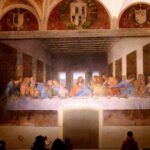
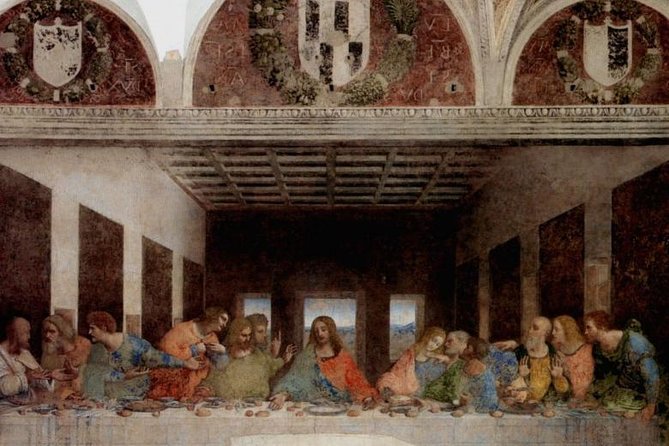
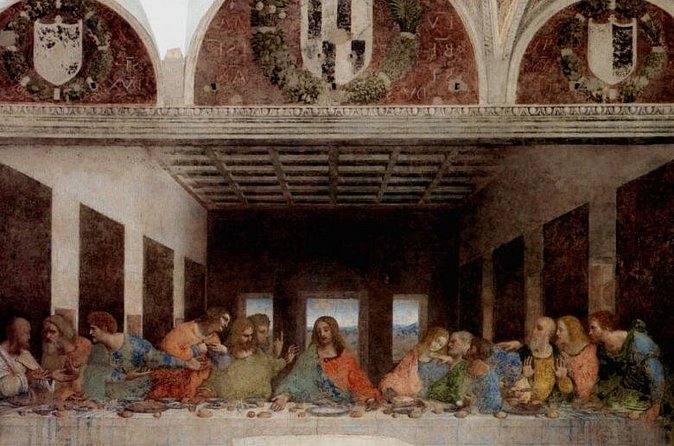
After the church stop, you head to Il Cenacolo for the painting. This portion is about 15 minutes, and admission is included again. That short time is the defining feature of the visit, so the value is in how the guide steers your attention.
You’re not just there to stand and stare. You’ll get commentary tied to Leonardo’s approach and what’s happening in the scene. If you’ve ever felt frustrated seeing masterpieces only as an image, this is the opposite: you’re given a way to look.
You’ll also feel the site’s flow: slots are managed in small groups. The painting room can have a switching rhythm, so you’ll want to watch, absorb, and then let the group move when it’s time. There’s no “linger for one more minute” superpower here.
The English guide factor: what makes the commentary pay off
The tour is offered in English, and that’s not just a comfort perk. It changes what you get out of the experience, because you can actually follow the story as the guide points out key elements.
From what I’ve gathered about guide styles on this tour, the strongest guides do two things well:
1) they explain the building and the painting in plain language, not art-speak, and
2) they keep you on track so you don’t waste your limited minutes.
Names you may see mentioned often include Nadia and Giada. Both come up as guides who make the experience feel organized and alive rather than like a rushed ticket scan.
One practical note: some people report they enjoyed receiving help from radio devices during the visit. That’s a good sign for clarity, especially in a crowded indoor environment where voices can get lost.


Tickets, names, and the phone-entry rule from Nov 1, 2024
This is the part you should take seriously because it can make or break entry.
When you book, all participant names and dates of birth are mandatory. There’s also limited flexibility: name changes are possible, but only up to 48 hours from the start date. If your travel group is still shifting, double-check early, because last-minute edits may cost you.
From November 1, 2024, the Cenacolo Museum has an extra step: each visitor needs their own ticket on a phone (or another electronic device). Even if you’re in an organized group, each person must be checked individually.
The procedure works like this:
- Each person must go to the Ticket Office to have their name verified against the electronic ticket and an identity document.
- Then you present your ticket again at the entrance.
- If you don’t do that first Ticket Office pass, entry is not possible.
The guide can support you with this process. Still, don’t assume it’ll take no time. Build buffer into your schedule so you’re not sprinting through the steps.
Also bring your passport or identity document—some visitors specifically note needing it for entry.
Group flow and the reality of a short, controlled visit
This is about efficiency, not wandering. The whole experience clocks in at about 1 hour, with the church taking the bigger chunk and the painting room giving you a concentrated slice of time.
That short format can feel perfect if you’re a focused sightseer. It can feel a little steep if you’re paying expecting a longer conversation or extra room time. A few people have felt that some of the tour time is spent organizing and moving, which is understandable given how the site operates.
You’ll also want to be emotionally prepared for the end-of-slot push to exit. In some cases, the tone of staff communication at the end can be blunt, which can take the glow out of the final minute. You can’t control that part, but you can control your mindset: treat the exit as the price of entry into a highly protected site.
Price and value: is $114.65 per person fair?
The price is $114.65 per person. At first glance, it’s not cheap. Here’s how I’d judge the value fairly.
You’re paying for:
- secured admission elements,
- guide interpretation in English,
- time management through a venue that runs on timed slots,
- and help with the name/ticket verification process.
If you’re comfortable buying tickets on your own and navigating the entry rules, you may be able to DIY it for less. If you’re not, paying for organization can be worth it because mistakes cost time, stress, and sometimes the ability to enter at all.
Also, this isn’t a full-day tour. Part of the price is basically paying for “use my one hour well.” If you want a fast, guided hit at the sites, it can feel like a solid deal. If you want deeper discussion and a slower pace, you may feel it doesn’t stretch far enough.
My take: this is a good value if you want the painting plus context and you appreciate a guided look. It’s less of a value if you expected the tour to act like a museum seminar.
Practical tips so your visit feels smooth
A few things I’d do before you go:
- Double-check your assigned time window in any message you receive before the day. Some people have described confusion between booked times and when they met their guide, so confirm the practical timeline in writing.
- Arrive early enough to locate your guide and handle the Ticket Office check smoothly, especially with the phone-ticket rule for the Cenacolo.
- Keep your phone battery charged. You may need your personal electronic ticket more than once.
- Bring your passport/ID. It’s not optional for the verification steps.
- Have one job in mind for the 15 minutes: look at what the guide tells you to look for. If you try to “see everything,” you’ll likely see nothing deeply.
If your group is changing names or someone is delayed, don’t wait. The tour’s name-and-DOB requirement means last-minute changes have limits.
Who this tour suits best (and who should think twice)
This tour fits best if:
- you’re visiting Milan for a short time and want a reliable, timed plan,
- you want the story behind the painting, not just a photo,
- you prefer a guided experience in English,
- and you’re okay with a structured, brief visit because that’s how the site works.
It might not suit you as well if:
- you hate anything that feels rushed,
- you expect to spend lots of extra minutes in the painting room,
- or you’re the type who wants a free-form church walk without time pressure.
For families and casual sightseers, it can work well because it’s only about an hour. For art-history power readers, you’ll still leave with a stronger grasp, but you may crave a longer discussion than the format allows.
Should you book this Last Supper tour?
Book it if you want the safest path to seeing Leonardo’s Last Supper with context, in English, inside a tight schedule. The big wins are the included admission, the structured flow through the church and the Cenacolo, and the practical help with on-site verification—especially after the Nov 1, 2024 ticket-on-phone process.
Skip booking (or at least think carefully) if you’re expecting a slow, long museum-style experience for the price. This is a timed tour by design. If that matches your travel style, you’ll likely feel satisfied and move on to the rest of Milan with the painting fresh in your mind.
One last tip: before you go, make sure your travel group’s names and dates of birth are correct and keep your electronic ticket ready. That’s the difference between a calm arrival and a stressful scramble.
FAQ
How long is the Last Supper tour?
It runs for about 1 hour.
Is the tour offered in English?
Yes, it is offered only in English.
What are the main stops?
You visit Santa Maria delle Grazie (about 45 minutes) and Il Cenacolo (about 15 minutes).
Are admission tickets included?
Yes. Admission tickets are included for both stops.
Where does the tour start?
The meeting point is Leonardo’s Last Supper Museum, Piazza di Santa Maria delle Grazie, 2, 20123 Milano MI, Italy.
Do I need a phone ticket for the Cenacolo visit after Nov 1, 2024?
Yes. Each individual visitor must have their own ticket on their phone or another electronic device to access the Cenacolo Museum.
What is the Ticket Office procedure for the Cenacolo?
Each person must first go to the Ticket Office for name verification using the electronic ticket and an identity document. Then you present the ticket again at the entrance for a second check. Without the first Ticket Office step, entry is not possible.
Do I have to provide names and dates of birth when booking?
Yes. All participant names and dates of birth are mandatory at booking.
Can I change the participant name after booking?
A name change may be possible up to 48 hours from the start date of the tour.
Is the tour refundable if I cancel?
No. The experience is non-refundable and cannot be changed for any reason. If it’s canceled because a minimum traveler number isn’t met, you’ll be offered a different date/experience or a full refund.
Is it a private tour?
Yes. It’s a private tour/activity, and only your group participates.