REVIEW · MILAN
Private Tour from Milan: Venice Full Day Trip by Train
Book on Viator →Operated by Rental and Tour · Bookable on Viator
One train ride and Venice hits hard. This private full-day outing is built around a smart Milan-to-Venice rail rhythm and a guided route that hits the big icons and then keeps moving through lesser-pressured corners. I especially like the way the stops connect like a puzzle (canals, bridges, then squares, then craft and back streets), and I like that the tour is paced by your group instead of a cattle schedule. The main consideration is simple: Venice crowds and the canal air are part of the deal, so photos and timing can feel less relaxed on busy days.
The tour starts early at Milan’s Milano Centrale, then lands you in Venice for a full 11-ish hours including train time. You’ll hop from landmark to landmark without the stress of figuring out routes or tickets on your own. And if you care about more than postcard angles, this one has a nice balance of famous spots and local-feeling places, like a classic gondola shipyard and a students’ square.
In This Review
- Key points to know before you go
- Milan to Venice by Train: Why Starting at Milano Centrale Works
- First Venice Views: Canal Grande and a Quick St. Lucy Stop
- The Leaning Campanile Moment: San Giorgio dei Greci
- Strada Nova: The Wide Street That Cuts Through the Old City
- Rialto Bridge: Architecture, Commerce, and One of the Oldest Crossings
- St. Mark’s Square and Basilica: The Big Stage You Can Still Enjoy
- Bridge of Sighs: Ponte dei Sospiri and the Doge’s Palace Connection
- San Zaccaria: A Former Monastic Church You Can Actually Breathe in
- Ponte dell’Accademia: Grand Canal Views with Art-Academy Naming
- Squero di San Trovaso: Where Gondolas Get Repaired
- Banksy at Campo San Pantalon: Street Art in a Real Square
- Campo Santa Margherita: Student Hangout Venice
- The Exit Plan: Piazzale Roma and the Train Back to Milan
- Price and Value: What You’re Paying For at $391.34 per Person
- Who This Tour Fits Best (and Who Should Look Elsewhere)
- Should You Book This Milan-to-Venice Private Day Trip by Train?
- FAQ
- FAQ
- What time does the tour start?
- Where do we meet in Milan?
- How long is the full experience?
- How do the train tickets work?
- Is the tour private?
- What’s included in the price?
- Is food included?
- Does it run in bad weather?
- Are admission tickets included for the stops?
Key points to know before you go
- Private pacing with a real guide: You follow your guide’s lead through the city’s walking bottlenecks.
- Two train rides, included: 2nd class rail to Venice and back, built into the total time.
- Grand Canal hits, in a logical line: Bridges and viewpoints come in an order that helps you orient fast.
- Craft and neighborhood Venice: A squero for gondola repairs and local squares break up the tourist grind.
- St Mark’s without being only St Mark’s: You get the square, then keep walking to other corners of the city.
- Prices are not low, but you’re buying convenience: You’re paying for a private guide plus transport, not just a walk.
Milan to Venice by Train: Why Starting at Milano Centrale Works
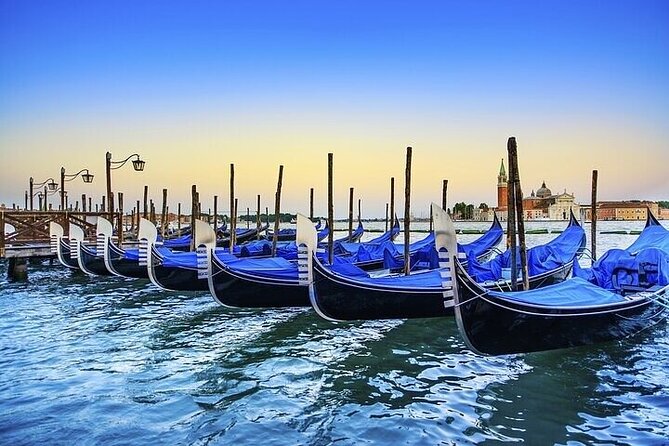
This day trip is designed around one practical idea: let the train handle the long-distance part. Starting from Milano Centrale (near Piazza Duca d’Aosta), you roll into Venice with less fuss than if you drive or deal with multiple transfers. The schedule is tight enough to feel efficient, but long enough to still treat Venice like a day in its own right.
The trip includes transport by train in 2nd class and the total duration is listed at about 11 hours, with travel time counted. Venice is far more enjoyable when you arrive with daylight and energy, and that early departure time matters.
Also, this is a private format. That means you’re not sharing your guide with strangers while you try to ask questions, change priorities, or slow down for photos. Guides can tailor the flow—this shows up repeatedly in how people talk about the experience, especially the focus on pacing and safety.
You can also read our reviews of more private tours in Milan
First Venice Views: Canal Grande and a Quick St. Lucy Stop
Your first big moment is the Canal Grande—Venice’s main waterway, roughly 4 kilometers long, splitting the city into two halves. The Grand Canal is Venice in motion: Venetian-Gothic architecture, boats sliding past, and those long views that make the city feel like a stage set. You’ll spend about three hours here in the early part of the day, which is a good thing. The first hours are when you still have the ability to take in details instead of just rushing to the next stop.
There’s also mention of a chance to see the Sanctuary of St. Lucy. Even when you just catch a glimpse, it adds variety beyond the usual bridge-and-basilica loop. The key benefit is context: your guide can connect what you’re seeing now to why Venice grew and how its religious sites functioned in the city.
A real consideration: canal areas can be photogenic but not always calm. Water smell and the reality of boats moving close by are part of Venice’s personality, not a tour problem. If you’re sensitive to that, plan for it and keep a quick way to wipe lenses and freshen up.
The Leaning Campanile Moment: San Giorgio dei Greci
Next comes Chiesa di San Giorgio dei Greci, tied to Venice’s Greek community—especially sailors and merchants. You get a quick look at the campanile known as the leaning clocktower, designed by Simone Sorella and completed in 1592.
This stop is short (around 30 minutes), but it works because it changes the texture of your walk. After the Grand Canal’s wide spectacle, the Greek quarter angle feels more human-scale. It’s also a reminder that Venice wasn’t only Italians. It was a working port with communities that brought different traditions and built their own religious landmarks.
Strada Nova: The Wide Street That Cuts Through the Old City
Then you move to Strada Nova, described as the widest street in Venice. This matters because Venice is famous for narrow lanes that force you to stop, dodge, and recalibrate. Strada Nova is different: it was created in the 19th century to speed pedestrian access between Rialto and the railway station.
So even if you don’t stop long, this is a smart orientation point. You get a sense of how modern Venice adjusted its medieval layout once trains and tourism changed the flow of people. It’s also a good place to catch your bearings before you hit the Rialto hotspot.
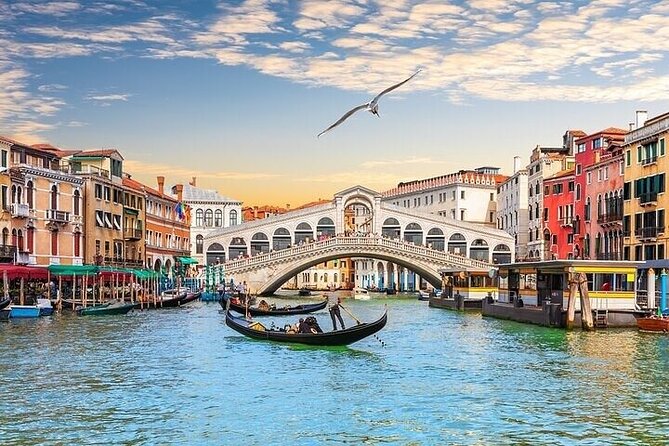
Rialto Bridge: Architecture, Commerce, and One of the Oldest Crossings
At Ponte di Rialto, you’ll stand at one of the oldest bridges spanning the Grand Canal. Rialto isn’t just a bridge—it’s a symbol of Venetian economic power for years. The bridge’s fame comes from its architecture, yes, but also from what it represented when Venice was trading at full speed.
Your stop here is short (about 30 minutes), so use it well. Don’t try to do everything at once. Instead, take a few minutes to watch boat traffic, then ask your guide what you should notice: materials, angles, and the way the bridge shaped movement across the canal.
A practical note: Rialto can be crowded. If you’re aiming for photos without tons of people, your best strategy is patience and angle—not trying to fight the crowd in the middle of the bridge.
You can also read our reviews of more tours and experiences in Milan

St. Mark’s Square and Basilica: The Big Stage You Can Still Enjoy
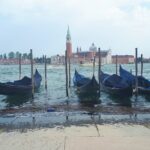
Then it’s Piazza San Marco—Venice’s principal public square and one of Europe’s most famous gathering spaces. Near it is St Mark’s Basilica with interior domes, vaults, and upper walls covered in gold-ground mosaics depicting saints, prophets, and biblical scenes.
Your tour time at this stop is listed as about 30 minutes, so this is a “see the core, then keep going” moment. If you want more time inside the basilica, treat this visit like the launch point, not the finish. A guide can also help you prioritize what to look at so you don’t waste precious minutes staring at ceiling mosaics without knowing what you’re seeing.
This stop is the main reason Venice feels like a movie. But the value of a guided day trip is that you can leave the square without losing momentum, which is exactly what happens next.
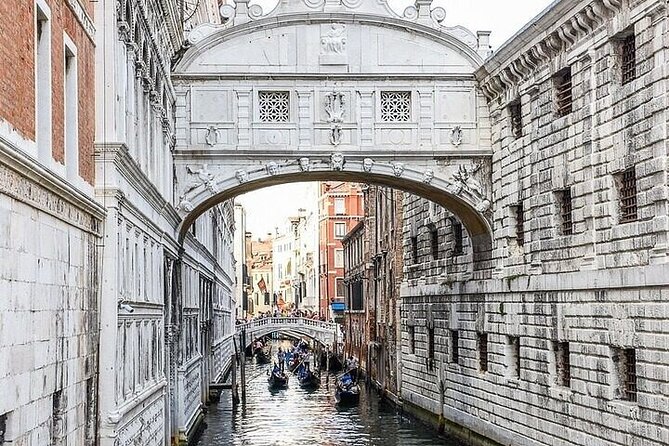
Bridge of Sighs: Ponte dei Sospiri and the Doge’s Palace Connection
Next is Ponte dei Sospiri, the Bridge of Sighs. Built in the 1600s, it connects the Doge’s Palace with the historic prison across the canal. Tradition links the name to prisoners crossing it, sighing at the last look at the outside world.
This stop is short (around 30 minutes), but it’s one of those places where history feels dramatic even if you never visited a palace museum. The emotional weight of the story helps you pay attention. It’s also a good break in pace: you’re not just collecting sights, you’re connecting architecture to Venetian law, power, and control.
San Zaccaria: A Former Monastic Church You Can Actually Breathe in
After the major icons, you head to Chiesa di San Zaccaria, a 15th-century former monastic church in central Venice. The present church was built between 1458 and 1515, and the facade mixes late-Gothic and Renaissance styles.
What I like about this stop is the contrast. Venice can feel like constant spectacle, but San Zaccaria offers a quieter, more architectural focus. You’re there for about 30 minutes, which is enough to appreciate the facade style and still move on.
This is also a reminder that Venice’s best scenes aren’t always the loudest ones. When you get a church like this in the middle of the day, the walk stops feeling like a checklist.
Ponte dell’Accademia: Grand Canal Views with Art-Academy Naming
Then you cross or pause around Ponte dell’Accademia, one of only four bridges spanning the Grand Canal. It’s named for the Accademia di Belle Arti di Venezia, tying the bridge to the city’s art world rather than just commerce.
Your time here is about 30 minutes. Even if you don’t do an indoor visit, bridges give you what Venice is built for: layered sightlines over water. This one is a great “reset” after Rialto and St Mark’s, especially because it lets you see the Grand Canal from a different angle without repeating the exact same scenery.
Squero di San Trovaso: Where Gondolas Get Repaired
Now you shift to something Venice-specific: Squero di San Trovaso. A squero is the classic Venetian shipyard where small boats—like gondolas—are repaired. This is one of the oldest and most famous squeros, and the tour includes time to take a peek at how gondolas are made or repaired.
This stop is huge for value if you like real city life. The Grand Canal is spectacular, but it can feel like a stage. A shipyard feels like the working engine under the stage. Even with only about 30 minutes, the craft angle changes your whole impression of Venice: it’s not only postcards, it’s labor and tradition.
Banksy at Campo San Pantalon: Street Art in a Real Square
Next is Campo San Pantalon, with time to admire a painting by Banksy commonly referred to as the shipwrecked/migrant child. This is a modern cultural layer inside an ancient city, and that mix is exactly why Venice remains interesting to repeat visitors.
You’re here for about 30 minutes. The practical tip is to treat it like street art: look, then look again from a slightly different angle. Squares shift the view as people move, and a guide can help you spot where the best sightlines typically are.
Campo Santa Margherita: Student Hangout Venice
Then you reach Campo Santa Margherita, a city square in the Dorsoduro area near university buildings. It serves as a gathering place for students at the end of the day.
This stop is short (about 30 minutes), but it has a real payoff if you’re trying to see Venice as a living place. After churches, bridges, and famous squares, you get something closer to everyday rhythm. If you’re tired from the walking, this is also the kind of place where you can pause and just watch the city settle.
The Exit Plan: Piazzale Roma and the Train Back to Milan
Your last stop is Piazzale Roma, the square at the entrance of Venice at the end of Ponte della Libertà. It’s also the only place in Venice’s insular urban core where ground motor vehicles can reach, with nearby Tronchetto island also involved.
This matters because Venice is a trap for people who lose time—once you’re near the exit, you’re back on schedule. Ending here helps you transition cleanly to the train back to Milan.
After the tour, you take the train back, listed at about 2.5 hours. The day ends back at the meeting point, which keeps the planning simple.
Price and Value: What You’re Paying For at $391.34 per Person
At $391.34 per person, you’re paying for several things at once: a private guided tour, train transport in 2nd class, and the Venice visitor fee. That price only makes sense if you’ll use the guide beyond simple directions—asking questions, customizing pacing, and getting help navigating crowds and back streets.
The value improves if:
- You want flexibility to slow down for photos and shop stops.
- You prefer a guided flow through key sights rather than arranging your own day with transport and ticket headaches.
- You care about local businesses and don’t want to guess what’s legit versus what’s tourist-only.
The trade-off is that Venice is Venice. Even with a private guide, crowded zones like Rialto and St Mark’s can feel intense. And if you’re expecting a calm, empty Venice day, you might feel disappointed when the city does what it always does: attracts people.
One more note from the experience style: most guides are praised for history, communication, and steering you through less obvious routes to avoid the worst congestion. Still, there is at least one report of language/communication issues, so if English fluency is crucial for you, consider reaching out ahead of time to confirm guide language.
Who This Tour Fits Best (and Who Should Look Elsewhere)
I think this is a great match for first-timers who want a full day that actually covers the main shapes of Venice: Grand Canal, bridges, St Mark’s, plus craft and neighborhood stops. It’s also a good fit if you dislike planning—train scheduling, walking routes, and deciding what to skip are handled for you.
It may not feel worth it if:
- You prefer totally independent exploration with no guidance.
- You’re very price-sensitive and would rather spend a fraction on transport and do your own walking.
- You’re expecting a low-crowd Venice, because the biggest landmarks will draw crowds no matter what.
If you like shopping, the best part is how a guide can steer you toward reputable places and help you shop at leisure rather than rushing. Some guides even handle carry-outs for purchases, which is a small comfort when bags get heavy.
Should You Book This Milan-to-Venice Private Day Trip by Train?
Yes, if you want an organized, private Venice day with a guide who can explain what you’re seeing and keep the route moving in a way that makes sense. For many people, the biggest win is not just the sights—it’s the time you save and the calm you feel when someone else figures out the flow.
I’d book it sooner rather than later because this kind of fixed train-and-walk format fills up. And if you’re sensitive to crowding or canal air, go in with realistic expectations: Venice won’t magically become quiet, but you can still enjoy it if you treat the route like a guided highlight reel plus a couple of calmer local stops.
FAQ
FAQ
What time does the tour start?
It starts at 7:30 am.
Where do we meet in Milan?
You meet at Milano Centrale, Piazza Duca d’Aosta, 1, 20124 Milano MI, Italy.
How long is the full experience?
The duration is about 11 hours including travel time.
How do the train tickets work?
Train tickets are purchased 48 hours in advance, and you receive train ticket details by email and a WhatsApp message the day before.
Is the tour private?
Yes. It’s a private tour/activity, so only your group participates.
What’s included in the price?
Included are a private guided tour, 2nd class train transport, and the Venice visitor fee.
Is food included?
No. Food and drink are not included.
Does it run in bad weather?
The tour operates in all weather conditions.
Are admission tickets included for the stops?
The itinerary shows admission ticket free at the listed stops, and the Venice visitor fee is included.