REVIEW · MILAN
Sforza Castle and Michelangelo’s Pietà Rondanini guided experience
Book on Viator →Operated by Hidden Experiences · Bookable on Viator
Milan’s castle walls hold a Michelangelo shock. This small-group visit pairs Castello Sforzesco with Michelangelo’s Pietà Rondanini, explained in clear, practical ways by an English guide. It’s the kind of museum stop where context changes how you see the faces.
I especially like that you get entry covered and a licensed guide doing the “put it in context” work, so you are not hunting for meaning on your own. Guides such as Renata, Simon, Stefania, Sylvia, and Fabio are repeatedly praised for setting a steady pace and connecting what you’re seeing to Milan and to artists like Michelangelo.
One thing to keep in mind: hearing everything can depend on the guide and the room noise, and there are limited restroom options inside the castle complex. If you’re sensitive to audio, make sure you take the headphones if your group size qualifies for them.
In This Review
- Key highlights
- Why Sforza Castle plus Pietà Rondanini works in 90 minutes
- Filarete Tower meeting point: fast start, fewer headaches
- Castello Sforzesco grounds: from Francesco Sforza to the museum doors
- Luca Beltrami and the restored rooms you’re walking through
- Michelangelo’s Pietà Rondanini: how the guide changes the viewing
- The art scene connections: Michelangelo, Leonardo, and Milan’s “why here”
- Pacing and group size: why 1 hour 30 minutes feels the right amount
- Price and value: what $60.37 actually covers
- Who should book this tour (and who might want a different style)
- Should you book the Sforza Castle and Pietà Rondanini guided experience?
- FAQ
- How long is the guided tour?
- What is the price per person?
- Is the tour in English?
- Where do we meet?
- Does the ticket to Sforza Castle cost extra?
- Are headphones provided?
- How large is the group?
- Is there an option for a private tour?
- What’s included in the tour besides the guide?
- What is the cancellation policy?
Key highlights
- Pietà Rondanini focus: you’re guided through what makes Michelangelo’s work feel unfinished and intensely human
- Licensed guide + entry included: you pay for the ticket and interpretation in one package
- Smart starting point: Filarete Tower at Piazza Castello keeps you from wandering at the start
- Small group up to 20: calmer than a big bus crowd, with a chance for more personal pace
- Restored fortress setting: the story includes the Sforza era and restoration work by Luca Beltrami
- Art connections: several guides tie Michelangelo to the wider Milan art scene, including Leonardo
Why Sforza Castle plus Pietà Rondanini works in 90 minutes
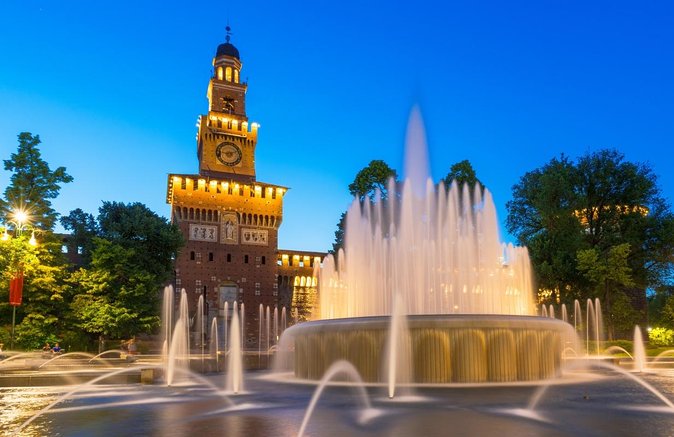
This tour is built for people who want a real art and history hit without spending an entire day inside. You start at Castello Sforzesco, a huge fortified complex tied to the Sforza family, then you move into the part where Michelangelo’s Pietà Rondanini steals the show.
What makes it feel efficient is the guide’s job: explaining what you’re looking at before you get overwhelmed by rooms and labels. Instead of treating the Pietà like just another statue, you get the background that makes the expression and scale click.
You can also read our reviews of more guided tours in Milan

Filarete Tower meeting point: fast start, fewer headaches
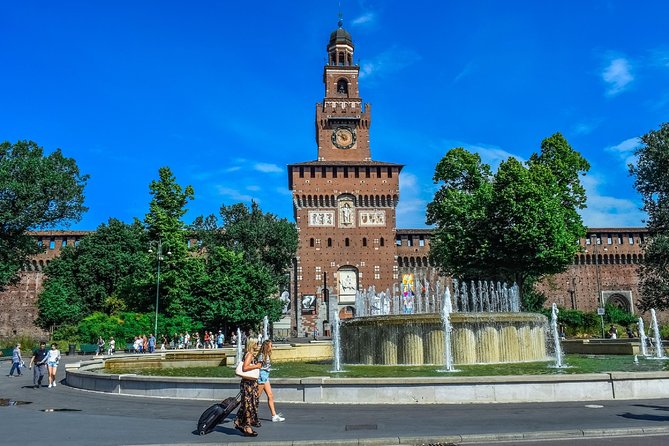
Your meeting point is clear: Filarete Tower, Piazza Castello (right in central Milan). Since the tour also ends back at the meeting spot, you don’t have to worry about where to regroup for your next plan—especially if you’re hopping to another neighborhood after.
The max group size is 20 travelers, which matters here because Sforza Castle can feel crowded around the popular areas. In the small-group setting, the guide can keep an eye on timing and flow, and the headphones (when provided from 11 participants) help you stay on track.
A small practical bonus: multiple guides are described as easy to find, including one who was holding a flag at the meeting point. If you arrive a few minutes early, you’ll usually spot your group quickly.
Castello Sforzesco grounds: from Francesco Sforza to the museum doors
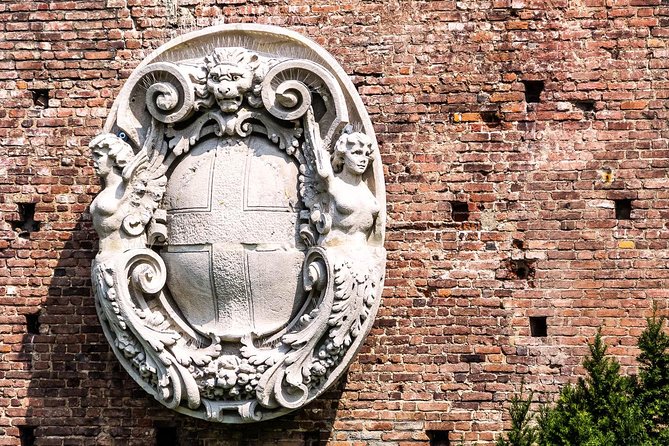
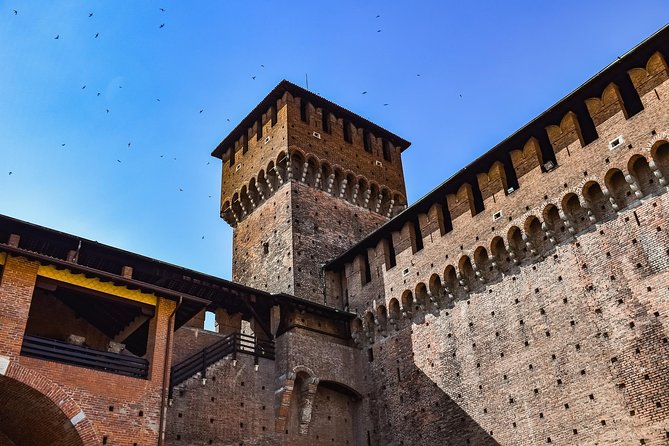
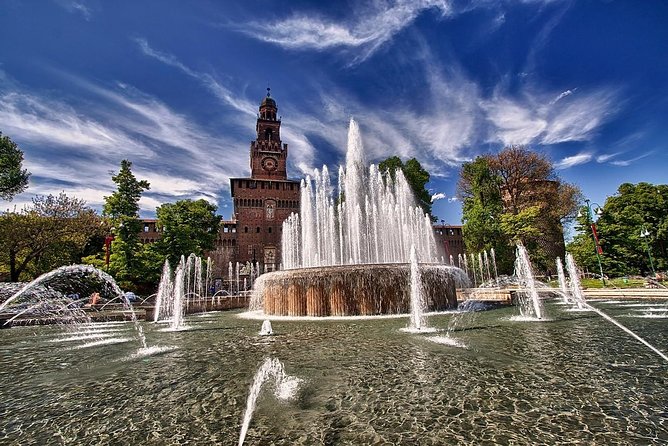
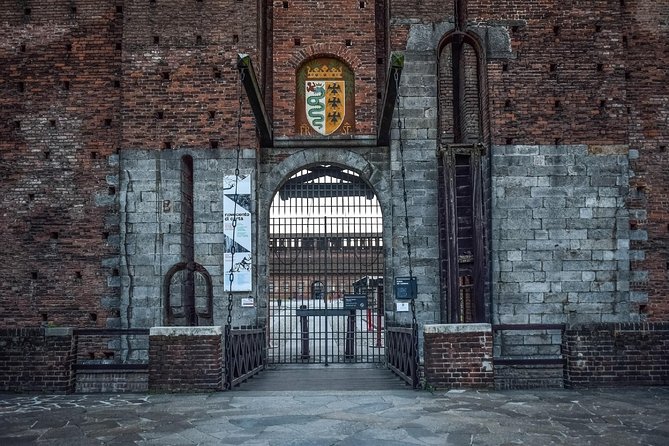
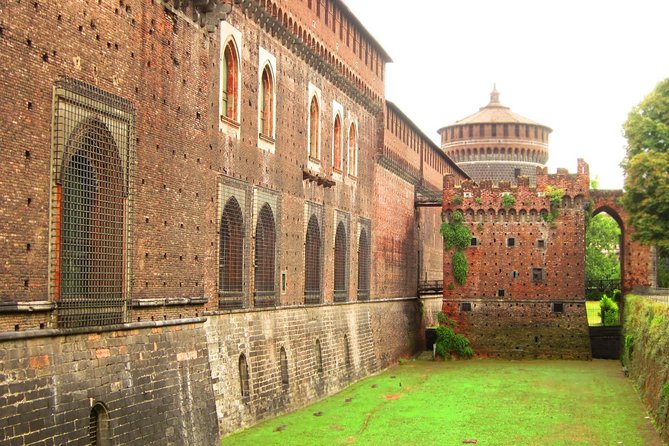
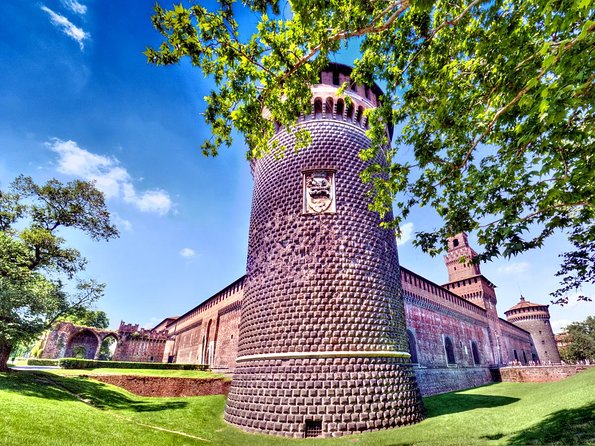
The first stop is the Castello Sforzesco complex, originally built in the fifteenth century by Francesco Sforza. The castle didn’t stay frozen in one era; over centuries it changed, got restored, and accumulated layers of meaning.
This is where your guide’s stories pay off, because the fortress walls look dramatic from outside but the “why it matters” becomes clearer with an explanation. You’ll get the Sforza angle first, then the tour connects it to later changes and restoration work that shaped what you see today.
One drawback to be aware of is that crowds can make the experience feel louder than it should. Even with a small group, you may run into busy circulation areas, and that can make a softly spoken guide harder to hear.
Luca Beltrami and the restored rooms you’re walking through
A key detail in this tour is the mention of restoration by Luca Beltrami. That name matters because restoration is not just cosmetic; it affects the look, layout, and how visitors move through the site.
Inside, the castle functions like a museum with major collections. Some guides do an excellent job emphasizing that this place is more than “old stones,” and that it’s basically an art gallery with a fortress frame.
That said, 90 minutes is not enough time to cover every room. If you care about a specific collection—one guide may or may not have time to highlight it—you might find the tour focuses mainly on the major storyline and the top artworks.
Michelangelo’s Pietà Rondanini: how the guide changes the viewing
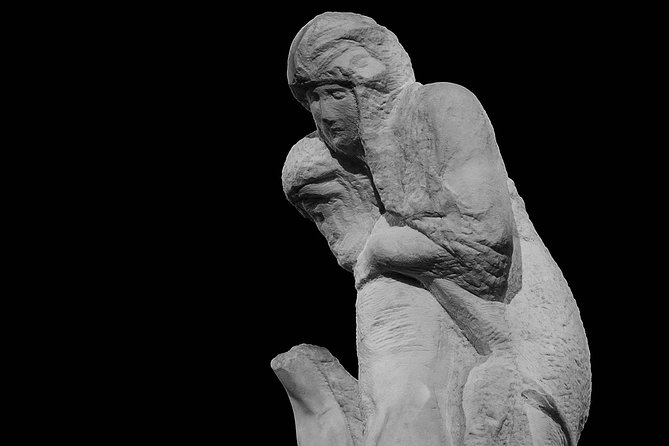
This is the heart of the experience: Michelangelo’s Pietà Rondanini. In the cast of masterpieces inside Sforza Castle, this one stands out because it feels emotionally close even if you’re seeing it for the first time.
The guides who earn the highest marks tend to explain what you’re seeing in human terms—especially the unfinished quality and the way the face of Mary conveys sorrow. Instead of only talking about the artist’s fame, they point out why the work feels raw, not polished.
One detail that comes up again and again is discussion of Michelangelo’s unfinished masterpiece and connections like the death mask. That extra layer can turn the Pietà from a famous object into something more personal and eerie, in the best way.
If you’re an art lover who likes looking longer, this is also one of the few museum moments where your attention tends to slow down naturally. You might find yourself standing back and then stepping closer again, because the expression does not read the same way once you know the story.
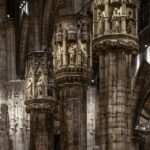




The art scene connections: Michelangelo, Leonardo, and Milan’s “why here”
Even though the headline is Michelangelo, some guides broaden the lens by tying the story to Milan’s broader artistic world. In a few accounts, guides also bring up Leonardo and connect how Milan collected and displayed major works.
That approach is valuable because it makes the castle feel like part of a living artistic ecosystem, not just a standalone stop. You leave with a sense that Milan wasn’t randomly lucky—people built collections here, and the city has been shaping taste for a long time.
If you prefer a strict focus on one artist, it’s still workable. You just need to know that some guides add extra context where they can, within the time limit.
Pacing and group size: why 1 hour 30 minutes feels the right amount
The tour runs about 1 hour 30 minutes, with entry tickets included. That time window is long enough to get oriented and hear real explanations, but short enough that you’re not trapped inside while your energy fades.
Many people praise the pace as well paced and not overwhelming. A well-run group tour can also be more relaxing than doing it solo, because the guide keeps you moving at a museum-friendly speed.
The flip side: if you land in a noisier area or your guide’s voice is harder to hear, the experience can feel less satisfying. When that happens, the fix is simple: use the headphones if they’re offered, and stand where you can clearly see the guide’s face and gestures.
Price and value: what $60.37 actually covers
At $60.37 per person, the value is mostly about what’s included. You’re getting entry tickets, a licensed tour guide, and (depending on group size) headphones. You’re also paying for time saved—no searching for the right rooms, no guessing which details matter most.
If you were to do it on your own, you’d likely still pay the museum entry. Then you’d have to spend time building context from signs, guides, or apps, which can be slow once you hit busy galleries. This tour buys you interpretation and route guidance in one go.
Also, there’s an option to upgrade to a private tour, which can be worth it if you want quieter pacing, more questions, or a more tailored focus on the Pietà Rondanini and the art collections around it.
Who should book this tour (and who might want a different style)
I think this fits best for people who are short on time but want more than a quick look. It’s a great match if you like “show me how to see it” guidance, especially for Michelangelo’s Pietà Rondanini.
It’s also a good pick for first-timers in Milan, because Castello Sforzesco is a central landmark and the meeting point is easy to reach near public transportation.
If you’re bringing kids, it’s not marketed as a kid-focused tour, and some experiences are described as less engaging for younger visitors. I’d treat it as an adult-museum vibe with a few natural photo moments, not a family game plan.
Should you book the Sforza Castle and Pietà Rondanini guided experience?
Book it if you want the Pietà Rondanini experience to come with context, and you like guided pacing inside a major site like Castello Sforzesco. It’s also a solid value when you factor in that entry tickets are included and the group size stays small.
Skip it or consider a private option if audio clarity is a big deal for you, or if you really need restroom planning baked into your schedule. The complex has limited restroom availability, and crowds can make it harder to hear in certain areas.
If you’re the kind of traveler who wants to leave saying, “Now I understand what I was looking at,” this is a strong use of 90 minutes in Milan.
FAQ
How long is the guided tour?
It’s about 1 hour 30 minutes.
What is the price per person?
The price is $60.37 per person.
Is the tour in English?
Yes, it’s offered in English.
Where do we meet?
You meet at Filarete Tower, Piazza Castello, 20121 Milano MI, Italy.
Does the ticket to Sforza Castle cost extra?
No. Entry tickets to Sforza Castle are included in the tour price.
Are headphones provided?
Headphones are provided for groups from 11 participants.
How large is the group?
The tour has a maximum of 20 travelers.
Is there an option for a private tour?
Yes, you can upgrade to a private tour for a more personalized experience.
What’s included in the tour besides the guide?
The tour includes entry tickets, a licensed tour guide, and headphones (when applicable) along with a small group tour.
What is the cancellation policy?
You can cancel for a full refund up to 24 hours in advance. If you cancel less than 24 hours before the start time, you won’t get a refund. If the minimum number of travelers isn’t met, you’ll be offered a different date/experience or a full refund.