REVIEW · MILAN
Venice and Verona Full Day Tour by Train from Milan
Book on Viator →Operated by Amigo Tours Spain · Bookable on Viator
Cramming two classics into one day sounds impossible, but this Milan-to-Verona-to-Venice train tour makes it feel manageable. You get a tour leader who keeps the day moving, plus short guided stops in Verona and Venice, then real free time to wander at your own speed. It’s built for people who want the highlights without spending hours planning routes.
I especially like that the plan reduces logistics stress. When you’re juggling two cities, the hard part is not the sightseeing—it’s figuring out trains, meeting points, and where to be next. A good guide helps you get where you need to go, and the group size stays small enough (up to 30) that it still feels like a tour, not a herd.
One thing to consider: this is a long day with a lot of walking. Cobblestones, stairs, and heat in peak season can make the pace feel fast, so I’d only book if you’re comfortable moving for hours.
In This Review
- Key things to know before you go
- Milan To Verona: A 7:00 a.m. start that actually works
- Verona Quick-Strike: Juliet, Castelvecchio, and the Roman-rooted square
- Castelvecchio: red-brick fortress energy
- Juliet’s house: the famous facade, plus a story lens
- The oldest square: a Roman forum vibe
- The main drawback in Verona
- From Verona to Venice: Let the group handle the train
- Venice by St. Mark’s: Doge’s Palace power and Napoleon’s salon line
- Doge’s Palace: government, court, and prison
- The Basilica-front stop: the story of the salon
- A realistic warning
- Using your 4 hours in Venice without burning it
- Pace, walking, and who this tour suits best
- Price and value: what you’re paying for, and what you’re not
- Group size, language, and the “lost in Venice” reality check
- The quick checklist I’d use before booking
- Should you book the Venice and Verona full-day train tour?
Key things to know before you go
- A real train day (not just a single-city day trip): you’ll ride rails between Milan, Verona, and Venice.
- Short, focused guidance: timed sightseeing blocks let you see the big landmarks without “all-day museum mode.”
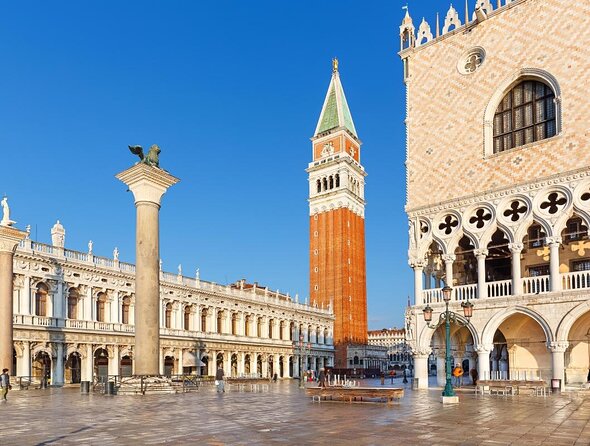
- Venice sights start near St. Mark’s: the tour centers around the area that anchors the city’s most famous views.
- You get free time on purpose: you’ll have room to browse shops, grab coffee, and choose your own photos.
- Guides matter here: many guests highlight leaders like Lourdes, Arelette, Gaia, Chiara, Laura Baratti, and Lara for keeping the day on track.
Milan To Verona: A 7:00 a.m. start that actually works
This tour begins early. The meeting point is Terrazza Gallia, Piazza Duca d’Aosta 9, 20124 Milan, and the start time is 7:00 am. The location is conveniently near public transport, which matters because getting there on time is half the success.
Why start so early? Because Verona and Venice are not “next door.” You’re spending real time on trains, and the schedule needs that head start to fit in two cities. Think of it like this: you’re buying time and simplicity. Instead of researching trains and building connections yourself, you show up and let the tour handle the rhythm.
Also, you’re not just boarding a train and disappearing. You’ll be with a tour leader in English and Spanish who helps manage the transitions between stops. In past experiences, guests praised guides who were strong at getting people onto the correct trains smoothly, including when train travel is new for you.
Practical note: Italy’s stations can be loud and confusing, especially when you’re tired. Keep your phone charged, stay alert near departure times, and watch for the leader’s “we’re moving” cues.
You can also read our reviews of more tours and experiences in Milan
Verona Quick-Strike: Juliet, Castelvecchio, and the Roman-rooted square
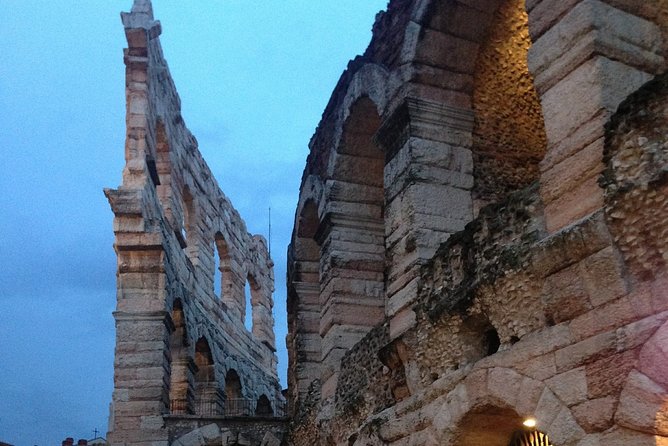
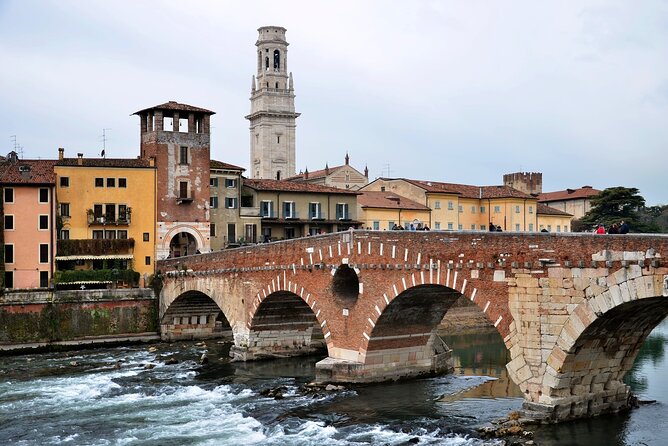
Verona is first, and it’s a smart order. You arrive, get a guided overview, and then you’re free to roam while you still have energy. The Verona portion includes about 45 minutes of guided visiting, followed by time to discover on your own during the Verona block (listed as 1 hour 30 minutes total).
Here’s what the guided portion focuses on, and why it’s worth doing even if you could technically explore alone:
Castelvecchio: red-brick fortress energy
You’ll get to Castelvecchio, described as the key military construction of the Scaliger dynasty. The highlight here is the visual punch: red bricks and a fortress layout that’s built to defend. Even if you don’t go deep into the museum, the castle itself gives you immediate context for how Verona protected power in the Middle Ages.
If you like places that feel more like real defense architecture than “pretty buildings,” this stop hits the right note. It’s also a good warm-up before Venice, because it’s still distinctly Verona—less iconic tourist-copy and more “this city has muscle.”
Juliet’s house: the famous facade, plus a story lens
Then comes the stop connected to Juliet’s house and the Shakespeare love story. You’ll be able to admire the facade and learn background. The honest value here isn’t that it’s a quiet literary shrine—it’s that the guide helps you understand what you’re looking at and why it became a magnet for visitors.
Go in with the right expectation: this is an iconic spot people photograph. The benefit of the tour is not magic—it’s that you get the history thread quickly so the place doesn’t feel like just another photo stop.
The oldest square: a Roman forum vibe
The plan also includes the oldest square in Verona, located where the ancient Roman forum was. It’s presented as the city’s most recommended square, and the practical reason is simple: squares are natural “meeting points.” They also tend to sit close to what you’ll want to see next, so you’re not wandering blindly.
If you use your free time well, this is where you can transition from structured sightseeing into self-guided wandering: coffee, strolling, and picking routes based on what catches your eye.





The main drawback in Verona
The guided time is brief. If you’re hoping for long, slow wandering and deep commentary, you may feel the day is a sprint. Some guests have noted that the overall schedule can feel rushed, especially once Venice gets crowded.
Still, Verona is the easier city for a quick visit. The bigger challenge is what comes next.
From Verona to Venice: Let the group handle the train
Between Verona and Venice, you’ll transfer by train as part of the tour. This is one of the practical wins of booking a group day trip: you’re not just traveling—you’re traveling in a planned sequence, with a leader keeping everyone lined up for the right connection.
This is where many guests seem to appreciate experienced tour leaders. You’ll see praise for guides who could calmly handle train logistics, help people find the correct platforms, and keep the group together even when it’s hectic.
Your job is easier than theirs, but you still need to be ready. Wear shoes that work well on uneven ground. Venice days can be longer than you expect, and if you’re dragging your feet early, you’ll feel it later.
Venice by St. Mark’s: Doge’s Palace power and Napoleon’s salon line
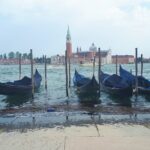
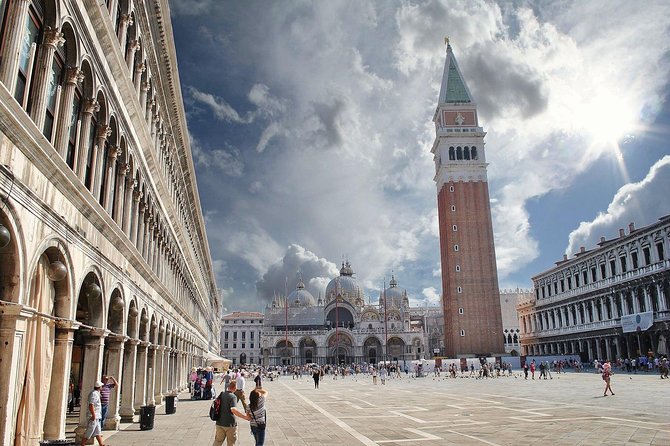
Venice is the big draw, and the tour spends time around the Piazza San Marco area. That’s important because it’s not just about “where the photos are.” St. Mark’s is where Venice’s different eras bump into each other—religious authority, political power, and the city’s obsession with spectacle.
Venice’s guided portion starts near the Basilica area and includes stories about the sites you’re seeing, including notes about recurring floods. Even if you don’t plan to go inside every landmark, this context changes how you interpret what you see. Venice isn’t just pretty streets—it’s a city constantly negotiating water.
Doge’s Palace: government, court, and prison
The tour includes a stop by Piazza San Marco tied to the symbol of Venetian Gothic power: the Doge’s Palace (the residence of the Dux, seat of government and court, and also a prison of the Venetian Republic). This is a huge building with an identity that goes beyond architecture.
Why include it on a day like this? Because it gives Venice structure. Without some grounding, you can lose the thread and just feel like you’re passing storefronts and canals. The palace stop helps you “read” the city.
The Basilica-front stop: the story of the salon
Next is another St. Mark’s-area stop that references the claim by Napoleon Bonaparte calling the space the most beautiful salon in Europe. Again, you’re not getting lost in trivia—you’re getting a lens for what the space was meant to communicate: status, ceremony, and the theater of power.
A realistic warning
This is a high-walk zone. Expect steps and crowds, especially in peak months. Some guests also mention that certain iconic sites can be closed at times or not possible to enter on schedule, so don’t anchor your day on one single inside-the-door moment.
The tradeoff for seeing it all in one day is that Venice becomes less about slow entry and more about smart orientation plus a chance to roam.
Using your 4 hours in Venice without burning it
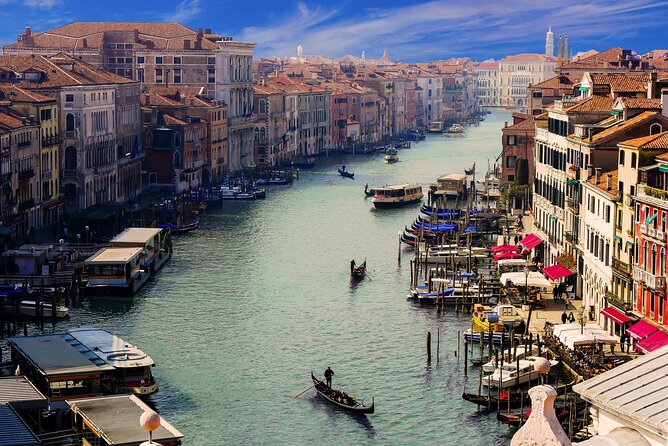
Your Venice block is listed as 4 hours. That usually means a blend of guided talking and then time to explore on your own. This part is where your choices really shape the experience.
I’d treat those hours like a menu:
- Pick one “must-see” lane near St. Mark’s (for views, photos, and atmosphere).
- Leave time for food and wandering because Venice rewards slow turns more than strict checklists.
- Don’t overbook yourself on purchases. This is tourist Venice, and shop browsing can swallow time fast.
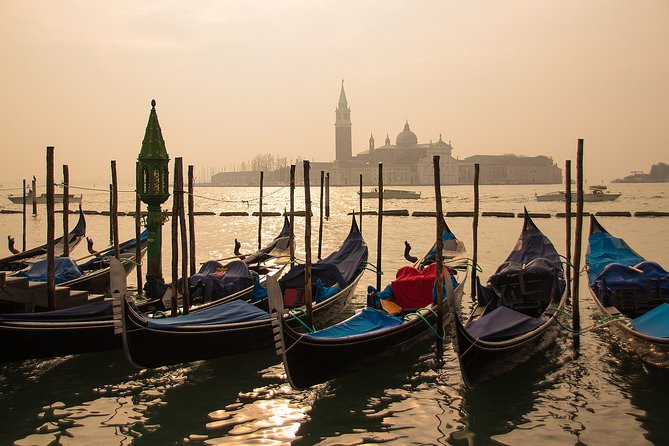
If you want a souvenir memory that feels more local, Venice’s vibe is your best buy. Grab a snack, sit for a minute, and let the canal scenery do its job. Gondola rides can be tempting too—just know they can be pricey, and you’ll be deciding that cost on the spot.
Also, consider simple logistics you can control:
- Go into the day with a plan for where you’ll meet the group if you get separated.
- Keep an eye on the leader so you’re not chasing them through crowded walkways.
Some guests had moments where the pace felt quick and the group needed to find each other again. That’s not unusual when the city is packed. Your best defense is staying close when the group starts moving.
Pace, walking, and who this tour suits best
This tour is not a sit-and-relax day. It’s built on transitions: train, walk, short guided segments, then roam. That’s why your physical comfort matters.
The tour notes moderate physical fitness and warns that it may not be suitable for reduced mobility due to extensive walking. In plain terms: if you have trouble with uneven cobblestones or stairs, Venice in particular will be hard work.
Even among younger visitors, Venice can feel like a constant series of little climbs and tricky surfaces. If you’re someone who hates rushing, this day might test your patience—some guests describe feeling rushed through streets and limited time for photos.
So who is it best for?
- You’re short on time in Italy and want big-ticket cities without building train plans.
- You like learning a bit of context quickly so you can enjoy wandering without a guide shouting facts the whole time.
- You’re comfortable with walking and can keep a steady pace.
Who should skip or rethink it?
- You want a slow, deep Venice day with museums, long meals, and minimal hustle.
- You need frequent restroom/lunch breaks that aren’t built into the schedule.
- You’re very sensitive to heat and long station waits.
Price and value: what you’re paying for, and what you’re not
At $192.29 per person, this is not a budget impulse buy. But it’s also not purely a sightseeing markup.
Here’s where the value can show up:
- Train tickets are included, which is a big part of the real cost and effort of doing two cities from Milan.
- You get a tour leader in English and Spanish to manage timing and transitions.
- The day includes guided context around major landmarks, which can save you from spending your short Venice hours just trying to figure out what matters.
What you’re not getting:
- Lunch is not included. In a long day, that’s a noticeable detail. Plan for at least one meal out, and don’t assume the tour will pause for a full sit-down lunch.
- Hotel pick-up is not included, so you’re responsible for getting to the meeting point.
- It’s also not designed as a fully guided, door-to-door deep tour of every museum room.
If you’re comparing to going on your own, the math usually favors the tour when you value:
1) not researching train times and platforms,
2) not worrying about where to meet next, and
3) having a leader keep the schedule moving.
If you’re comfortable traveling independently and you want control, you might prefer doing Verona and Venice separately. But for a time-crunched visit, this can be a good deal.
Group size, language, and the “lost in Venice” reality check
The group max is 30 travelers. That size is generally workable, which helps explain why many guests remember the day as friendly rather than chaotic.
Language support is listed as English and Spanish simultaneously. Some guides have been praised for switching languages smoothly and helping people feel comfortable fast, which matters when you’re trying to keep up with timing.
My best advice for a day like this:
- Stay close during guided segments.
- When you break off for free time, take note of landmarks you can quickly use to find your way back.
- If you feel separated, don’t panic and wander. Go toward the nearest obvious reference point and reconnect.
This is one of the reasons having a strong tour leader matters so much. When leaders are organized, you don’t just get facts—you get less stress.
The quick checklist I’d use before booking
If you decide this is for you, set yourself up for success:
- Wear shoes that handle cobblestones and stairs.
- Bring water and a light layer if you’re traveling in hotter months.
- Plan for one paid meal since lunch isn’t included.
- If you’re visiting Venice specifically for St. Mark’s-area landmarks, go in expecting crowds.
One more Venice-specific note: the tour mentions that Venice has new regulations requiring the names of all participants. Make sure you provide full names as requested when you book, so you don’t hit avoidable friction.
Should you book the Venice and Verona full-day train tour?
Book it if you want a high-efficiency day: two major cities, guided orientation where it counts, and enough free time to still enjoy Venice’s streets. It’s especially worth it if you hate the logistics headaches of trains and connections in a tight window.
Skip it (or choose a different format) if you’re looking for a slow, relaxed Venice day, need lots of breaks, or don’t do well with heavy walking. This tour is a great fit for people who can handle a moving schedule and want the highlights without spending their entire trip on transit planning.
If you’re the type who likes learning a bit, then wandering freely, and you’re comfortable with the pace, this is one of the better ways to fit Verona and Venice into a single day from Milan.