REVIEW · MILAN
From Milan: Discover Florence & Pisa on an Exciting Full-Day Tour
Book on Viator →Operated by Amigo Tours Spain · Bookable on Viator
Two cities in one day, and it moves. The appeal here is the live bilingual commentary on the train plus a guided, stop-by-stop Florence and Pisa route. You get a clear structure for first-timers, and it helps you enjoy iconic sights without guessing where to go.
I also like the mix of guided moments and free time for your own pace—especially around Florence’s main square area and in Pisa for that quick, classic Leaning Tower photo moment. The tradeoff is the reality of the day: it’s tight, very walk-heavy, and the pace is demanding, so it’s not ideal if you get worn out easily or hate crowds.
In This Review
- Key takeaways before you go
- One long day from Milan: how the schedule really works
- Meeting at Terrazza Gallia and the train-to-Florence rhythm
- Florence stop 1: Piazza di Santa Croce and the names you’ll recognize
- Piazza del Duomo free time: where you’ll feel Florence most
- Ponte Vecchio stroll: shops, history, and a practical photo walk
- A 15th-century Dominican church stop: frescoes you can actually spot
- Piazza della Signoria: Florence’s civic center in motion
- Heading toward Il Duomo: timing your walk for Brunelleschi’s dome
- Pisa from Florence: the one-hour window at Piazza dei Miracoli
- Santa Maria Assunta in the square: what you’ll notice fast
- Value for $203.30: what you’re paying for and what you’re not
- The big caution: crowds, walking, and transport hiccups
- Who this Milan–Florence–Pisa day trip suits best
- Should you book this full-day Florence and Pisa tour?
- FAQ
- What time does the tour start, and how long is it?
- Where do I meet the tour?
- Is the tour commentary available in English?
- Is lunch included?
- Is there an audio guide in Florence, and what phone do I need?
- Is the tour suitable for people with mobility problems?
- Is the tour refundable if I cancel?
Key takeaways before you go
- Bilingual storytelling from the start: live English/Spanish commentary on the train, then a bilingual leader in both cities
- Florence essentials in a logical route: Santa Croce → Duomo square area → Ponte Vecchio → civic center
- One-hour Pisa timing: enough time for the Piazza dei Miracoli views and a few photos, not enough for slow museum wandering
- Small group size: maximum 30 travelers, which helps the guiding stay more personal
- Bring patience for transport changes: there have been past disruptions (delays/route changes) outside the operator’s control
One long day from Milan: how the schedule really works
This is a full-day outing built for speed. You’re leaving Milan at 7:00 am, and the total time is listed at about 15 hours. That means you should think of it less as two leisurely sightseeing days and more like a fast, guided highlights circuit—ideal if you want the big names without spending nights in Florence or Pisa.
The itinerary is also flexible by season, and the operator notes that the order of stops may change. So even if you’re planning around specific photo spots, keep your expectations loose and focus on enjoying the sights when you’re at them.
Two practical tips I’d give you right away:
- Wear shoes you can walk in for hours. This is not a sit-and-stare tour.
- Bring a small snack and water expectations, since lunch isn’t included. (You’ll feel the difference when you’re waiting for the next guided moment.)
You can also read our reviews of more tours and experiences in Milan
Meeting at Terrazza Gallia and the train-to-Florence rhythm
Your day starts at Terrazza Gallia, Piazza Duca d’Aosta, 9, 20124 Milano MI. The meeting point is near public transportation, which is useful if you don’t want to fight traffic or parking.
One of the smarter parts of this tour is the way it uses the train time. You’ll get live commentary in English and Spanish while you’re traveling. It’s not just “here we are, look out the window.” The goal is to set you up for what you’ll see later in Florence, so you’re not arriving cold.
There’s also an important detail: if the group size doesn’t allow a quality service, the between-city movement may switch to bus. That’s worth remembering because it can change how relaxed you feel during transfers—trains tend to feel smoother; buses can feel tighter.
Florence stop 1: Piazza di Santa Croce and the names you’ll recognize
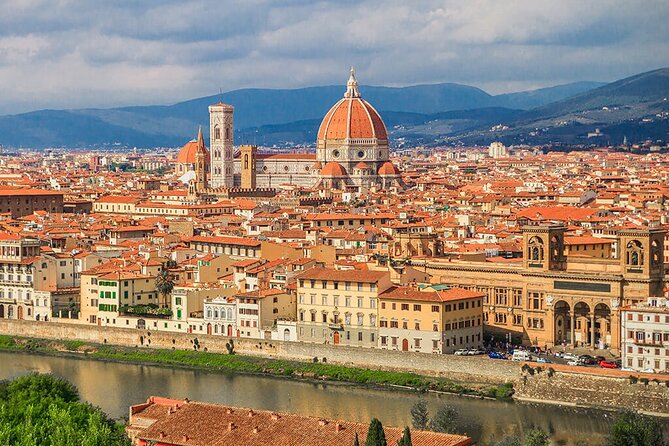
Your first Florence anchor is Piazza di Santa Croce, centered on the Basilica di Santa Croce. The church is known for its distinctive Gothic architecture. But what makes this stop work for most people is the roll call of famous burials.
You’ll get a focused moment in a place that’s tied to major Italian figures, including Michelangelo, Galileo Galilei, Niccolò Machiavelli, and Dante Alighieri. Admission here is listed as free, so the tour can spend more time on explanation rather than ticket logistics.
What to do with your time at this stop:
- Look up as well as at entrances. Gothic details reward quick scanning.
- Take a moment to understand that Santa Croce is both a beautiful church and a cultural memorial—its importance isn’t just architectural.
Piazza del Duomo free time: where you’ll feel Florence most
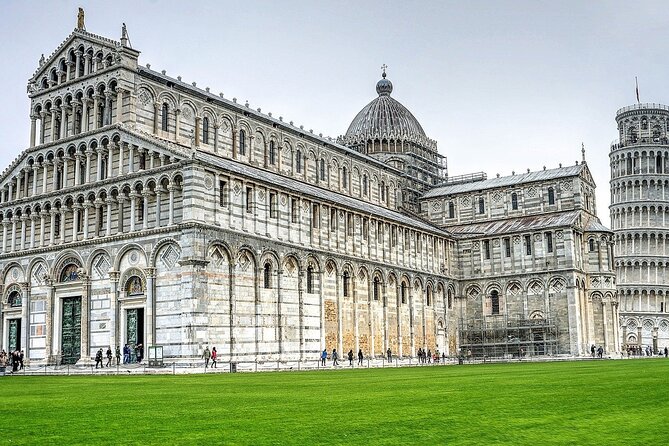
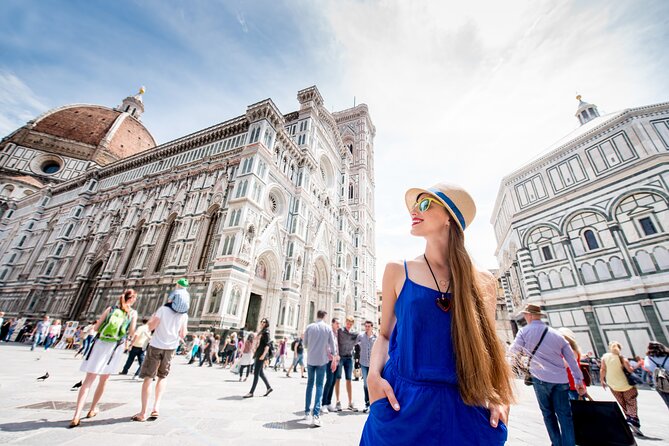
Next comes Piazza del Duomo, the main square in Florence’s core. You’ll get about one hour of time here, and it’s free to explore. This is one of the best parts of the day because you can match the pace to your energy.
This square is surrounded by landmarks you’ll hear about constantly:
- the Cathedral of Santa Maria del Fiore
- Giotto’s Campanile
Since the tour also later references the cathedral area (Il Duomo), your first encounter here is mainly about getting your bearings. Use this hour to walk the perimeter, grab orientation shots, and decide how you want to angle for the dome/bell tower views later.
If you want a simple strategy: stand with the square in front of you first, then circle once. That first loop helps your photos and your walking route.
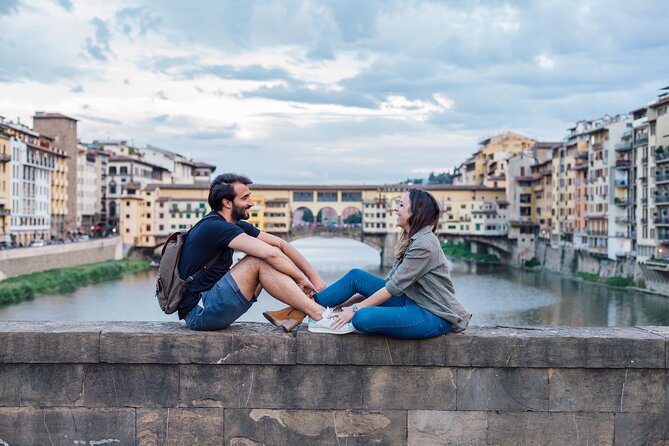
Ponte Vecchio stroll: shops, history, and a practical photo walk
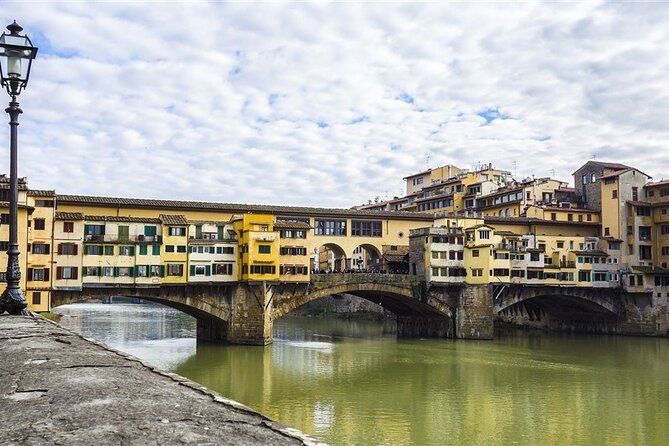
Then you’ll walk over the Vecchio Bridge. This isn’t just a scenic crossing. The point is the bridge’s unusual shop history—structures that line the sides, historically used by merchants (including jewelers and goldsmiths). The tents hanging over the river are described as being suspended and supported by columns.
Why this stop matters on a highlights day:
- It’s visual and easy to enjoy even if you’re tired.
- You get a living sense of how commerce shaped the city, not just a building snapshot.
Practical note: since it’s a walkway bridge, expect foot traffic. If you’re aiming for photos without tons of people, go a step early in your group timing rather than waiting for the perfect gap.

A 15th-century Dominican church stop: frescoes you can actually spot
The tour includes a stop at a 15th-century Dominican church with frescoes by Gothic and early Renaissance masters. It’s described as spectacular, and on a day like this the value is simple: you get concentrated art in a short visit.
Even if you can’t identify every fresco by name, you can still get something out of it:
- Look for the style shift—Gothic details versus early Renaissance traits.
- Pay attention to the way figures are arranged; it’s usually one of the fastest ways to notice artistic evolution.
This is also a good moment to slow your steps by a minute and reset mentally. If you’re walking all day, you need at least one visual break inside a church.
Piazza della Signoria: Florence’s civic center in motion
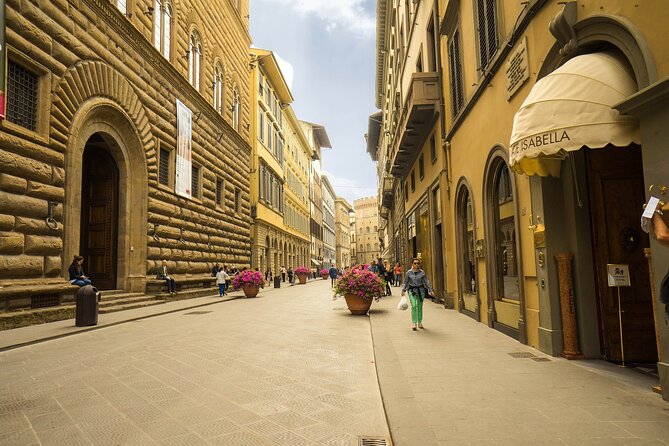
Next is Piazza della Signoria, identified as the seat of civil power with the Old Palace and as the heart of the city’s social life. This stop is all about context. If Santa Croce and the Duomo square are about sacred and architectural weight, Piazza della Signoria is about the city’s public identity—where power and culture meet in street-level life.
In practice, this is where you’ll feel Florence as a city you could actually wander for hours. If you only have one day, that’s important. Your goal here should be to absorb scale and atmosphere, not to see every sculpture.
A tip for your photo mindset: shoot wide first (square geometry), then zoom in for one or two key details. That gives you images that tell the story even if you’re rushed.
Heading toward Il Duomo: timing your walk for Brunelleschi’s dome
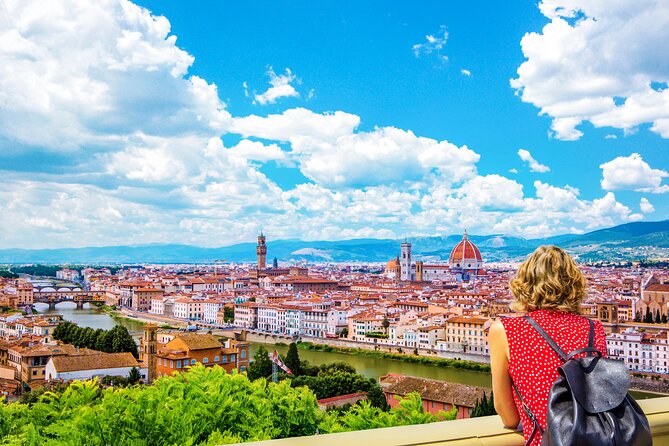
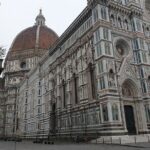
The tour then highlights Florence’s iconic cathedral commonly called Il Duomo. It emphasizes Filippo Brunelleschi’s dome, described as an architectural masterpiece of the Renaissance. You’ll also hear about the red-tiled dome and the marble façade, plus Giotto’s bell tower.
Because the itinerary is tight, I suggest treating this segment like a checklist:
- Find the dome shape in your line of sight first.
- Then look for the bell tower angle.
- Then decide if you want to go closer for façade details during your allotted time.
This kind of timing matters. Many people rush straight to the biggest view and miss that the second best view is sometimes a few steps to the side. With one-day pacing, that small adjustment can make your photos look intentional instead of accidental.
Pisa from Florence: the one-hour window at Piazza dei Miracoli
After Florence, you’ll travel to Pisa. The tour details note that transportation between cities will be by train, but if the group size doesn’t allow quality service it may switch to bus. Either way, the goal stays the same: get you into Pisa early enough to make the visit worthwhile.
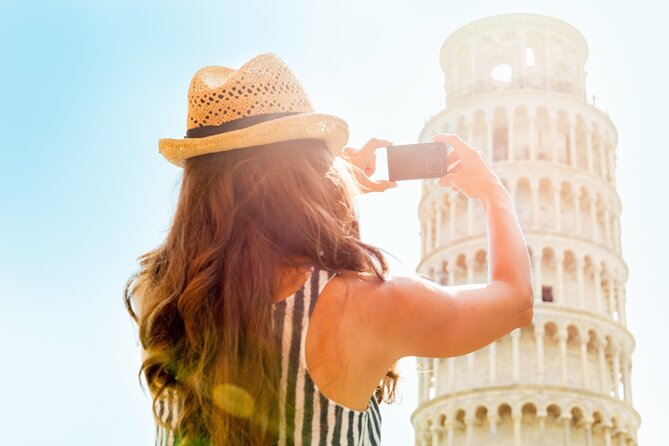
In Pisa, your main stop is Piazza dei Miracoli. The description is clear: green areas and the emblematic Leaning Tower, plus the majestic cathedral with marble bands. You’ll have free time for about one hour, with a note to take funny pictures.
That hour is the right length for most people—because what you’re really doing is appreciating a single, iconic ensemble from the outside. One hour gives you:
- time to walk the perimeter
- time to line up for the classic tower shots
- time to take a breath before the next move
If you want the most out of it, don’t try to over-plan. Instead, keep your walking simple:
- Start at the tower area.
- Circle once.
- Then return to your favorite angle and shoot again.
Crowds can build, and Pisa’s charm includes the fact that everyone’s trying the same photo trick.
Santa Maria Assunta in the square: what you’ll notice fast
Within Piazza dei Miracoli, you’ll also have a look at the Cathedral of Santa Maria Assunta, described as a medieval Catholic cathedral dedicated to the Assumption of the Virgin and the episcopal seat of Pisa.
This part is best treated as a “what stands out in a glance” moment. On a highlights tour, you won’t have the luxury to linger over every architectural panel. Still, you can make it satisfying by focusing on what’s explicitly highlighted in the tour description:
- the cathedral’s medieval presence in the ensemble
- how the marble bands contribute to the layered look of the square
If you’re the kind of traveler who likes to understand why buildings are famous, take 3 minutes to read what the ensemble is about, then let your eyes do the rest.
Value for $203.30: what you’re paying for and what you’re not
At $203.30 per person for about 15 hours, the value comes from three things you’re getting together:
- Train transport from Milan (and group movement support)
- Live bilingual commentary during the train ride
- Bilingual tour leadership in the cities
You’re not just buying tickets to Florence and Pisa—you’re buying a plan, an explanation rhythm, and help navigating a packed day.
What’s not included matters for your budget:
- Lunch is not included
- There’s no hotel pickup (you meet at Terrazza Gallia)
- The tour doesn’t promise a long sit-down experience at each sight
There’s also an optional audio guide in Florence (if you choose it). If you go that route, you’ll need a compatible smartphone (Android 5.0+ or iOS), and it’s not compatible with certain older devices or Windows Phones. If you want a smoother day, bring headphones, since the audio option is recommended that way.
The big caution: crowds, walking, and transport hiccups
A theme from the experience feedback is that Florence can feel crowded, and this kind of itinerary doesn’t let you escape crowds for long. Pisa’s “four blocks” reality (short, concentrated viewing) can feel exactly right if you want classic photos, but it can feel too short if you hoped for deep exploration.
Then there’s the hard truth about day trips: sometimes transport gets disrupted. There are accounts of delays and issues tied to strikes that affected the ability to reach Pisa fully, plus cases of complications with trains and station logistics. Those disruptions were outside the operator’s control, but they can still affect your day.
So here’s my practical advice:
- If Pisa is your top priority, know you’re relying on transport continuity.
- If you’re the type who hates stress, keep your expectations flexible.
- If your schedule is rigid and you can’t absorb delays, consider a multi-day plan instead.
Who this Milan–Florence–Pisa day trip suits best
This tour fits best if you:
- want Florence and Pisa without sleeping in either
- like a guided route that hits major highlights
- are comfortable walking a lot and staying engaged for a long day
- enjoy stories while you travel, since the train has live commentary in English and Spanish
If you have mobility limitations, the operator specifically warns that the itinerary is very tight, distances in the cities are great, and the pace is demanding. In that case, you might want a different format with fewer stops and less walking.
It also works for groups up to 30 travelers, which usually keeps the guiding more manageable than big bus tours.
Should you book this full-day Florence and Pisa tour?
If your goal is to see Il Duomo, hit the core Florence squares, and get your Leaning Tower photos without planning a thing, this is a solid value. The bilingual guidance and live train commentary make it feel efficient rather than random. And if you’re okay with one-hour chunks in the big-picture places, you’ll likely enjoy how the day connects Florence to Pisa.
I would not book it if you:
- can’t handle heavy walking and crowd flow
- need guaranteed freedom to linger at each stop
- have to avoid any chance of transport disruption
If you do book, go in with one mindset: you’re buying a fast, guided taste. Pack comfortable shoes, plan for crowds, bring your snack, and you’ll get a day that feels like a highlight reel—but in real streets, not just a brochure.
FAQ
What time does the tour start, and how long is it?
It starts at 7:00 am and runs for approximately 15 hours. The tour ends back at the meeting point.
Where do I meet the tour?
You meet at Terrazza Gallia, Piazza Duca d’Aosta, 9, 20124 Milano MI, Italy.
Is the tour commentary available in English?
Yes. It’s offered in English, and the train includes live commentary in English and Spanish, with a bilingual tour leader in the cities.
Is lunch included?
No. Lunch is not included.
Is there an audio guide in Florence, and what phone do I need?
An audio guide in Florence is available if you select that option. You’ll need an Android (version 5.0 and later) or an iOS smartphone. The audio tour isn’t compatible with Windows Phones and certain older Apple devices listed by the operator. Headphones are recommended.
Is the tour suitable for people with mobility problems?
The operator states the itinerary is very tight, distances in the cities are great, and the pace is demanding. It is not recommended for people with mobility problems.
Is the tour refundable if I cancel?
The experience is non-refundable and cannot be changed for any reason. If you must cancel more than a week in advance, you can write and they will study your case.