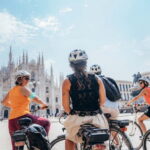
Milan looks different when you pedal it. This bike-first tour links major sights and contrasting neighborhoods in one smooth route, with a guide narrating what you’re seeing as you move. I love how stops feel timed for real city moments, not museum checkpoints, and how guides on the team (like Paulo or Sandra) keep the history clear and practical.
Two things I especially like: you get the core sights (Duomo, Teatro alla Scala from the outside, and Sforzesco Castle) along with side streets in Brera and the Darsena del Naviglio area, so your Milan is both iconic and lived-in. And the equipment is included—bike and helmet—so you can focus on the ride instead of logistics.
One drawback to think about: Milan streets can get bumpy and busy on bike days. If your group is large, you may spend extra time waiting to pass through pedestrian-heavy areas, and some road surfaces (like cobblestones/brick) can feel rough on basic bikes.
In This Review
- Key points to know before you ride
- Why This Milan Bike Tour Works So Well for First-Time Sightseers
- Price and What You Actually Get for Around $47
- The Morning Route: Timing, Meeting Point, and How the Ride Flows
- Porta Ticinese Start: Gate History and Boho Energy Before the Big Sights
- Duomo di Milano, Vittorio Emanuele, and the Royal-Adjacent Views
- Teatro alla Scala Outside: Opera Glamour, Explained Simply
- Brera District Streets: Artisan Lanes and the Art-Gallery Neighborhood Feel
- Porta Nuova to Bosco Verticale: Modern Milan After the Old Center
- Castello Sforzesco and Leonardo’s Link: Power, Fortresses, and Renaissance Visits
- Parco Sempione and San Lorenzo Columns: Green Breaks and Roman Echoes
- What the Guides Do That Makes This Tour Feel Worth It
- Bike Comfort and Street Reality: What You Should Expect on the Road
- Who Should Book This Milan Bike Tour (and Who Might Skip It)
- Should You Book This Tour?
- FAQ
- How long is the Milan bike tour?
- Where does the tour start, and where do you end?
- What is included in the price?
- Are e-bikes included?
- What sights are covered during the ride?
- What’s the minimum age, and do you need a special bike size for shorter riders?
- Does the tour run in bad weather?
Key points to know before you ride
- A fast “see-it-all” mix: Roman leftovers, Renaissance power, and modern design show up in one outing.
- Classic sights, guided context: Duomo, La Scala (outside), Brera, and Sforza Castle all come with stories you can actually use.
- Built-in contrast: You ride from old gates and artisan streets to Porta Nuova’s towers and Bosco Verticale.
- Safety and pacing matter: Multiple guides on the team emphasize safety, and the ride is described as easy to manage.
- Group size is capped, but still sizable: Up to 30 people means crowded stretches are possible.
- E-bikes are an add-on: If you prefer less effort, e-bikes cost extra when available.
Why This Milan Bike Tour Works So Well for First-Time Sightseers
Milan can be a lot on foot: big distances, traffic noise, and sight lines that force you to constantly re-map your route. By bike, the city feels more “connected.” You move through districts that would be awkward to string together by taxi but too spread out for a slow stroll.
The biggest win is that you’re not just collecting landmarks—you’re seeing how the city layers time. You start near Porta Ticinese and end up looping through places tied to medieval rule, opera glamour, Renaissance art, and Roman Milan. That theme of old-to-new isn’t an accident; it’s the structure of the ride.
You also get repeated chances to stop for photos and quick explanations, which is exactly what you want when you’re trying to remember where everything is for your next day.
You can also read our reviews of more cycling tours in Milan
Price and What You Actually Get for Around $47
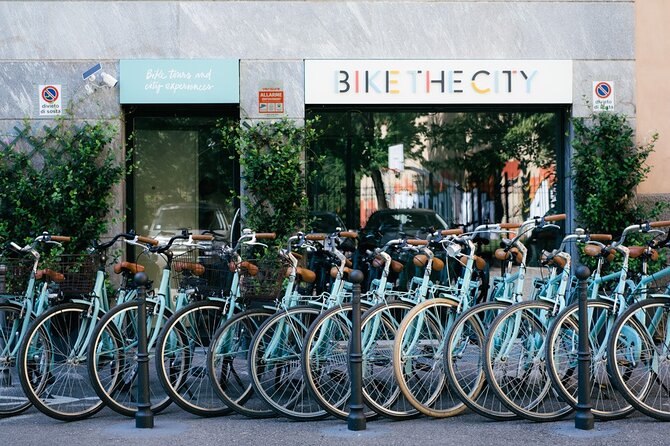
At about $47.16 per person, this tour is priced like a “light investment” that can save you time later. You’re paying for three things you’d otherwise cobble together: a guided route through the center, bike + helmet, and the effort of moving efficiently between far-apart neighborhoods.
Bike and helmet rental are included. That matters because Milan is not a place where you want to arrive, hunt for a rental shop, and then scramble to find your way to Duomo and Sforza on your own schedule.
One extra cost to be aware of: e-bikes are not included. They’re listed as available for €15 per person if you want help with the pedaling. If you know you’ll be tired early in the day, plan on that option.
The Morning Route: Timing, Meeting Point, and How the Ride Flows
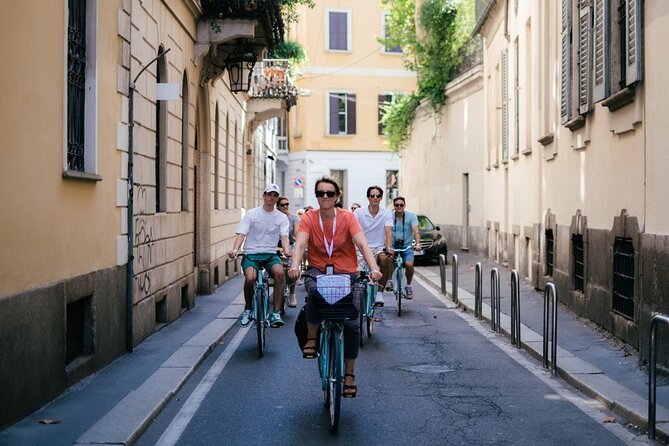
This tour starts at 10:00 am and runs about 3 hours 15 minutes. You meet at Via Vetere, 11, 20123 Milano and you end back near the same spot. It’s a good length for a first day because it gives you bearings without draining your whole morning.
You’ll get a safety briefing after meeting your guide, then you ride. The route is designed to be mostly “downtown-style cycling,” with plenty of low-speed sightseeing moments. It’s not described as a strenuous workout tour, but you should still feel comfortable riding in a real city setting.
A practical detail: Milan streets can be narrow and pedestrian-heavy. Even if the guide keeps the group moving smoothly, expect shared space at times, especially around the more central areas.
Porta Ticinese Start: Gate History and Boho Energy Before the Big Sights
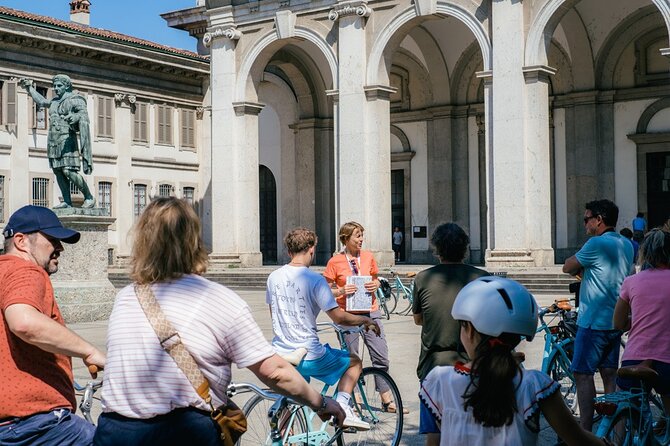
The ride kicks off at Porta Ticinese, tied to the city gate after which the district is named. This is a smart opening because it gets you into Milan’s older street texture right away, before the route ramps up toward the most famous monuments.
From there, you start on classic Dutch-style bikes and head through central Milan. The early pace gives you time to settle in—how the bike feels, how the group stacks up, and what your guide’s rhythm is like for photo stops.
Why I like this start: it’s not just a “park and pose” moment. Porta Ticinese helps you understand the city layout, so later sights like the Duomo area make more sense.
Duomo di Milano, Vittorio Emanuele, and the Royal-Adjacent Views
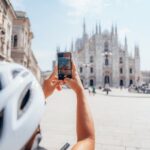
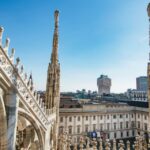
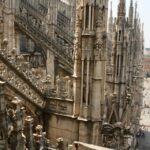
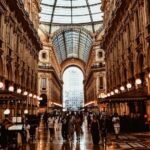
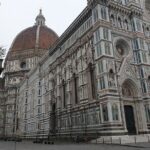
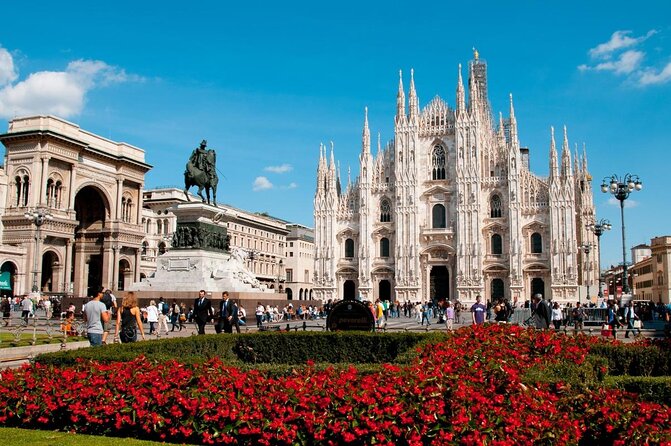
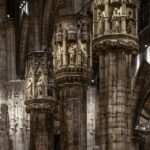
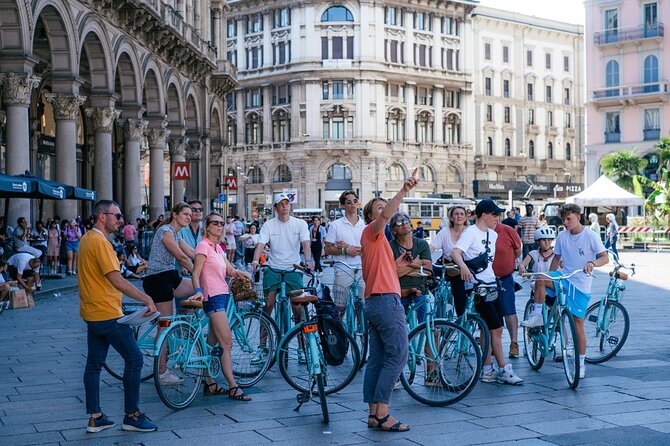
Your next stop is the Duomo di Milano. You’ll see the cathedral from the outside and hear the building story, plus you’ll pass by the Royal Palace, the Museo del Novecento, and the Vittorio Emanuele Gallery.
Even without going inside, this is one of those places where guided context changes everything. The Duomo isn’t just a huge Gothic landmark—you’ll start to understand why it became the symbol of Milan’s identity and how the surrounding spaces evolved around it.
If you’re someone who worries about cathedral tours feeling slow, this stop is a good compromise: you get the main visual hit plus explanations, without needing a long planning detour.
Teatro alla Scala Outside: Opera Glamour, Explained Simply
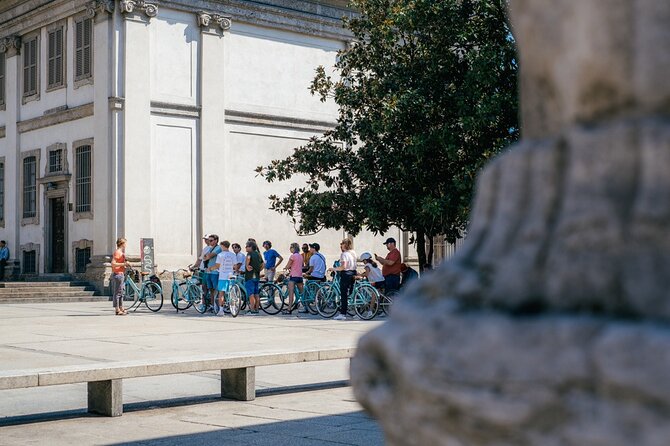
Next comes Teatro alla Scala, viewed from the outside. This is a great stop for two reasons: first, it’s quick; second, you get the story behind the theatre and the kinds of singers and conductors who have performed there.
That outside-only format is practical. You can enjoy the grand façade, learn what makes the place important, and still keep momentum for the rest of the route.
One thing to consider: if you were hoping for extended time inside, this tour focuses on street-level seeing and commentary. You’re building understanding for a later return if you want deeper access.
Brera District Streets: Artisan Lanes and the Art-Gallery Neighborhood Feel
From La Scala, you head to Brera—Milan’s artist district look-and-feel. You’ll move through streets lined with historic houses and churches, and you’ll also connect it to the nearby Pinacoteca area.
Brera is where Milan shifts from monument mode to neighborhood mode. This is the part of the ride that feels like walking, but faster: small turns, old façades, and a sense of local craft.
Practical note: Brera can be busy. Narrow streets and pedestrian traffic mean you’ll likely slow down for crossings and group movement. This is also where road surfaces can feel less smooth, depending on the exact lane you’re riding in.
Porta Nuova to Bosco Verticale: Modern Milan After the Old Center
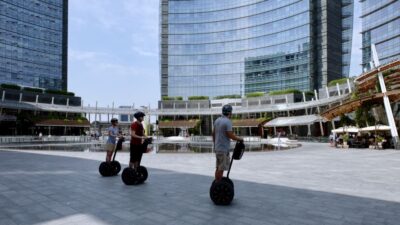
After Brera, the tour moves to Porta Nuova, and suddenly you’re in the future side of Milan. Along the way, you’ll see Palazzo Lombardia, Biblioteca degli Alberi, Unicredit Tower, and Bosco Verticale.
This is one of the smartest sections of the itinerary because it stops Milan from becoming a single-style city in your head. You get to compare eras back-to-back: from medieval-ish stone textures and historic churches into sleek architecture and design-forward public spaces.
If architecture matters to you, Porta Nuova is where you’ll likely want the most photos. It also helps you understand why Milan works as a business and fashion hub, not only a landmark city.
Castello Sforzesco and Leonardo’s Link: Power, Fortresses, and Renaissance Visits
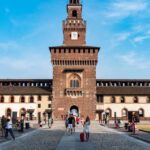
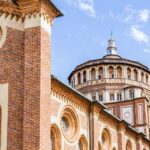
Then you arrive at Castello Sforzesco, the castle that anchors so many Milan stories. You’ll get time to admire the castle presence and learn how it was built for the first duke of Milan in the 14th century.
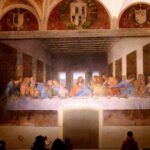
Here’s a detail I’d highlight if you’re a history-minded visitor: you’ll hear about Leonardo da Vinci, who was called to Milan by Ludovico il Moro in 1482, and that connection ties the fortress to the Renaissance era of art and politics.
This stop also works as a “reset” point. You’ve done a chunk of cycling across districts, and now you’re spending time in a place where the atmosphere naturally slows you down.
Parco Sempione and San Lorenzo Columns: Green Breaks and Roman Echoes
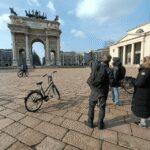
After the castle, you head to Parco Sempione, described as the city’s green lung. You’ll also see the Peace Arch, a neoclassical marker that gives the park another layer beyond trees and paths.
This is a good place for a breather. In real cycling tours, you need a moment where you’re not thinking about the next turn or the next stop photo.
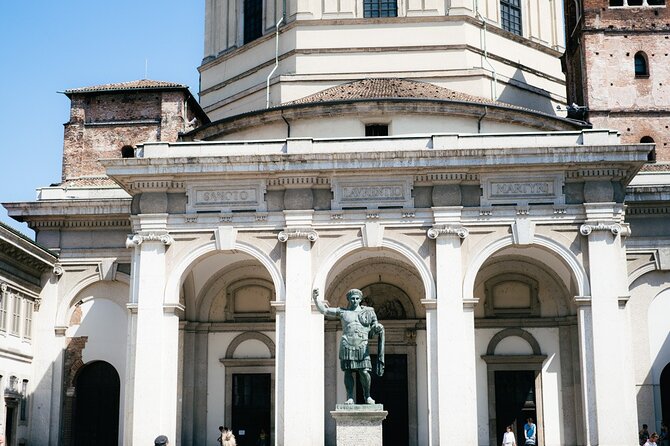
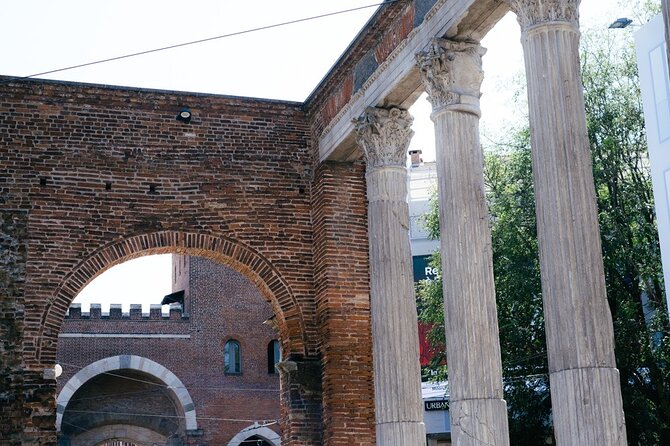
Finally, you reach Colonne di San Lorenzo, with Roman ruins that point to Milan’s Imperial era. You’ll learn about the setting when Milan was capital of the Roman Empire—palace, circus, amphitheatre—and you’ll connect the columns to that larger city-scale past.
This ending section is a strong payoff. It’s one thing to see Roman references on a map; it’s another to ride right up to the physical pieces and have someone put them in context.
What the Guides Do That Makes This Tour Feel Worth It
The guides are a big part of why this ride consistently lands high ratings. Names that come up in the guide team include Paulo, Sandra, Angelo, Marco, Simon, and Simone. Across them, the common thread is practical city storytelling and maintaining safety while still keeping the energy up.
You’ll also notice how the tour is narrated to match what you can actually see from the bike. Instead of long lectures, you get stop-by-stop explanations timed to your route—Duomo building history while you’re looking at it, castle construction context while you’re in that courtyard space, and modern architectural pointers as you’re riding past the towers.
Also, pace seems to be a priority. One family-friendly note: kids were handled with safety in mind, and the ride wasn’t described as exhausting. If you’re the type who gets restless on slow tours, you’ll likely appreciate the steady rhythm.
Bike Comfort and Street Reality: What You Should Expect on the Road
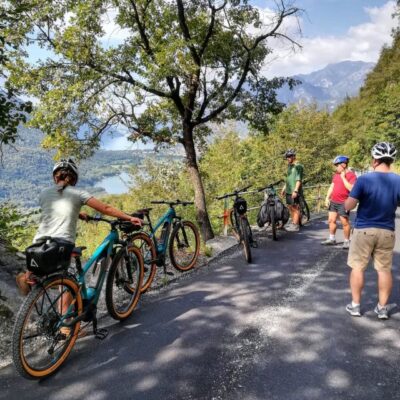
This is where you should be honest with yourself. Milan is a real city with pedestrians, narrow lanes, and sometimes imperfect bike surfaces. In one case, someone flagged that cobblestones and brick roads can vibrate your way through, and that even bike routes weren’t always smoothly paved.
What that means for you: bring the right expectations. This is an easy-leaning sightseeing ride, not a smooth-lane cycling fantasy.
A couple more practical notes based on what people experienced:
- Bikes are described as basic, with one gear in at least one account. That’s fine if you don’t mind a steady pedal, but it’s not the option for anyone chasing effortless cruising.
- Some rides included shade breaks and water stops, and in at least one itinerary there was a gelato moment. Don’t count on extras, but do assume you’ll get a breather built into the flow.
- If it rains, short wet stretches can happen, and rain gear was used for a brief period on one ride. You might want a light layer just in case.
If you’re sensitive to rough road texture, consider the e-bike option if it’s available when you book.
Who Should Book This Milan Bike Tour (and Who Might Skip It)
This tour is best for you if:
- you want a big-picture orientation in a short morning
- you like mixing monuments with neighborhoods like Brera
- you care about how Milan shifts from classic architecture to modern design
- you enjoy learning in small chunks while moving through the city
It might be less ideal if:
- you hate group dynamics in busy areas and want total freedom to wander at your own pace
- you’re very sensitive to bumpy surfaces
- you’re expecting lots of time inside major sights, since the format is largely street viewing plus guided explanation
On the practical requirements side, the minimum age is 9, and for riders between 135 and 155 cm, you’ll need to email to reserve a suitable bike because availability is limited. If that applies to your group, plan ahead.
Should You Book This Tour?
Yes, if you want an efficient, guided route that covers both the postcards and the in-between streets of central Milan. For the price, getting bike + helmet plus structured storytelling is strong value—especially if it’s your first day in town or your only morning with enough energy to see a lot.
I’d book it sooner rather than later if your dates are tight. The tour is often booked around 20 days in advance, and the group size can affect how smooth the ride feels in pedestrian areas. And if you’re not a confident rider on city streets or you know you’ll struggle with rougher surfaces, strongly consider the e-bike add-on when available.
If Milan is calling you for one “main intro” activity, this is a very practical way to answer that call.
FAQ
How long is the Milan bike tour?
It’s about 3 hours 15 minutes.
Where does the tour start, and where do you end?
You start at Via Vetere, 11, 20123 Milano and the tour ends back at the same meeting point.
What is included in the price?
The tour includes bike and helmet rental.
Are e-bikes included?
No. E-bikes are not included and are listed as available for an additional €15 per person, subject to availability.
What sights are covered during the ride?
You’ll see or pass major highlights like Duomo di Milano, Teatro alla Scala (outside), Brera, Castello Sforzesco, Parco Sempione, and Colonne di San Lorenzo, plus areas like Porta Ticinese and Porta Nuova.
What’s the minimum age, and do you need a special bike size for shorter riders?
The minimum age is 9. For riders between 135 and 155 cm, you need to email to reserve a suitable bike because availability is limited.
Does the tour run in bad weather?
The experience requires good weather. If it’s canceled due to poor weather, you’ll be offered a different date or a full refund.