REVIEW · MILAN
Milan: Bernina and Glacier Train Tickets & Sankt Moritz Tour
Book on GetYourGuide →Operated by Z V SRL · Bookable on GetYourGuide
Two railways in one long Alpine day. This Milan-to-Switzerland trip links Sankt Moritz with the famed Bernina Red train, then continues onto the Albula line’s big engineering moments. It is the kind of day where you spend more time looking out the window than worrying about logistics.
What I like most is the mix of big-name scenery and real town time. You get a couple of hours in St. Moritz before the train portion turns into pure mountain rail watching.
One thing to consider: a big part of the day is spent on the coach between Milan and the rail stations. If you hate long seated transfers, plan for that, and consider going directly to the Bernina area instead of doing the full day loop from Milan.
In This Review
- Key highlights you will actually feel during the day
- Milan to St. Moritz: the coach start and what it sets up
- Sankt Moritz free time: how to use your two-hour window
- Bernina Red train: why this ride is worth building a whole day around
- Albula line and the UNESCO connection: engineering that feels personal
- Landwasser Viaduct: the gorge-crossing moment you should not rush
- Bergün, Preda, and the descent toward Chur or Thusis
- Time management: how the 12 to 13 hours really feels
- Logistics that can make or break the day: where to meet and how to prepare
- Value: how this tour stacks up for your time in Italy
- Should you book this Milan to Bernina and Glacier Train day trip?
- FAQ
- How long is the trip from Milan?
- Where are the pickup points in Milan?
- What languages is the live guide?
- Do I get time in St. Moritz?
- Which train lines are included?
- Is the Landwasser Viaduct included?
- Are there any breaks during the route?
- Where does the tour end?
- Is free cancellation available?
- Can I reserve and pay later?
Key highlights you will actually feel during the day
- Sankt Moritz, the Top of the World, gets about two hours to walk and reset before the train magic
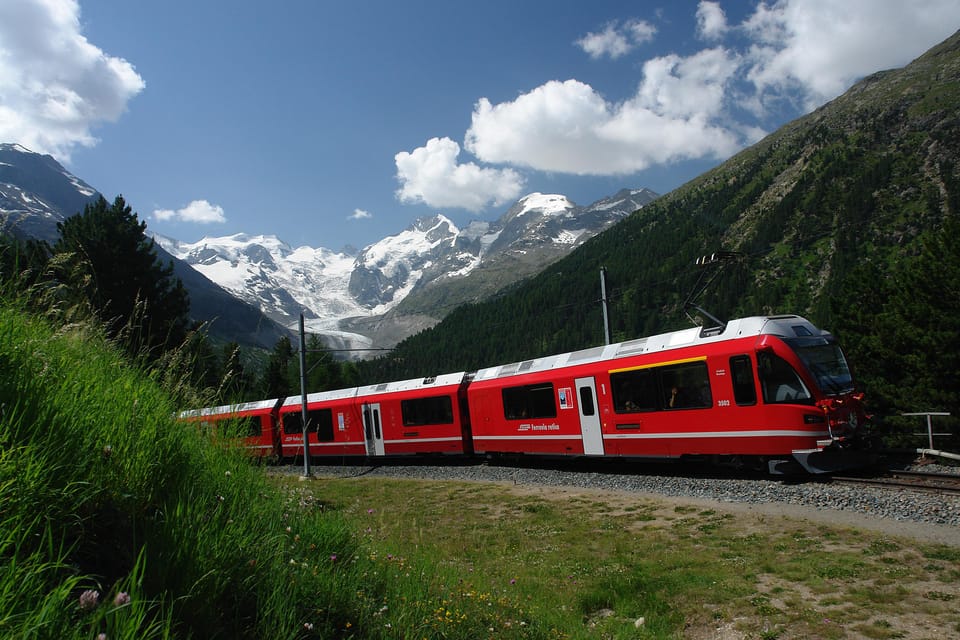
- Bernina Red train riding brings you into the Alps with classic Swiss mountain views
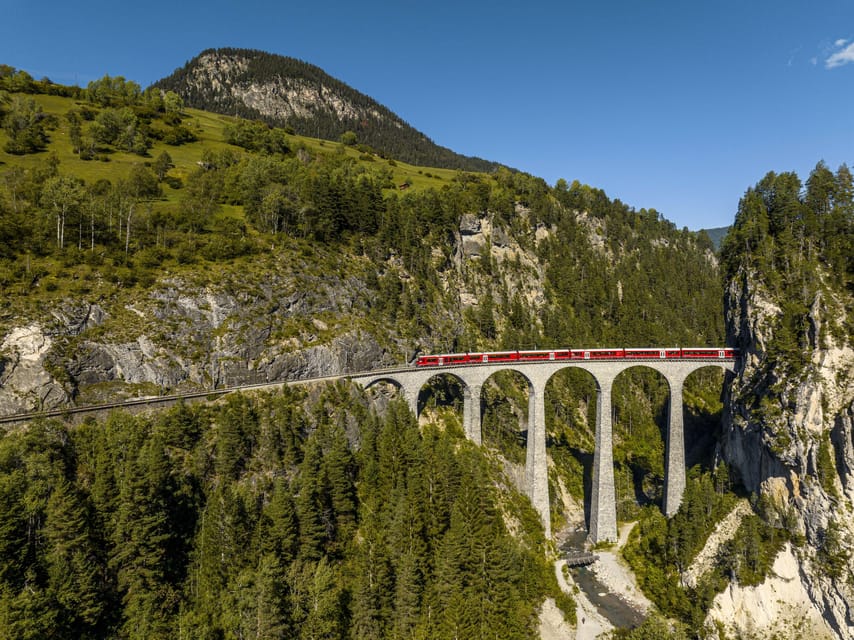
- Landwasser Viaduct panoramic time is built into the day, with a long viewing window
- Albula line UNESCO route includes the Pass and the gorge-spanning viaduct engineering
- Stops include Bergün and the high point at Preda before you head downward toward Chur/Thusis
Milan to St. Moritz: the coach start and what it sets up
The day begins with a coach transfer from Milan, and it is roughly 3.5 hours each way. That is a lot of time in a seat, but it also means you do not have to coordinate trains, connections, and station transfers on your own. From my perspective, that is the real value: you trade control for an easy, guided flow.
On the drive, you are traveling through the region that frames the Swiss Alps, and timing can affect what you notice. In winter months, you may see frozen lakes along the route, which adds a different look than the green-summer version of the same valleys.
You also get some breathing space once you arrive. The itinerary schedules a visit to St. Moritz with free time, so you are not rushed immediately into another vehicle the moment you step off the coach.
You can also read our reviews of more tours and experiences in Milan
Sankt Moritz free time: how to use your two-hour window
St. Moritz is known as the Top of the World, and the nickname fits the mood. It sits in the Engadin Valley with striking mountain backdrops and a lake setting that often looks more dramatic than you expect from photos.
Because your time is about two hours of free time, you want a quick plan. I suggest walking first to get your bearings, then choosing one focus:
- a lakefront stroll for views and photos
- a quick wander through the town center for that St. Moritz feel
- a café stop if you want to warm up and slow down before boarding
If you are traveling with a camera, this is your best chance to get non-train shots. Once you are on the rail, the rhythm changes: you look, you listen, you watch the track curve and climb.
This is also where having a live guide helps. Even if you only catch a few key bits of context, it makes the train segments more meaningful when they start.
Bernina Red train: why this ride is worth building a whole day around
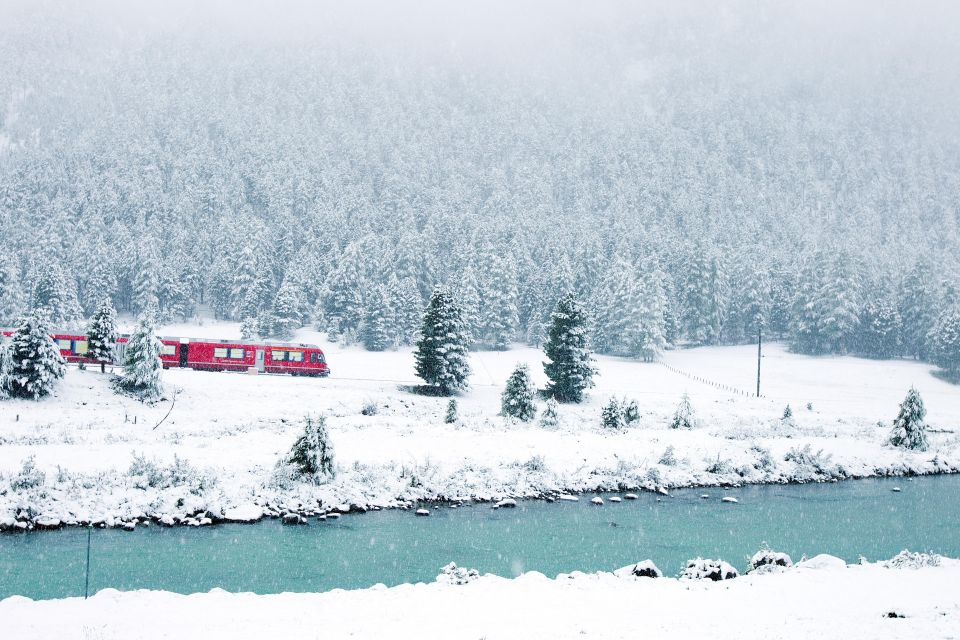
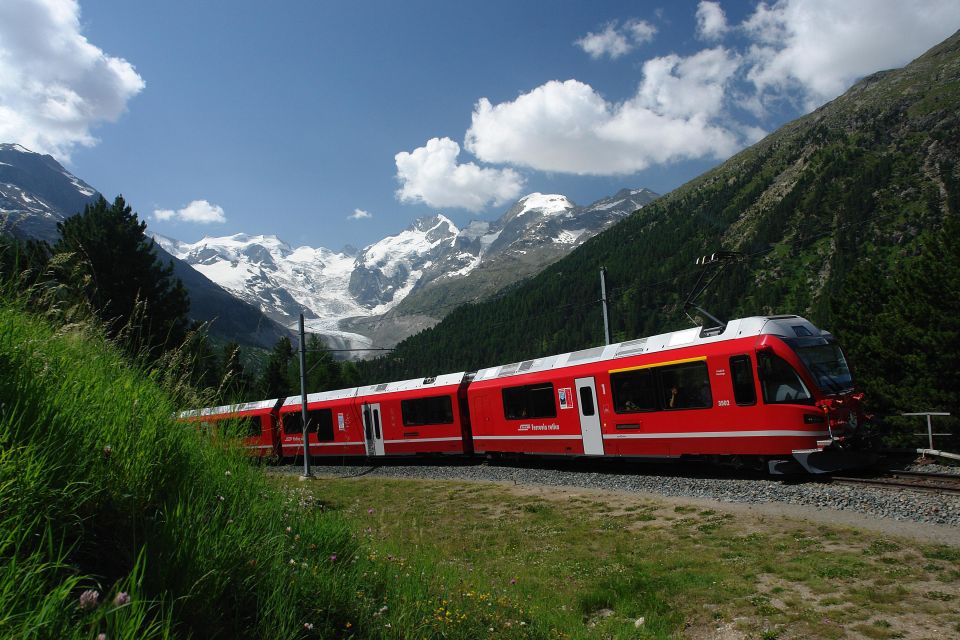
After your St. Moritz time, you board the legendary Bernina Red train. The big draw here is simple: the Bernina line is famous because the route is designed for views. You spend long stretches watching mountains rise and valleys open, with the rail line threading through a dramatic high-alpine setting.
This is not just about pretty scenery. Train windows create a kind of slow motion travel. Instead of arriving at a single viewpoint and taking a few photos, you get a continuous sequence of small surprises: bends in the track, sudden altitude changes, and gorge-like drops that feel close.
You will also be traveling with an English or Spanish live tour guide. In practice, that means you can ask questions or get heads-up about what you are seeing, especially during the more technical-looking sections. I have seen this kind of day run smoothly with strong on-the-ground staff, including guide Angelo and a driver/conductor Marcello, both noted for keeping the day organized and pleasant.
Albula line and the UNESCO connection: engineering that feels personal
Right after the Bernina part, your day continues onto the Albula railway, which is part of the UNESCO World Heritage rail route. The Albula line is famous for more than views; it is famous for how it handles the Alps.
What I love about these routes is that the engineering is not an abstract brag. It is visible every few minutes. You see the line climb, cut through terrain, and bridge over difficult ground with structures that look both precise and bold.
As you move along, you pass through lush valleys and alpine villages, and the train gradually works its way upward. The itinerary explicitly calls out the Albula Pass stage and panoramic mountain views during the climb. This is one of those moments when you start to understand why the rail routes became icons in the first place: the line is doing serious work to make the Alps accessible.
Landwasser Viaduct: the gorge-crossing moment you should not rush
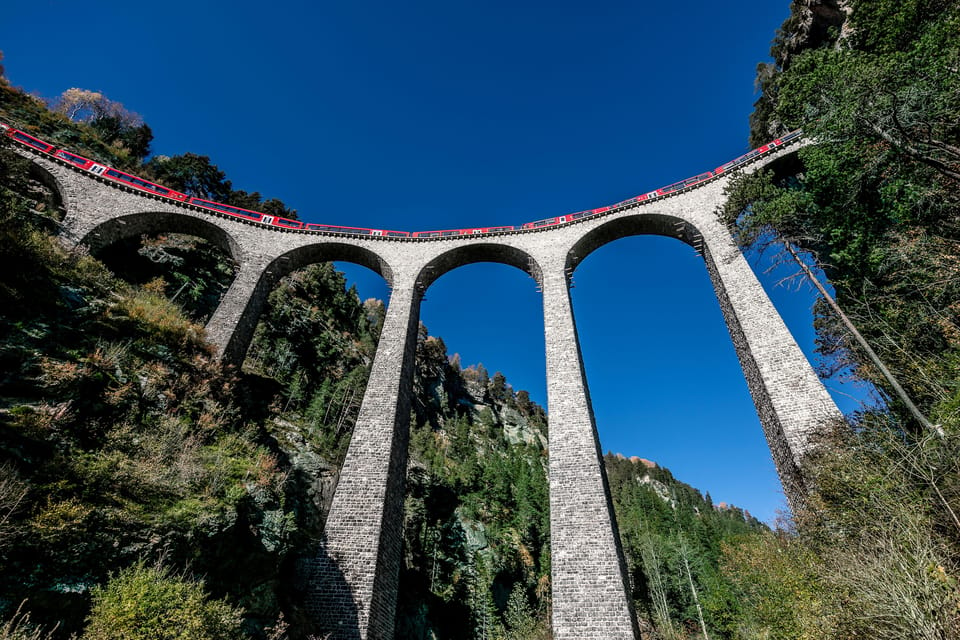
If you only care about one photo-stop moment, make it Landwasser Viaduct. Your schedule includes a panoramic train ride segment centered around it, with about two hours set aside for that high-impact stretch of the route.
This is the section that many people describe as the peak of the rail day, and for a good reason. A viaduct like this is not just a bridge across a gap. It curves and spans a deep gorge in a way that makes the altitude and depth feel immediate. From your seat, the structure grows more impressive as the train approaches and the curve brings the view around.
It helps that the itinerary gives you time rather than making this a quick blink-and-you-miss-it pass. Two hours is long enough to settle in, take photos from different angles as the train moves, and just watch the track threading through the valley.
If you are sensitive to motion, have a plan for comfort. Look for a seat where you can watch forward without constantly turning around. Dress in layers so you can stay comfortable, since viaduct and pass segments can change the feel of the air quickly.

Bergün, Preda, and the descent toward Chur or Thusis
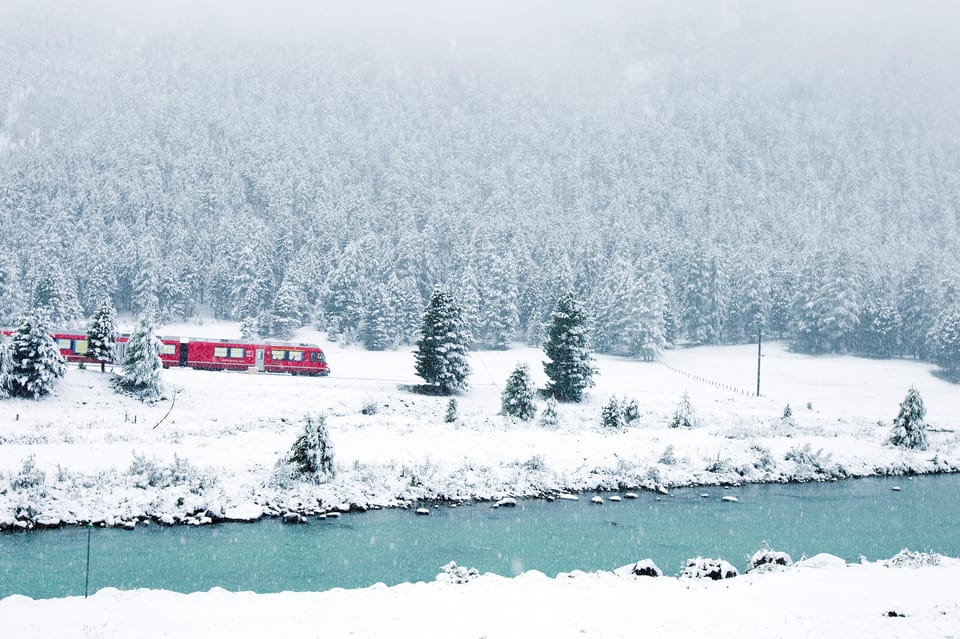
Your route includes the charming village area of Bergün and a climb to Preda, described as the highest point on the line. Those stops matter because they break the day into distinct “chapters,” not just one long ride with no sense of progress.
Bergün’s traditional Swiss look gives you a human-scale moment. After time spent watching large-scale engineering, it is reassuring to see a village clustered in the mountainside, with everyday life implied through architecture and spacing.
Then you reach Preda. Even if you do not get a long platform stop, the high point works as a psychological milestone. You feel the day has truly moved into the upper Alps, not just skirted around them.
After that, the train begins its scenic descent toward Chur. The plan ends with coach return from the Chur area or from Thusis, depending on timing. Your itinerary notes a short break in Thusis as well, roughly 15 minutes—enough to stretch, grab a quick drink/snack if offered, and reset before the ride back to Milan.
One practical note: because the ending point can be Chur or Thusis, do not plan on a long wander in both places. Treat the end as transit-focused rather than sightseeing-heavy.
Time management: how the 12 to 13 hours really feels
This trip runs about 12 to 13 hours total. That is a full day, and the pacing is the whole story.
Here is how it typically breaks down:
- Milan coach transfer: about 3.5 hours
- St. Moritz visit and free time: about 2 hours
- Train time segments including the Landwasser-focused panoramic portion: about 2 hours called out for that experience
- A brief break in the Chur/Thusis corridor area: around 15 minutes
- Coach transfer back to Milan: about 3.5 hours
You can see why the day feels long but also controlled. You are never stuck for long stretches without a purpose—town time, then rail highlights, then a short pause, then back to the coach.
What can feel tight is the combination of travel time plus limited free time. If your idea of vacation is slow morning, this is not it. If your idea of vacation is doing one of the great Alpine train journeys without spending time planning every connection, it works well.
Logistics that can make or break the day: where to meet and how to prepare
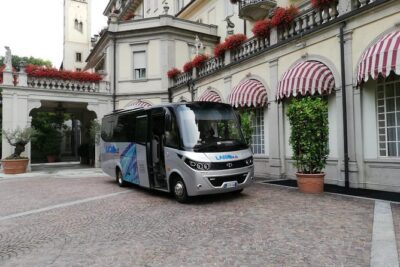
Your meeting point can vary depending on which starting option you pick in Milan. Your day includes several possible pickup locations, including the Zani Viaggi meeting point options and the LakeComo Milan Visitor Center area. If you want the easiest start, choose the closest option to where you are staying and aim to arrive early so check-in does not eat into your schedule.
Because the tour runs with a live guide in English or Spanish, the day depends on group timing. That means being punctual at transfers is not optional. Bring a small day bag with water and a warm layer. The train windows are your big viewing tool, so having a light jacket that you can put on quickly helps.
Also, plan your expectations around the fact that you are not doing everything at your own pace. This is structured sightseeing via rail.
Value: how this tour stacks up for your time in Italy
Even without seeing any price tag, you can judge value by what you get for a single day. This experience bundles:
- coach transport from Milan to St. Moritz and back (about 3.5 hours each way)
- guided direction with an English/Spanish live guide
- iconic Bernina Red train riding
- the Albula UNESCO route and its signature engineering, including the Landwasser Viaduct segment
- St. Moritz town time and a short break in the Chur/Thusis region
For me, the value is not just that the trains are famous. It is that the day is organized around the key moments—St. Moritz, the Bernina experience, and the Landwasser engineering focus—so you do not waste time figuring out what to do when.
This is a good fit for:
- first-time visitors to the Bernina/Alps
- people who want the rail highlights without splitting days across multiple hotel check-ins
- travelers who like guided structure but still want real viewing time
If your top priority is maximum freedom—stopping longer in towns, lingering at stations, or skipping the coach transfer—then this type of day tour might feel like a compromise. In that case, you might prefer building your own plan around the specific rail segments.
Should you book this Milan to Bernina and Glacier Train day trip?
Book it if you want one packed, guided day that hits multiple Alpine rail icons. This is especially tempting if you like scenery on rails and you want Landwasser Viaduct without doing any planning gymnastics from Milan.
Pass or adjust your approach if you dislike long coach rides. The time in the seat is real, and the tour structure means you get short bursts of free time rather than slow wandering.
If you do book, do it with the right mindset: this is a sightseeing-focused rail day. You are there to look out the window, learn a bit with your guide, and let the Alps do the talking.
FAQ
How long is the trip from Milan?
The duration is about 12 to 13 hours.
Where are the pickup points in Milan?
Meeting points can vary depending on the option booked and include Zani Viaggi Meeting Point (Foro Buonaparte area), and Milan Visitor Center – Zani Viaggi options, including a LakeComo Milan Visitor Center pick-up.
What languages is the live guide?
The live tour guide is available in English and Spanish.
Do I get time in St. Moritz?
Yes. You have a visit to St. Moritz with free time for about 2 hours.
Which train lines are included?
You ride the Bernina Red train and then continue on the Albula line, which is part of the iconic Glacier route.
Is the Landwasser Viaduct included?
Yes. The itinerary includes a panoramic train ride that centers on the Landwasser Viaduct, with about 2 hours allocated for that segment.
Are there any breaks during the route?
There is a break in Thusis of about 15 minutes.
Where does the tour end?
The day concludes in Chur or Thusis, and then you board the coach back to Milan.
Is free cancellation available?
Yes. You can cancel up to 24 hours in advance for a full refund.
Can I reserve and pay later?
Yes. The option includes reserve now & pay later, where you pay nothing today.