REVIEW · MILAN
Milan: Cathedral and Terraces Guided Experience
Book on GetYourGuide →Operated by Hidden Experiences · Bookable on GetYourGuide
Duomo rooftops change your Milan view. I love the way a certified guide walks you through the Duomo di Milano interior, pointing out mosaics, stained glass, statues, and art. I love the moment you reach the rooftop terraces and realize the whole city spreads out around you.
You meet your guide at Duomo Square and the experience stays tight and human-sized, not a cattle-car tour. I also like that it’s a small group with headphones provided from 6 participants, so you can actually hear the story (guides you might get include Renatta, Lorella, Mary, Simone, and Maria).
The one real catch is access: the terraces are not wheelchair-accessible, with about 80 steps to reach the second level plus an all-stairs descent totaling 250 steps.
In This Review
- Key highlights I’d prioritize
- Why This Duomo Tour Works So Well in 2 Hours
- Entering Duomo di Milano: Security and Dress Rules That Matter
- Meeting at Duomo Square and What a Guided Start Changes
- Inside the Cathedral: Mosaics, Colored Windows, Statues, and Art
- Duomo Secrets You’ll Hear (Including Steeples and Hidden Treasures)
- Rooftop Terraces: Elevator Up, 250 Steps Down, and the Milan View
- Small Group + Headphones: Why This Format Feels Better
- Timing and Photo Tips for the Duomo Skyline
- Renovation Notes: What You Might Notice at the Cathedral
- Price and Value: Is $70 Worth It?
- Who Should Book This Tour (and Who Should Rethink It)
- Should You Book? My Honest Take
- FAQ
- How long is the Milan Cathedral and Terraces guided experience?
- What is included in the $70 per person price?
- Are Cathedral and rooftop tickets included?
- What are the dress rules for entering the Duomo?
- Are there restrictions on what I can bring into the cathedral complex?
- Is the terraces visit accessible for wheelchair users?
Key highlights I’d prioritize

- Duomo interior, guided for your attention span: mosaics, colored windows, statues, and key artworks explained in plain terms
- Rooftop terraces with the best skyline angles for photos over Milan
- Hidden Duomo details you’ll learn as you walk, including how many steeples sit on top
- Elevator ascent, stair descent: easier going up, tougher on the way down (plan your legs)
- Small-group format with audio support when the group is bigger
Why This Duomo Tour Works So Well in 2 Hours
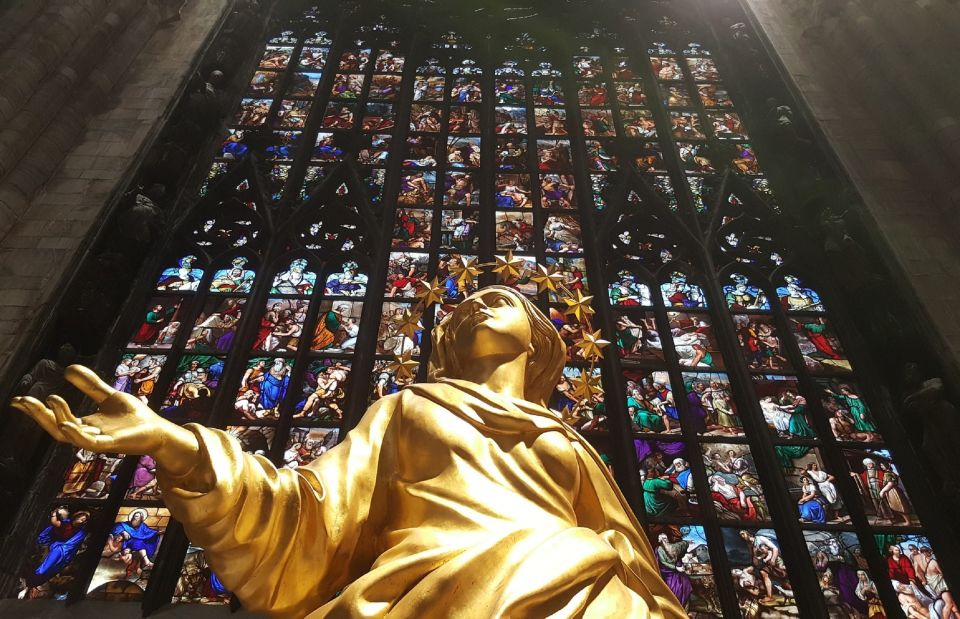
Two hours sounds short, but Duomo di Milano is one of those places where you can either wander aimlessly for hours or get your bearings fast. This tour is built for the second option: cathedral interior first, then terraces for the view.
You’ll focus on the parts that make the Duomo feel like a living monument. The guide doesn’t just recite dates. They point out the visual clues you’d otherwise miss—like how the building materials and ornamentation come together to create the Duomo’s look.
And the rooftop piece matters. Milan on top of Milan feels like a whole different city, especially when you’re looking outward across rooftops toward the skyline. If you care about photos, this is where the camera comes alive.
You can also read our reviews of more guided tours in Milan



Entering Duomo di Milano: Security and Dress Rules That Matter
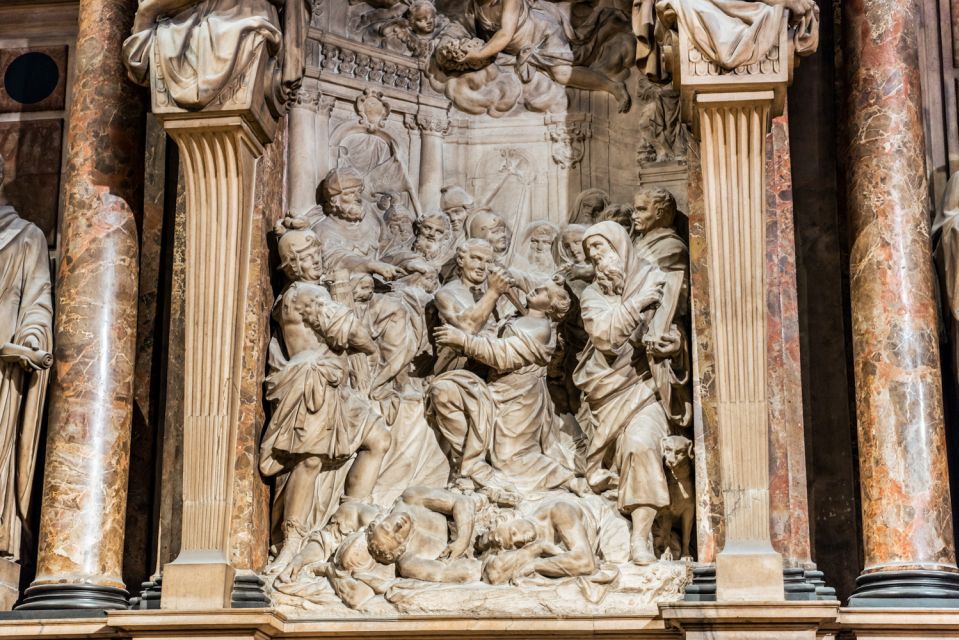
Before you even start admiring anything, you’ll hit strict security checks. You should expect to empty pockets and open bags as part of the screening by Public Security Authorities.
It’s also enforced by staff, so don’t treat it like optional theater. You won’t be allowed into the cathedral complex with helmets, glass objects, or luggage, and you’re strongly discouraged from bringing big bags. If you’re traveling light, the whole flow is smoother.
Dress matters too. You’ll need clothing that covers knees and shoulders. Short skirts aren’t allowed, and sports club t-shirts (sports shirts) aren’t acceptable. Plan for this even if the day is warm; the key is shoulders and knees covered.
Meeting at Duomo Square and What a Guided Start Changes
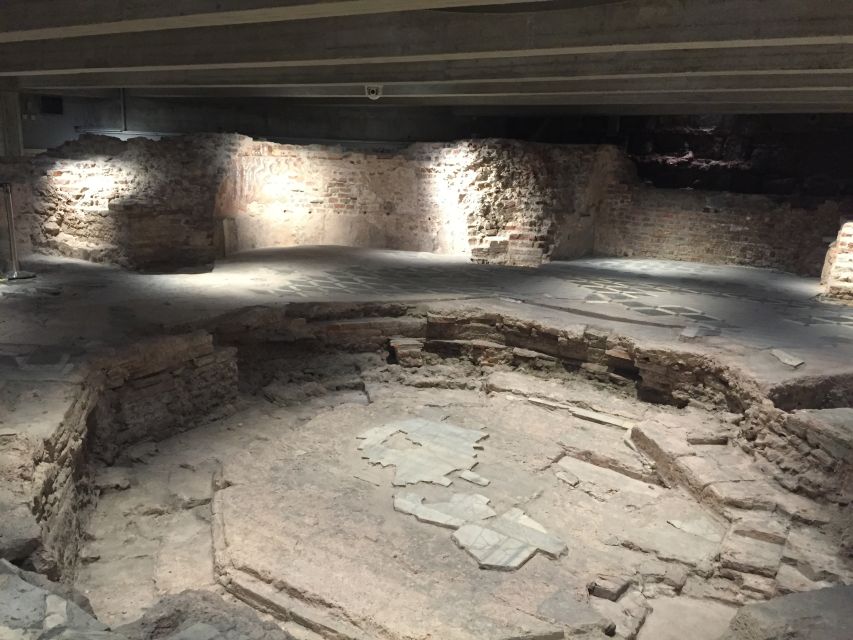
The tour begins in Duomo Square, where you’ll meet your guide. Meeting point can vary depending on the option you booked, so check your confirmation details so you’re not searching while the security line moves without you.
What you get from a guided start is time saved and confusion avoided. Duomo’s interior is huge. Without a guide, you might spend energy looking up at everything and remembering nothing. With a guide, you get a path and a purpose—mosaics here, windows there, then the terrace viewpoints where your effort pays off.
The guide is monolingual, but the tour operator supports multiple languages for booking: Italian, English, German, French, and Spanish. That helps a lot if you don’t want history-by-gesture. You’ll also have headphones from 6 participants, which is a practical detail that keeps things comfortable in a crowded space.
Inside the Cathedral: Mosaics, Colored Windows, Statues, and Art
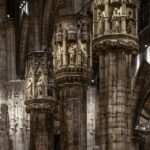
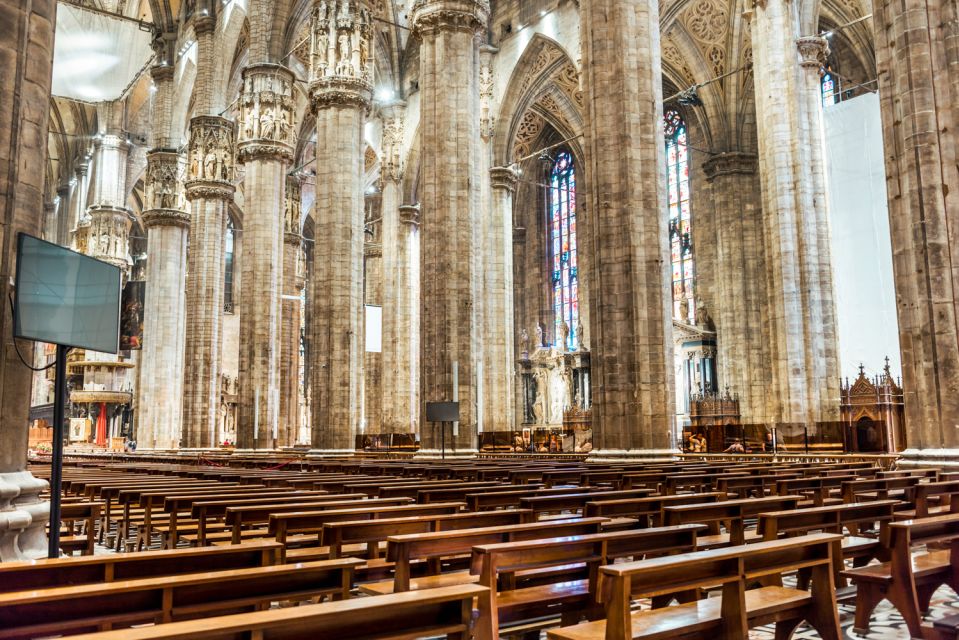
Your tour time inside the cathedral focuses on what you’ll actually want to remember later. The Duomo’s interior can feel overwhelming at first glance—there’s stone everywhere and light everywhere. A good guide turns that into a readable experience.
You’ll see:
- Mosaics and ornamented surfaces that explain how the Duomo’s decorative language works
- Colorful windows from different eras, so you can spot how styles evolve
- Statues and sculptural details that reward you for slowing down
- Art and key visual elements explained as you move through the space
One reason this works is pacing. The guide keeps you moving, but not so fast that you miss things. It’s the difference between staring at ceilings for 20 minutes and actually understanding what you’re looking at.
Also, guides often connect details to Milan itself, not just the building. That helps the Duomo feel like a city landmark, not a stand-alone museum piece.
Duomo Secrets You’ll Hear (Including Steeples and Hidden Treasures)

A big part of the value here is that the tour isn’t just about what’s obvious from ground level. You’ll learn secrets that are harder to spot on your own.
One example: you’ll discover how many steeples are at the top of Duomo. That kind of detail changes how you look upward. Suddenly you’re not just seeing a forest of rooftops; you’re counting architecture.
You’ll also be guided toward lesser-noticed elements around the cathedral complex. These are the moments that make a guided tour feel worth paying for, because they’re the exact things you’d walk past while trying to take in everything.
This is where the better guides shine. People have praised guides for being especially animated—like Renatta, Lorella, Mary, Simone, and Maria—so even if you’re not a hardcore cathedral person, you’re likely to leave with real understanding.




Rooftop Terraces: Elevator Up, 250 Steps Down, and the Milan View
The rooftop portion is the reason many people book. You’ll climb to the terraces using an elevator for the ascent, which makes the start easier than you might expect.
Then comes the physical part. To reach the second terrace, you’ll climb about 80 steps. After you’ve been on the tower areas, your descent is via stairs—roughly 250 steps to get down.
So here’s the practical translation: if your legs are fine with stairs, you’ll love this. If stairs are a problem, you should think twice. The terraces visit is not accessible for wheelchair users or anyone with mobility problems, precisely because of that stair requirement.
From the terraces, you’ll get the best opportunities for skyline photos of Milan. And more importantly, you’ll see the Duomo the way it was designed to be seen: as an urban crown rather than just a church front.
Small Group + Headphones: Why This Format Feels Better
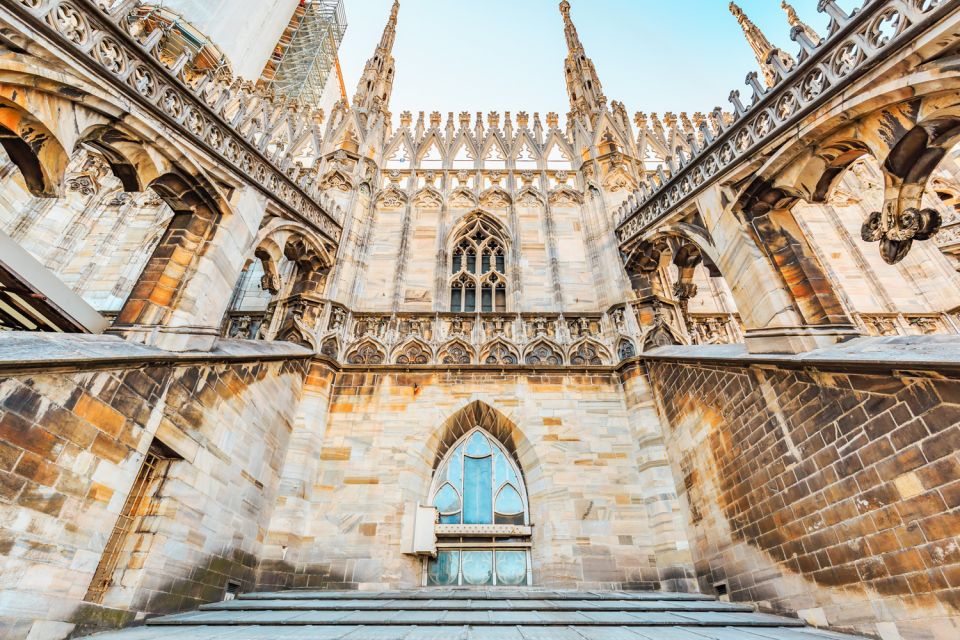
This is a small group tour, and that matters more than it sounds. In a large group, you lose the chance to ask a question, and you spend energy trying to keep up rather than looking closely.
Headphones from 6 participants are another real-life quality booster. Duomo is echo-y. Crowds are loud. Audio support means the guide’s story lands clearly without you craning your neck just to hear the next point.
If you’re the type who likes to understand what you’re photographing, this format helps. You’re not just collecting pictures; you’re collecting context for why those images look the way they do.
There’s also a private group option available, which can be a great fit if you want a quieter pace or you’re traveling as a family with different attention spans.
Timing and Photo Tips for the Duomo Skyline
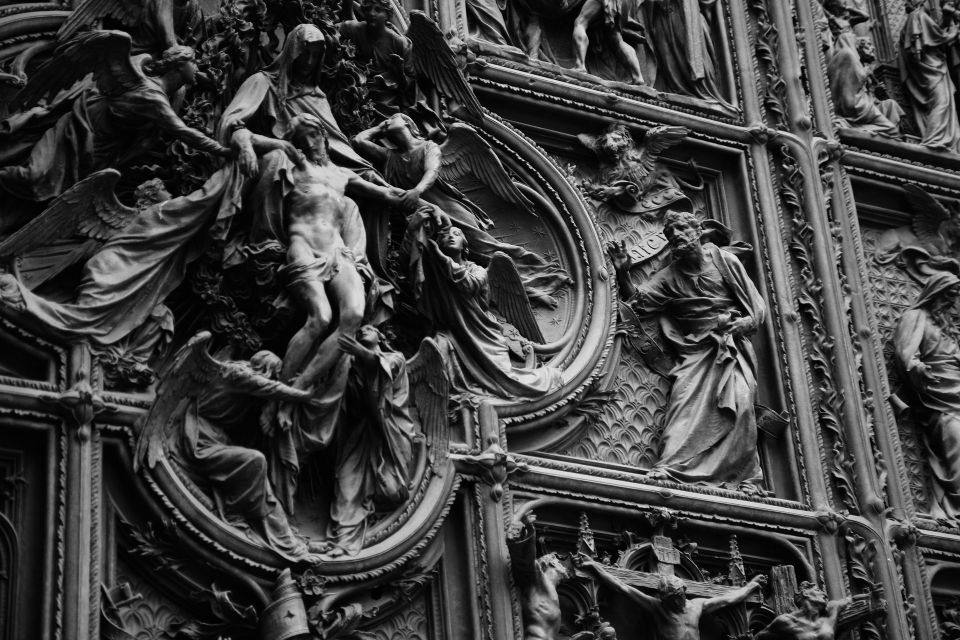
Duomo rooftop sessions can be hot, bright, and crowded depending on the time of day. A smart move is going in the morning, when temperatures are often kinder and the city feels calmer at the start of your day.
If you’re booking a time slot, pick morning if you can. You’ll likely enjoy the climb and the time on the terraces more.
For photos, the rooftop is where you should slow down and aim. Instead of taking one quick shot and moving on, stop at a couple of viewpoints and let your eyes adjust. You’ll also want to watch your footing on stair areas so you don’t rush your shot and then rush your descent.
Renovation Notes: What You Might Notice at the Cathedral
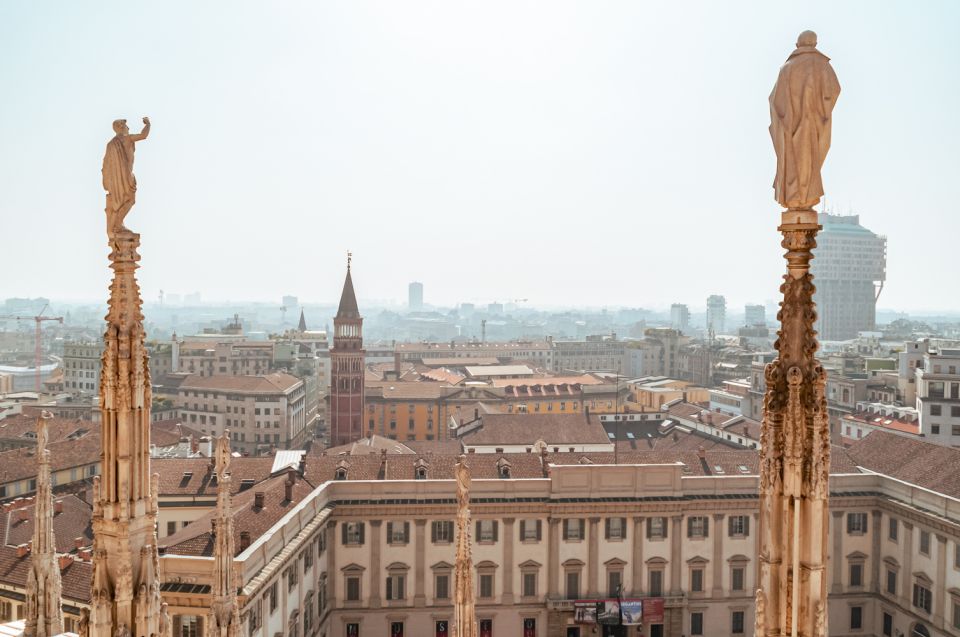
The Duomo is in a major multi-year renovation period. You may notice parts of the facade that look newly cleaned or restored, depending on what’s currently being worked on.
This doesn’t ruin the experience—it can even help you see the building’s surface details more clearly. Still, it’s good to know in advance so you’re not surprised by scaffolding or temporary visual changes in the complex.
Price and Value: Is $70 Worth It?
At $70 per person for a two-hour guided visit with entrance tickets included for both the cathedral and the rooftop climb, you’re paying for three things: access, guidance, and time.
Access is key because Duomo security and entry flow can eat up your energy. A guided format helps you stay on schedule and avoid pointless waiting.
Guidance is the second value driver. The tour isn’t random. You’ll hear specific details—like the number of steeples—and you’ll get pointed toward details that are easy to miss when you’re self-guiding.
The rooftop component is the third reason the price feels reasonable. Without a guided plan, it’s easy to underestimate the stair effort and overestimate how much you’ll actually enjoy the view once you’re tired.
If you’re in Milan for a short visit, this is a practical use of limited time.
Who Should Book This Tour (and Who Should Rethink It)
This tour is best for you if:
- you want a structured, guided cathedral visit in about two hours
- you care about seeing the Duomo from above for skyline photos
- you enjoy learning architectural details, not just walking from point to point
- you like small groups and clear audio support
You may want to choose another option if you:
- need wheelchair access for the terraces (the second terrace involves about 80 steps, and the descent is via stairs)
- have difficulty with extended stair climbing because the descent totals around 250 steps
- aren’t prepared for strict dress rules and security screening
One more tip: wear comfortable shoes. You’ll be inside, then on stairs, then descending stairs. That’s the rhythm.
Should You Book? My Honest Take
Book this if you want the Duomo experience to feel ordered and rewarding, not like a long search for the best photo spot. The interior and terraces in one guided package is a strong use of time, and the guide-led details—mosaics, windows, statues, and steeples—turn the visit into something you can actually talk about later.
Skip or rethink if stairs are a deal-breaker for you. The terraces visit has real stair demands, and it’s not set up for wheelchair or mobility issues.
If your Milan plan includes time around the Duomo area, you’ll also be well placed for an easy continuation afterward. The cathedral area sits right in the city’s heart, close to the kinds of historic streets and shopping galleries that make this neighborhood so fun to wander after your rooftop views fade.
FAQ
How long is the Milan Cathedral and Terraces guided experience?
The tour lasts 2 hours.
What is included in the $70 per person price?
It includes the entrance ticket, a certified monolingual tour guide, headphones from 6 participants, and a small group tour.
Are Cathedral and rooftop tickets included?
Yes. Tickets for the cathedral and the rooftop climb are included.
What are the dress rules for entering the Duomo?
You need clothing appropriate for a religious site, including covered knees and shoulders. Short skirts aren’t allowed, and sports shirts are not acceptable.
Are there restrictions on what I can bring into the cathedral complex?
Yes. You cannot enter with helmets, glass objects, or luggage. Large bags are strongly discouraged, and you should expect security checks where you may need to empty pockets and open bags.
Is the terraces visit accessible for wheelchair users?
No. The terraces are not accessible for wheelchair users or those with mobility problems because reaching the second terrace involves climbing 80 steps, and the descent is via stairs (250 steps).