REVIEW · MILAN
Milan Dark Ghost Tour on Foot
Book on Viator →Operated by Citywalkers · Bookable on Viator
Milan gets eerie after dark. This on-foot ghost tour in the city center mixes real Milan history with spooky tales, told in plain, story-first English without gimmicks or jump scares. You’ll walk to places most people rush past, from Porta Venezia to the Duomo.
I love two things most: the licensed English guide and the focus on real-history storytelling instead of cheap thrills. The main thing to watch is value and timing—at $94.91 for about 2 hours, you should only book if you’re okay walking in the dark and if your confirmation looks solid, since the tour needs a minimum group size.
In This Review
- Key Highlights You’ll Care About
- Why This Milan Dark Ghost Tour Feels Less Like a Theme Park
- Price and Time: Is $94.91 Worth Two Hours on Foot?
- Meeting Points, Walking Pace, and What to Wear in Milan Night Air
- Porta Venezia: Santa Margherita, a Notorious Nun, and Convent Crime
- Duomo di Milano: The White-Eyed Figure in Wedding Photos
- Pinacoteca Ambrosiana: Haunted Rooms, a Ghost, and the Search for a Lover
- Via Torino: A Narrow Street, an Icy Wind Feeling, and a Serial Killer Legend
- Colonne di San Lorenzo: The Great Plague of Milan and a Barber’s Bad Luck
- The Real Secret Sauce: The Guide’s Storytelling (Including Names Like Marco)
- Who Should Book This Tour (And Who Might Pass)
- FAQ
- How long is the Milan Dark Ghost Tour?
- Is the tour offered in English?
- Where do I meet the guide?
- Will there be jump scares or special effects?
- Are museum or monument entrance fees included?
- Does the tour run in bad weather?
- Can I cancel and get a refund?
- Should You Book This Milan Dark Ghost Tour?
Key Highlights You’ll Care About
- Small group size (30 max) keeps the pace human and the stories easier to hear on night streets.
- English-speaking, licensed guide means you get clear context, not just scary vibes.
- No jump scares or special effects; the focus is the story, not a jump-out moment.
- Pinacoteca Ambrosiana and plague-era Milan add variety beyond the usual Duomo photos.
- Lesser-known stops like Colonne di San Lorenzo bring you into the city’s darker past.
- Arrive 10 minutes early and look for the guide with a hooded cape at Corso Venezia 47.
Why This Milan Dark Ghost Tour Feels Less Like a Theme Park
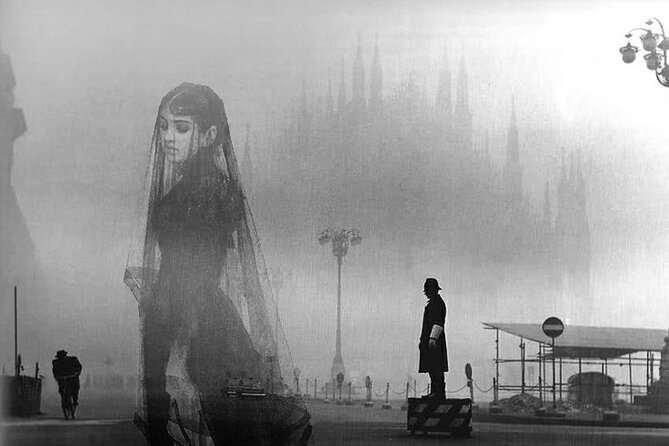
If you’ve done “haunted” tours that feel like a TV set, you’ll appreciate this one’s tone. The tour is built around mysteries, legends, and darker chapters of Milan’s history, and it explicitly avoids special effects or jump-out scares. The result is a more grown-up kind of eerie—quiet streets, attentive listening, and facts tied to atmosphere.
That matters because Milan is a city of contrasts. You’re walking past serious monuments and old stone corridors, then hearing stories that connect crime, plague, and grim human behavior to real locations. It’s not about making you scream. It’s about helping you see Milan differently, at night, without turning it into a caricature.
You can also read our reviews of more tours and experiences in Milan.

Price and Time: Is $94.91 Worth Two Hours on Foot?
At $94.91 per person for an approximately 2-hour walking tour, the value depends on what you want from a guided experience. If you’re mainly after photos, you can do that yourself. If you want story structure, local context, and a guide who keeps the group moving at a comfortable pace, the price starts to make sense.
Also, this isn’t a short stroll through one street. It’s multiple stops—Porta Venezia, the Duomo area, the Pinacoteca Ambrosiana, Via Torino, and Colonne di San Lorenzo—so your money buys both access to the pacing and the connective tissue between sites. One practical note: the schedule is “about 2 hours,” but some groups may feel closer to 3 hours if the guide takes questions or slows down for the atmosphere.
Meeting Points, Walking Pace, and What to Wear in Milan Night Air
The tour starts at Corso Venezia, 47, 20121 Milano, and ends at Corso di Porta Ticinese, 16, 20123 Milano. Plan to arrive 10 minutes early and look for the guide with a hooded cape. You’ll also get a mobile ticket, which is handy if you’re bouncing between sights and don’t want paper.
The big practical factor is footwear. This is a night walk in the historic center, and the route includes narrow streets. Comfortable shoes are non-negotiable. And dress for the weather: the tour runs in all weather conditions, so you’ll want layers you can move in.
The group is capped at 30 people or less, which helps. You’re not stuck behind a crowd of strangers for the best parts of the story.
Porta Venezia: Santa Margherita, a Notorious Nun, and Convent Crime
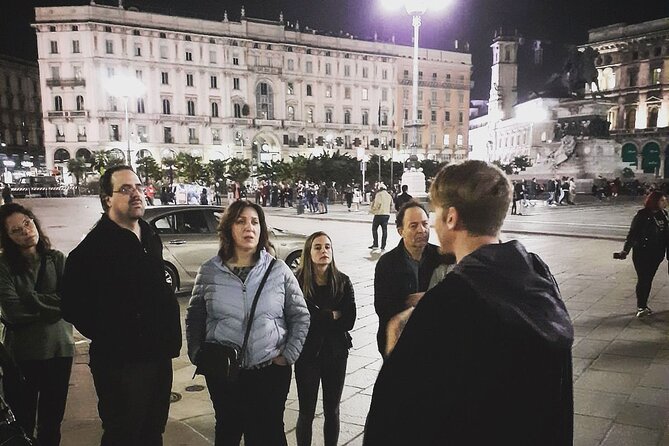
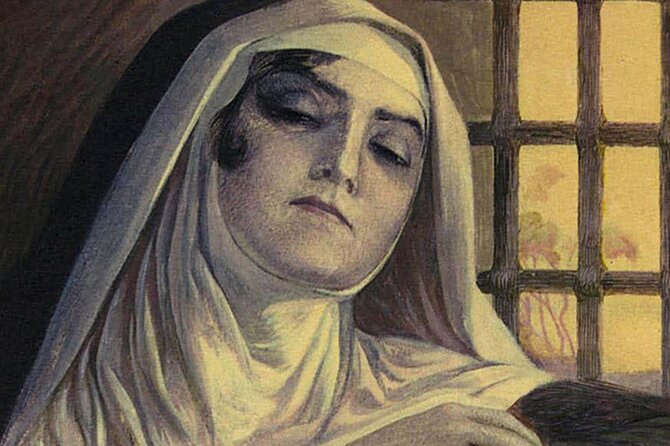
The first stop is Porta Venezia, tied to a story that starts with a convent and turns into something darker. You’ll hear about the most emblematic figure from Santa Margherita—often described as the famous nun of Milan who became linked to murder. The angle is not supernatural. The fear comes from the idea of corruption and violence in a place you’d expect to be safe.
What I like about this opening is that it sets the tour’s rules. You’re not being dragged into a horror movie. You’re being asked to pay attention to human choices—how institutions can hide rot, and how rumor and reputation can travel faster than truth.
A practical drawback: the stop is short (about 10 minutes), so if you’re the type who likes deep Q&A, you’ll probably want to ask your questions later as the group moves.
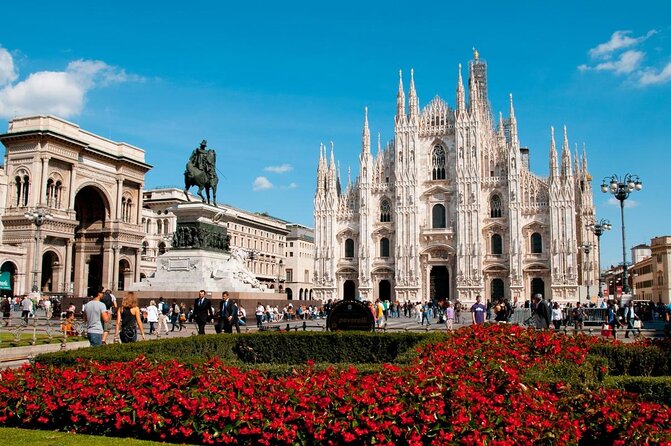
Duomo di Milano: The White-Eyed Figure in Wedding Photos
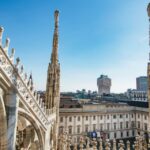
Next up: the Duomo di Milano. This stop is built around a modern kind of “proof”—photos. The story involves a white-eyed spooky figure dressed in black, said to appear in pictures taken behind newlyweds coming out of the Duomo. The guide then connects that legend to why people keep repeating it.
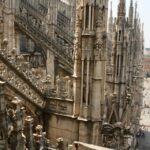
Even if you’re skeptical, this stop works because it’s about how stories spread. Milan has always been a city where people gather for major moments. Add the Duomo’s power and scale, and you get the perfect setting for legends to latch on.
Tip for enjoying this stop: keep your eyes moving. You’ll likely hear the story in a way that makes you notice details you would normally ignore during daylight sightseeing—where people stand, how light hits stone, and why the legend sticks.




Pinacoteca Ambrosiana: Haunted Rooms, a Ghost, and the Search for a Lover
At the Pinacoteca Ambrosiana, the mood shifts. Instead of crime in a convent, you get an eerie tale set in the empty rooms of a museum at night. You’ll hear about a beautiful deadly ghost wandering for centuries, looking for a new lover.
This stop is special because it adds pacing variety. The Duomo story is tied to crowds and photos. Porta Venezia leans into institutional wrongdoing. Pinacoteca Ambrosiana goes for atmosphere—quiet rooms, cold stillness, and the idea of longing that never turns into closure.
One note to manage expectations: the stop is about 10 minutes, so you won’t get a long museum-style visit. This tour is not trying to replace your daytime admission. It’s using the location as a stage for narrative.
Via Torino: A Narrow Street, an Icy Wind Feeling, and a Serial Killer Legend
Then you walk to Via Torino, described as a dark, quiet street in the historic center. Here the story turns toward a ghost of a famous serial killer, still hunting for the next victim. The guide leans into the idea of an icy wind feeling down a narrow corridor of old streets.
This is the stop where the tour can feel most intense—still not a jump-scare event, but the subject matter is darker. If you’re sensitive to true-crime themes, you may want to mentally brace yourself for this one.
The upside is that this kind of street storytelling is exactly why walking tours beat audio guides. When you’re physically in the narrow space, the story’s “why here” makes more sense than it would from a distance.
Colonne di San Lorenzo: The Great Plague of Milan and a Barber’s Bad Luck
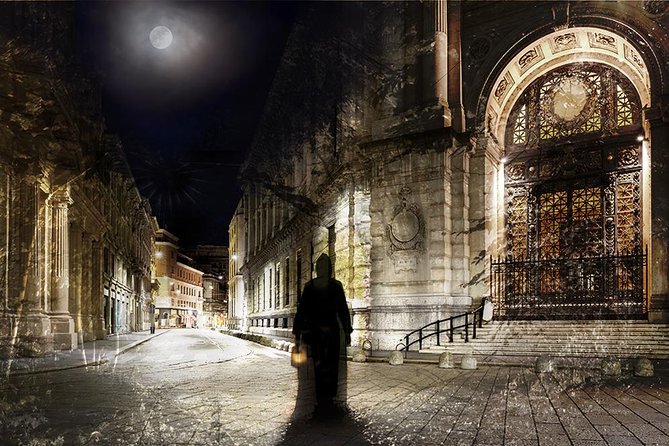
The final major stop is Colonne di San Lorenzo, tied to the Italian plague of 1629–31—often called the Great Plague of Milan. You’ll learn it ravaged Northern and Central Italy and may have claimed up to one million lives, around 25% of the population.
Then the guide brings it down to the street level with a grim anecdote: a story that it could be even worse if you were a barber during that period. It’s a small detail, but it changes the tone. You stop thinking in numbers and start thinking in daily life and livelihood.
This stop is about 10 minutes, and it’s also the one with a catch: admission is not included. That doesn’t mean the tour is unusable—it just means you may want to check whether there’s a ticket expectation for that specific element of the stop so you don’t get surprised at the end.
The Real Secret Sauce: The Guide’s Storytelling (Including Names Like Marco)
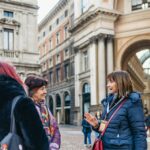
The tour is designed around the guide, and the best versions depend on someone who can hold a group together on a night walk. You’ll get an expert and licensed English-speaking guide, and that matters because the stories aren’t just scary—they’re framed with context so you can follow the chain of ideas from stop to stop.
In the kind of feedback I’ve seen attached to this tour, guides such as Marco (sometimes listed as Marko) are praised for passion, clear storytelling, and keeping people comfortable. One standout pattern: the guide remembers names and manages the group well, so you’re not constantly lost in the back. That’s a big deal on tours like this, where streets can make it easy to get separated from the main “story spot.”
There’s also a practical “don’t ignore this” point. While most experiences likely run smoothly, there have been reported issues like no-shows or unclear communication. Your best defense is simple: make sure your confirmation is active, save any message thread from the operator, and arrive early at Corso Venezia, 47 to meet the hooded-cape guide.
Who Should Book This Tour (And Who Might Pass)
This tour is a strong match if you want:
- spooky storytelling grounded in real locations
- an English guide who connects the dots
- a night walk that avoids jump-scare theater
- darker Milan themes beyond postcard landmarks
It’s also a good fit for people who enjoy history, but in a way that feels human. The plague story and convent corruption don’t come as lectures. They come as narrative, with the city’s physical layout acting like the set design.
You might consider something else if:
- you dislike true-crime themes
- you hate walking in the dark (even without scares)
- you’re short on time and want a quick “hit the highlight and go” sightseeing loop
FAQ
How long is the Milan Dark Ghost Tour?
It runs for about 2 hours.
Is the tour offered in English?
Yes. It’s offered in English.
Where do I meet the guide?
Meet at Corso Venezia, 47, 20121 Milano. Arrive 10 minutes early and look for the guide with a hooded cape. The tour ends at Corso di Porta Ticinese, 16, 20123 Milano.
Will there be jump scares or special effects?
No. The tour is designed for storytelling, not special effects or cheap tricks, and it specifically notes that no one will jump out at you to scare you.
Are museum or monument entrance fees included?
Most stops list admission as free, but Colonne di San Lorenzo notes that the admission ticket is not included.
Does the tour run in bad weather?
Yes. It operates in all weather conditions.
Can I cancel and get a refund?
You can cancel for a full refund if you cancel at least 24 hours before the experience starts. If you cancel less than 24 hours before, the amount paid is not refunded.
Should You Book This Milan Dark Ghost Tour?
If you like your spooky travel with a side of real context—and you prefer story over stunts—this is a fun way to experience Milan at night. The small group, licensed English guide, and the stop-by-stop variety (convent crime, Duomo legends, the Pinacoteca after dark mood, a dark street tale, then plague-era Milan) make it feel like more than a one-note ghost walk.
Just book with your eyes open: it’s not free, it’s weather-dependent like most walking tours, and the tour needs a minimum group size. If you want an eerie walk that respects your comfort while still giving you chills from the history, it’s an easy yes.