REVIEW · MILAN
Private 4-Hour Walking Tour of Milan with private official tour guide
Book on Viator →Operated by Tour Travel & More · Bookable on Viator
Milan hits you fast, in the best way. This private 4-hour walking tour strings together the city’s biggest sights with an official guide and practical pacing for a first trip. I like that it’s private and focused on central areas you can reach on foot, with pickup/drop-off if you’re staying nearby.
Two things I really like: you get a personalized experience with time to ask questions, and the route covers the places that shape Milan’s look and rhythm. You’ll also get help with planning extras—guides like Stephania have even tried to secure tickets for The Last Supper and helped with opera plans at La Scala.
One drawback to consider: there can be a lot of street noise, and in small private groups you may not get headsets. Also, four hours without a formal break can feel like a workout if you’re the type who needs frequent sitting time.
In This Review
- Key highlights that make this tour worth your time
- How the 4 hours work in real life
- Duomo di Milano: start where the city becomes a movie set
- Piazza del Duomo: the square that keeps the Duomo in the frame
- Teatro alla Scala: what a world-famous opera house feels like from street level
- Brera District: fashion streets, artist energy, and real wandering time
- Castello Sforzesco and the Sforza story you can actually see
- Basilica of Saint Ambrose: Italian Gothic, built over decades
- Galleria Vittorio Emanuele II: the shopping mall that acts like a landmark
- Pinacoteca di Brera: a focused taste of 16th to 18th century art
- Piazza Mercanti: modern square vibes with old Milan energy nearby
- What makes the guiding style matter (and what to watch for)
- Price and value: what you’re paying for at $337.51 per person
- Who this private Milan walking tour suits best
- Should you book this private Milan walking tour?
- FAQ
- What’s the duration of the private walking tour?
- How much does it cost?
- Is pickup and drop-off included?
- Is this tour private?
- What language is the tour offered in?
- Are entrance fees included for the sights?
- Does the tour include food and drinks?
- Where does the tour start and end?
- Is a mobile ticket provided?
- Can I cancel for a refund?
Key highlights that make this tour worth your time
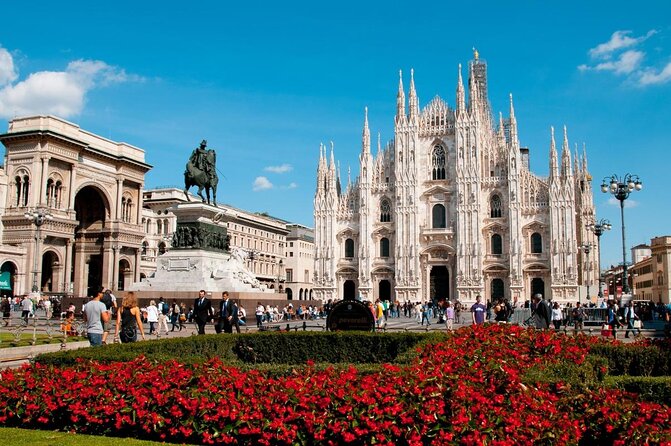
- Duomo first, so you start with Milan’s loudest landmark and build context as you go
- Teatro alla Scala from the outside, with a guide who explains why this building matters
- Brera District walking time, including the fashion lane feel of Brera Alta
- Castello Sforzesco viewpoints, built history you can see from multiple angles
- Galleria Vittorio Emanuele II stop, with serious “shopfront meets architecture” energy
- Pinacoteca di Brera quick museum time, focused on major works without dragging
How the 4 hours work in real life
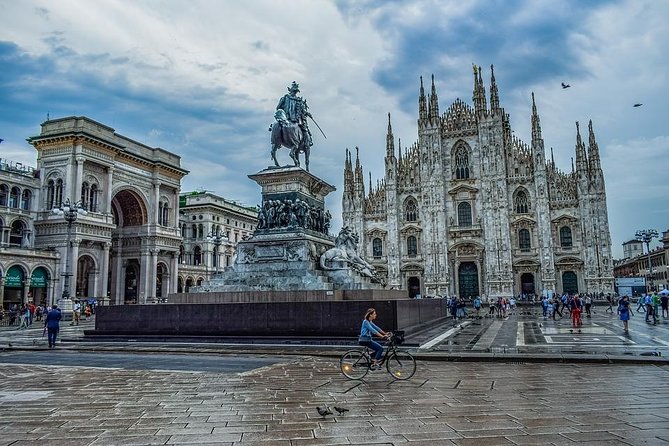
This tour is designed as a tight loop through central Milan, and it’s private the whole time. Expect about four hours of walking and standing, with a guide who moves you between stops efficiently.
The big value here is not just seeing landmarks. It’s understanding what you’re looking at while the city is right in front of you—especially helpful when Milan’s sights are packed so close together that they blur if you’re doing it on your own.
Pickup and drop-off are offered if you’re centrally located. That matters, because Milan’s streets can be a puzzle, and time is better spent on the route than on figuring out where to meet.
You can also read our reviews of more walking tours in Milan
Duomo di Milano: start where the city becomes a movie set
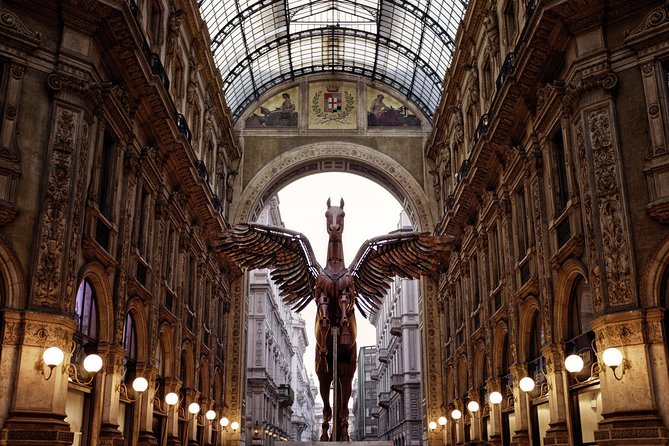
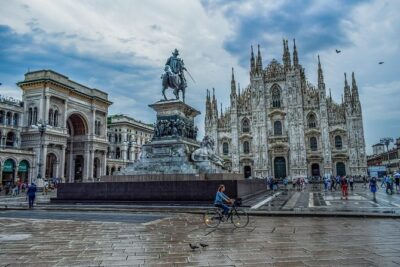
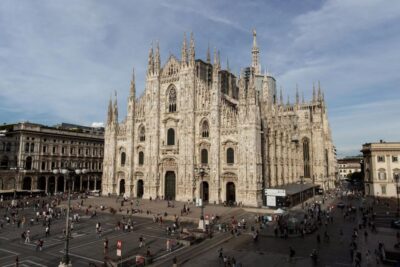
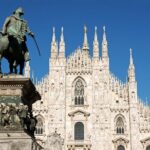
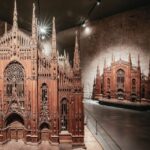
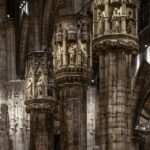
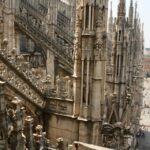
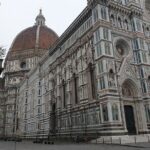
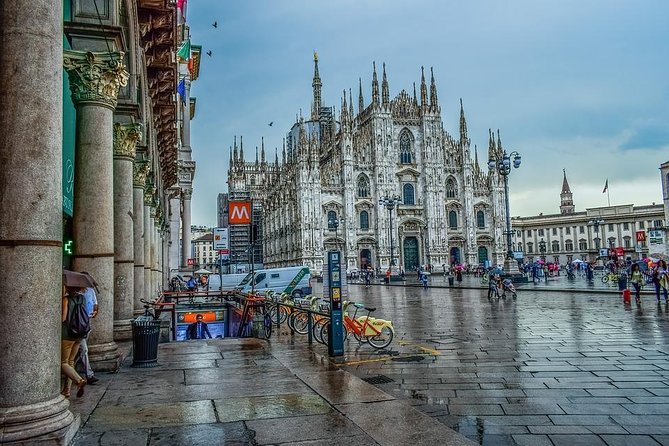
Your first stop is the Duomo di Milano, Milan’s iconic cathedral. It’s one of the world’s most photogenic churches, and it’s also the kind of backdrop that shows up in films—this is the sort of place that made directors look here for a reason.
You’ll spend about an hour here, which is the right amount for a guided orientation and photos without feeling rushed. Without a plan, it’s easy to wander and miss the meaning of the details.
Practical note: the Duomo is visually overwhelming in the best way. If you’re planning to go inside or climb (those entrances aren’t included), you’ll want to manage timing so the rest of the tour doesn’t start feeling like a sprint.
Piazza del Duomo: the square that keeps the Duomo in the frame
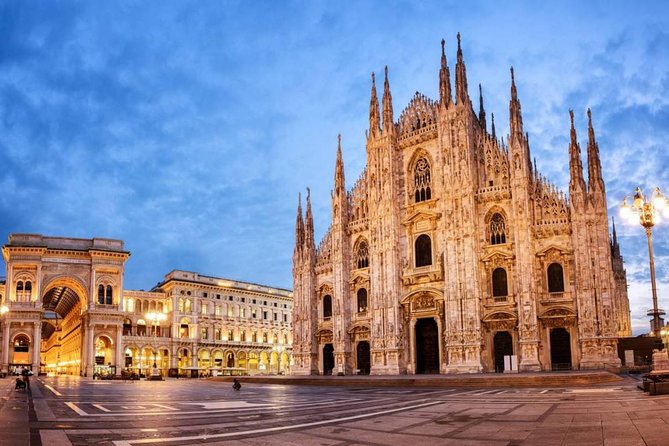
Right near the cathedral, you’ll spend time in Piazza del Duomo. This is the main square, lined with the Royal Palace and wrapped by busy streets on multiple sides.
This short stop is useful because it gives you scale. The Duomo looks different when you see the whole square, not just the front façade, and you start to understand why Milan works the way it does—big monument, big public space.
It’s free to enjoy the views here, and it’s also where the energy of central Milan is easy to feel. If you need a quick reset between big monuments, this is a good spot for it.
Teatro alla Scala: what a world-famous opera house feels like from street level
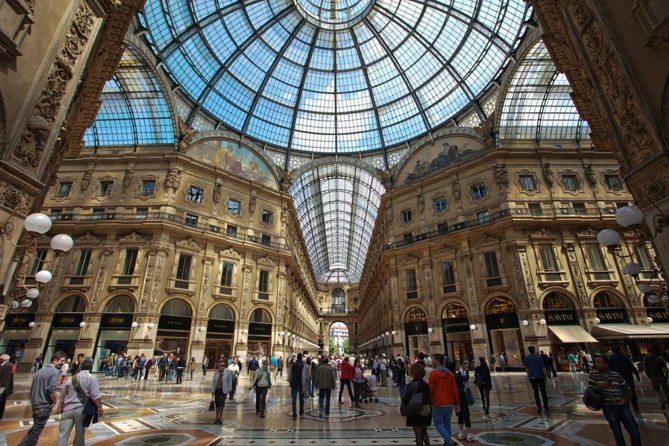
Next up is Teatro alla Scala, and the focus is outside viewing with your guide. You’re not stepping into the building on this stop, but you get context for why it’s considered the most prestigious opera house in the world.
The theater hosts opera, ballet, and symphonic concerts, and it has premieres and retrospectives connected to major composers like Rossini, Verdi, Puccini, and others. It’s built for around 2,000 people, which helps you picture it as more than just a famous façade.
This is the kind of stop that works well on a walking tour. Even if you’re not an opera superfan, you’ll leave with a clearer sense of what Milan treats as culture.
Brera District: fashion streets, artist energy, and real wandering time
Brera is one of Milan’s most fashionable neighborhoods, and you’ll get a full hour there. You’ll see boutiques and high-end stores, but more importantly, you’ll walk the streets in a way that shows how Brera earned its reputation in the 19th century through writers, poets, and artists who lived here.
A standout detail is Brera Alta, a small alley you’ll find on the right side of the street. That tucked-away lane is the kind of place where the district feels less like a catalog and more like a neighborhood.
This stop is free to explore, but it’s not a throwaway. The hour in Brera makes the tour feel less like a checklist and more like you’re learning the city’s mood.
You can also read our reviews of more guided tours in Milan
Castello Sforzesco and the Sforza story you can actually see
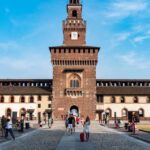
The Castello Sforzesco is a fortress built on the site of an older medieval castle. You’ll learn how the Sforza-Visconti family and their court lived there, and how the castle served as the official residence for the head of the House of Sforza starting in the 1450s.
Then comes the part that makes ruins feel human. By 1625, the castle had deteriorated and was abandoned. Today it stands in a ruined state, owned by the city, and it sits on a hill overlooking Piazza della Scala and Via Garibaldi.
That hill location matters because your views shift as you walk around. Even on a short tour window, you get that sense of elevation and control that a fortress was built to project.
If you love structures with layered timelines—good. If you hate history lectures, ask your guide to point out a few key features quickly, then let yourself roam for a few minutes.
Basilica of Saint Ambrose: Italian Gothic, built over decades
You’ll also stop at the Basilica of Saint Ambrose. It’s Italian Gothic in style, and it was built between 1386 and 1470—so it wasn’t a quick construction, and it doesn’t look like one.
This is a quieter stop compared to the Duomo and the theater areas. It gives your eyes a different kind of architecture to process, and it’s a nice change of pace if you’re starting to feel “big landmark fatigue.”
No entrance fee is listed for this stop in the provided tour info, but you’ll still want to dress and behave appropriately for a church environment.
Galleria Vittorio Emanuele II: the shopping mall that acts like a landmark
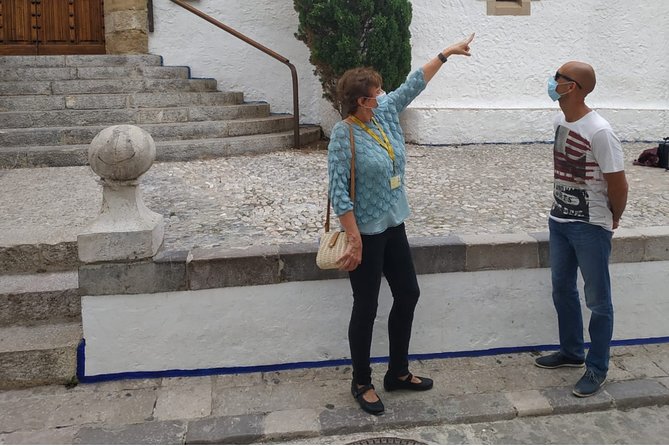
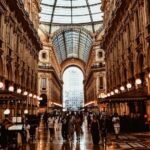
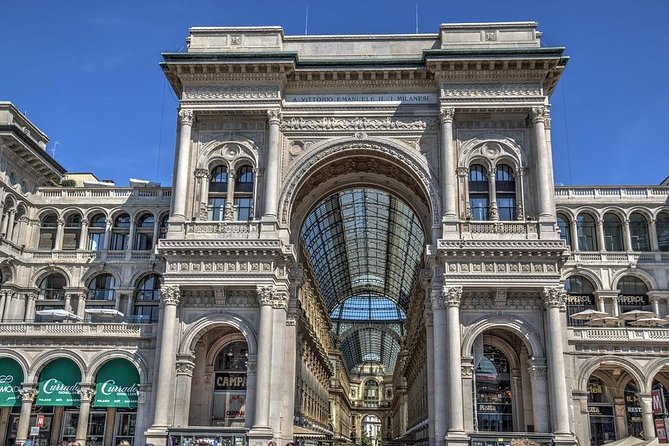
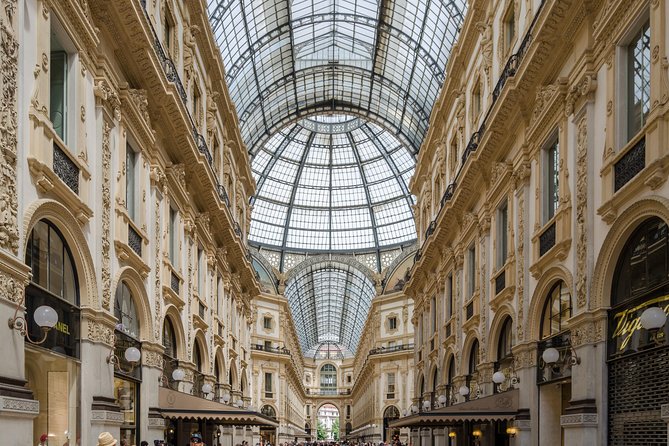
Your tour includes a stop at Galleria Vittorio Emanuele II, with a guide walking you through the space. This is one of the world’s oldest shopping malls, and it has two levels and about 415 stores—so yes, you can’t possibly see everything.
The key isn’t shopping. It’s architecture and atmosphere. This is one of those places where the interior feels like a public room—sunlight, ironwork, and the kind of elegant design you usually only see in postcards.
You get about 15 minutes here. For many people that’s enough to orient, take photos, and enjoy the contrast between this polished gallery and the streets outside.
Pinacoteca di Brera: a focused taste of 16th to 18th century art
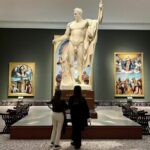
Next is Pinacoteca di Brera, one of Italy’s prestigious museums. Your guided visit is shorter (about 20 minutes), but it’s long enough to target a major highlight.
The museum holds paintings from the 16th to 18th centuries. One famous work is Caravaggio’s The Taking of Christ, and the supplied info notes it was commissioned by Vittorio Emmanuele II before he later became king in 1796.
If you’re the type who loves art but doesn’t want to spend an entire day inside a museum, this stop gives you a strong starting point. If you’re a serious art person, you’ll probably want to plan a longer solo visit later—this tour’s museum moment is a sampler, not a marathon.
Piazza Mercanti: modern square vibes with old Milan energy nearby
Then you’ll head to Piazza Mercanti, described as a new and modern square with a lakeside feel and international dining options nearby. It also connects to plenty of activities, along with boutiques and shops in an upscale but lively high-rise complex.
You’ll spend about an hour here, which is longer than most “pause and go” stops. This time window is valuable because it gives you room to absorb Milan beyond the monuments, and it’s a good place to grab a drink or snack if you’re keeping yourself fueled.
This stop also helps balance the morning and early afternoon intensity with something more flexible. Your guide can point you toward what’s worth your time depending on what you like—food, shopping, or just wandering.
What makes the guiding style matter (and what to watch for)
The private official guide is the heart of the experience. And the strongest signal from real-world feedback is that guides do more than recite facts—they tailor the day.
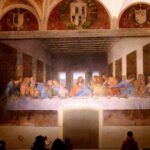
Stephania is a name that comes up for personalization and extra effort. One account notes she worked hard to try to get tickets to view The Last Supper fresco, which isn’t part of the standard tour. Another mentions she helped with tickets for an opera at La Scala and even guided metro planning for the next day.
That’s the practical advantage of private guiding: when you have questions like Where do I go next? or How do I make this work with the limited opening times? you get real answers on the spot.
One thing I’d keep in mind: noise can be an issue. In small private groups, headsets may not be used. If you already know you struggle in loud environments, it’s worth asking before you go whether audio headsets will be provided for your group size.
Also, pacing: four hours can feel grueling if you prefer frequent sitting. If that’s you, plan for a light snack and hydration before the tour starts, and know you can request a short pause.
Price and value: what you’re paying for at $337.51 per person
At $337.51 per person for about four hours, this isn’t a bargain-basement walking tour. But it also isn’t trying to be one.
Here’s what you’re buying:
- A private official guide for the full time, so you’re not sharing attention with strangers
- Hotel/apartment pickup and drop-off if you’re centrally located, which saves time and stress
- Local taxes included, so you’re not surprised later at checkout
- A mobile ticket for the experience itself
- A route that covers major anchors across multiple Milan areas in one day
Where the value shows up is decision-making speed. Milan’s landmarks are close, but planning the “right” order and understanding what you’re seeing takes time. This tour compresses that learning curve into one guided block, which is worth real money if you don’t want to waste your limited vacation hours.
If you’re traveling with a group and can use group discounts (offered), the price can feel even more reasonable. If you’re solo or only two people, it can still be a good deal if your alternative is paying for multiple separate paid entries and tours.
Who this private Milan walking tour suits best
This tour fits best if you want:
- A first-timer route through central Milan that hits the big visual anchors
- A guide who can answer questions and adjust based on your interests
- Enough structure to feel confident, plus enough neighborhood time to still wander
It’s also a good match if you care about culture but don’t want museum marathons or complicated logistics. The walking format helps you see Milan as a city, not just a set of tickets and lines.
If you’re the type who loves deep museum time, you’ll likely want to add a longer independent visit to Pinacoteca di Brera later. And if you dislike standing for hours, consider planning a slower day around it so you don’t feel wiped out.
Should you book this private Milan walking tour?
I’d book it if you’re visiting Milan for the first time and you want a guided path that makes the city’s layout and landmarks click. The mix of Duomo, La Scala area context, Brera walking time, Castello Sforzesco viewpoints, and a quick art hit in Brera makes it efficient without feeling purely rushed.
I’d think twice if you know you need frequent breaks or you’re sensitive to hearing in noisy streets. For those cases, ask about audio headsets and plan for a rest later the same day.
If you’re hoping to build ticket plans for big experiences—like an opera at La Scala or The Last Supper—going private gives you a real advantage. Guides have shown they’ll help with those requests, at least as far as their effort goes.
In short: this is a practical, well-paced “Milan orientation” tour with strong added value from the guide, and it’s a smart way to get your bearings fast.
FAQ
What’s the duration of the private walking tour?
The tour lasts about 4 hours.
How much does it cost?
The price is $337.51 per person.
Is pickup and drop-off included?
Yes, hotel/apartment pickup and drop-off are included if you’re centrally located.
Is this tour private?
Yes. It’s private, and only your group participates.
What language is the tour offered in?
The tour is offered in English.
Are entrance fees included for the sights?
No. Entrances fees are not included. The Duomo stop is listed as admission not included, and Pinacoteca di Brera is also not included.
Does the tour include food and drinks?
No. Food and drinks aren’t included.
Where does the tour start and end?
It starts in Milan, Metropolitan City of Milan, Italy, and ends back at the meeting point.
Is a mobile ticket provided?
Yes, a mobile ticket is offered.
Can I cancel for a refund?
Yes. You can cancel up to 24 hours in advance for a full refund.