REVIEW · MILAN
Skip the Line: Last Supper Tour in Milan
Book on Viator →Operated by Wanderinitaly · Bookable on Viator
A wall painting with a strict time limit. This skip-the-line Last Supper tour gets you into the experience faster, with an art historian briefing that helps you actually see what’s in front of you. You’ll also connect the mural to its home at Santa Maria delle Grazie, a UNESCO site tied to Milan’s Renaissance ambitions.
What I like most is the setup: you’re not just staring at a famous image, you’re given context first. You’ll get an introduction to Leonardo da Vinci’s world and the Renaissance moment in Milan, and then you get dedicated viewing time—typically at least 15 minutes—so the artwork can land. I also appreciate that headsets are available if the group is larger, so the guide’s explanations stay clear.
One drawback to plan around: museum preservation rules keep the actual viewing tightly timed, and you may feel the clock more than you expect. If you’re hoping for a long, wandering, quiet hour in the room, this isn’t that.
In This Review
- Key highlights worth your attention
- Meet at Santa Maria delle Grazie: fast start, clear orientation
- Why skip-the-line helps here more than you’d expect
- The Renaissance briefing that makes the painting readable
- Entering Il Cenacolo: what happens once you’re inside
- Santa Maria delle Grazie context: the church setting you shouldn’t ignore
- That strict 15 minutes: how to get the most from a short window
- Practical stuff that prevents headaches (ID, bags, headsets)
- Timing and logistics: the tour stays short on purpose
- Price and value: what you’re really paying for
- Who should book this, and who might want another option
- Should you book the Skip-the-Line Last Supper Tour?
Key highlights worth your attention
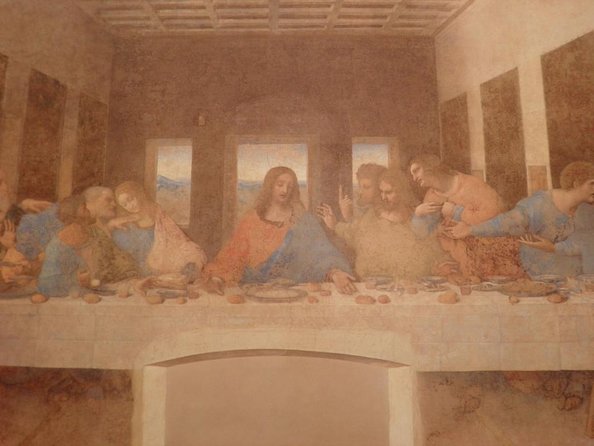
- Skip-the-line access helps you spend more time focused on the painting
- Art historian guide briefing before entry makes the mural easier to read
- Audio headsets for groups over 5 keep explanations clear and on track
- 15-minute minimum viewing in front of The Last Supper (time is enforced)
- Santa Maria delle Grazie context ties the mural to the site and era
- No-bag security rules mean travel light so you don’t waste time
Meet at Santa Maria delle Grazie: fast start, clear orientation
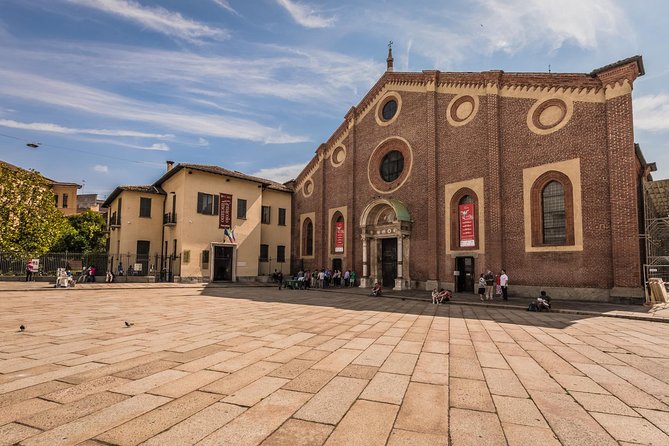
The meeting point is outside Leonardo’s Last Supper Museum at Piazza di Santa Maria delle Grazie, 2, in central Milan. This matters more than it sounds, because the museum area is busy and there are often other groups clustering nearby. If you’re even a little late, you’ll feel it quickly when the group moves on to ticket check-ins and security steps.
Right from the beginning, this tour is designed for efficiency. Your guide leads you through the orientation so you’re not arriving cold, staring at a masterpiece without any guide rails. And because it’s a short outing (about 45 minutes), you’ll want that early structure to do its job.
Tip: bring your ID document, and keep your day bag plan simple. The museum has strict rules about what you can bring inside, and that can slow you down if you’re improvising at the last second.
You can also read our reviews of more tours and experiences in Milan
Why skip-the-line helps here more than you’d expect
In most big-city attractions, skip-the-line is a nice perk. At the Last Supper, it’s the difference between a smooth visit and a frustrating one, because entry is tightly managed. The painting is protected with conservation controls, so access is scheduled and time-based. That’s why the “skip-the-line” component is really about getting you to the right checkpoints quickly and getting seated into the flow of the visit.
This also affects your mental approach. When you’re rushed, you tend to look at the painting like a postcard. When you’re oriented first, you start noticing structure—positions, gestures, and how Leonardo organized the scene. The guide’s pre-entry talk is what turns the “iconic image” into an image you can actually interpret in a few minutes.
Even if you know the basics of Leonardo and Renaissance Italy, you’ll get a cleaner map of what you’re seeing. The most praised experience in this kind of visit is usually the moment the guide connects details to meaning, then hands you that 15-minute viewing block like a guided lens.
The Renaissance briefing that makes the painting readable
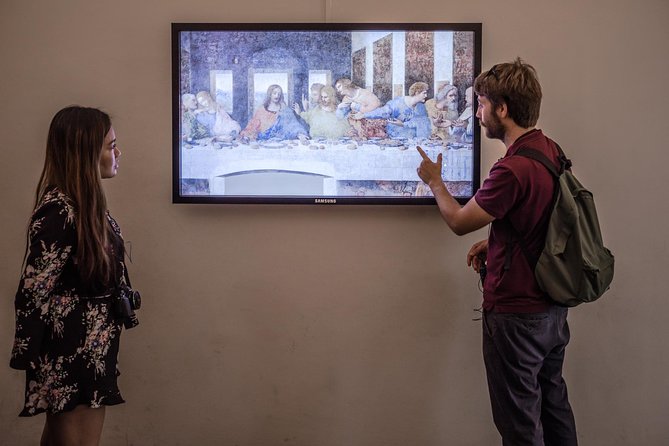
Before you enter, your professional art historian guide sets the stage. You’ll get a practical introduction to why this period mattered in Italy—especially in Milan—plus the specific reasons Leonardo da Vinci was commissioned for this project.
One of the most helpful threads is the political and artistic engine behind it. You’ll hear how Ludovico il Moro, Duke of Milan, commissioned Leonardo and shaped the kind of work that would symbolize Milan’s place in Renaissance culture. That background helps you understand why the painting isn’t just religious art; it’s also a statement made in a specific time and power setup.
You’ll also get context tied to Leonardo himself. Milan is full of his legacy, and this guide approach helps you connect the city to the artist instead of treating the Last Supper as a standalone stop. If you want to walk away with more than a photo and a checklist, this is the part that delivers.
If you’re curious about what the guide will sound like, guides are often praised for being passionate and detailed. Names mentioned in positive feedback include Sylvia, Maham, Giada, and Jada. You can’t count on a particular guide name, but if you get a speaker in that mold—clear, structured, and willing to explain what you’re seeing—you’re in for an easier, more satisfying visit.
Entering Il Cenacolo: what happens once you’re inside
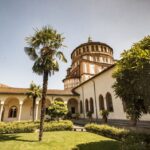
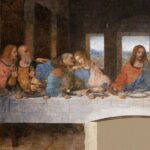
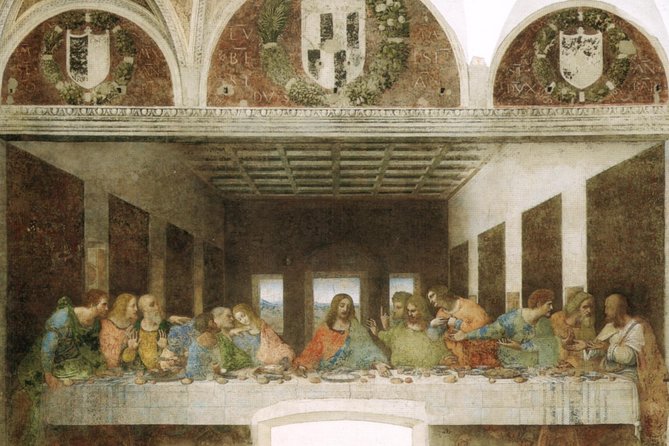
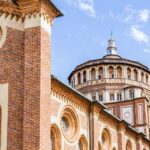
The main “target” is Il Cenacolo, the mural housed on a wall of the refectory at Santa Maria delle Grazie. The site is also called the Cenacolo Vinciano, and your guide frames it as a masterpiece of the Milanese Renaissance.
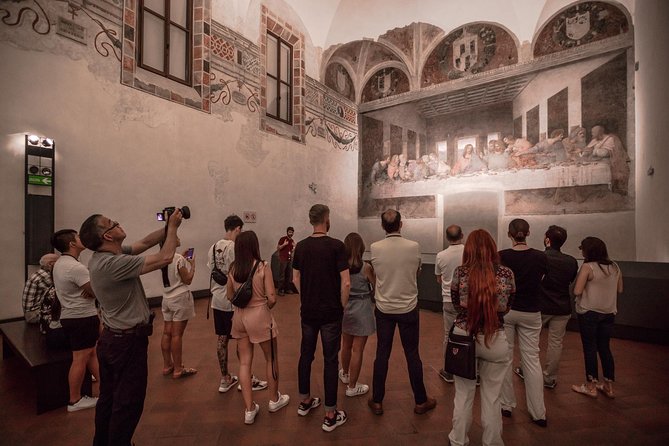
Then you do the part you came for: you’re taken straight to the front of the visit flow and given time to view The Last Supper. In this kind of entry format, you should plan on spending at least 15 minutes in front of the painting. That sounds short on paper, but it’s a realistic length for enforced museum time, especially when a guide is helping you see the scene with intention.
Here’s what makes this moment feel different from viewing it at a distance or through reproduction. Leonardo’s composition is built to be read. The guide’s earlier talk helps you look for the “why” behind what your eye naturally notices first—who reacts, how groups sit within the scene, and how the moment is staged.
Practical reality check: you will be timed. Some people wish they had an extra few minutes. The best way to handle that is to go in knowing the clock is real. Use your 15 minutes actively, not passively.
Santa Maria delle Grazie context: the church setting you shouldn’t ignore
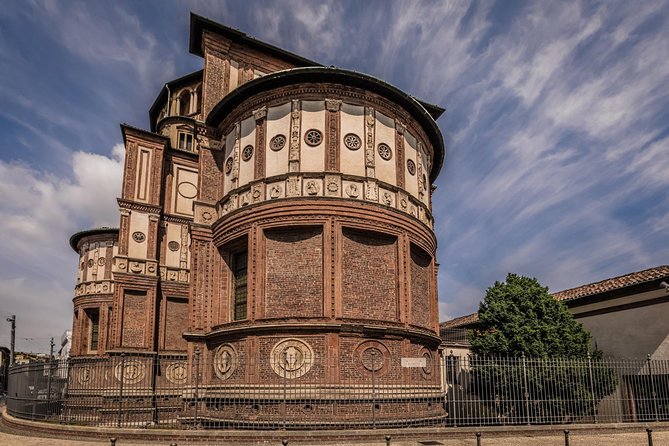
After the painting viewing, the tour keeps your experience anchored in the place where it exists. Santa Maria delle Grazie isn’t just a backdrop. It’s the home that shaped how the work was commissioned, displayed, and preserved over centuries.
Your guide gives additional context around Renaissance art and Leonardo’s role in Milan, tying the mural to the wider site story. This doesn’t turn into a long church tour. Think of it as the “why this matters here” layer—the part that makes the mural feel grounded rather than floating in space.
This stop can be especially useful if you’ve never studied Renaissance patronage. You’ll come away with a stronger sense of how art, politics, and place converged in late 15th-century Milan. And because the total tour time is short, you get just enough site connection without eating up your day.
If you’re hoping for broad access to every part of the church complex, calibrate expectations. The Last Supper visit is tightly controlled around preservation and scheduling. Your time is focused on the mural experience rather than roaming everything at leisure.
That strict 15 minutes: how to get the most from a short window
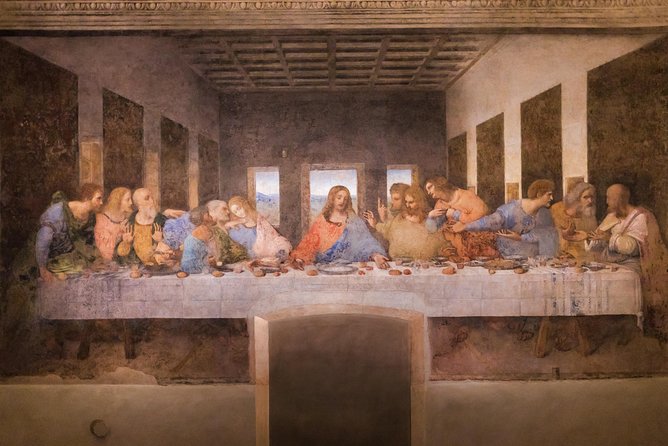
The single biggest question is always the same: will 15 minutes be enough?
For most people, yes—because the guide gives you a way to look. People who rate this tour highly tend to focus on one theme: the explanations change the viewing. When you know what to notice, the time feels purposeful instead of thin.
But it can feel short if you’re expecting a slow, reflective stare in silence. The museum enforces a time limit, and entry flow can also involve extra checkpoints before you reach the viewing room. Some visitors have experienced the process as more check-in heavy than expected, including multiple ticket scans and exchanges. That doesn’t mean it’s bad; it just means you should be prepared and keep your documents ready.
How to maximize your 15-minute block:
- Stand where your viewing is least obstructed and commit to looking in one direction at a time.
- Let the guide’s points guide your first 5 minutes, then switch to your own “scan” for 5 minutes.
- Finish with a slower look at gestures and grouping, which is where the scene starts to make sense.
If you’re a photographer, plan for the fact that museum rules govern access and behavior. Don’t build your schedule around taking lots of shots—build it around reading the painting.
Practical stuff that prevents headaches (ID, bags, headsets)
This tour is very doable, as long as you respect the rules that protect the artwork.
ID requirement: You must bring a valid ID document (either the original document). Have it with you. Don’t plan to “find it later.”
Bags, food, drinks: Bags of any size are NOT allowed inside the Last Supper Museum, and neither are food or drinks. This is a major planning detail. Travel with minimal items so you’re not stuck dealing with storage before entry.
Headsets for clarity: If the group is more than 5 people, you’ll be offered headsets to hear the guide clearly. This helps a lot in a room where sound can carry oddly and where the guide’s pace matters.
Group size: The tour has a maximum of 34 travelers. That’s not tiny, but it’s small enough for the guide’s explanations to stay organized and for headsets to do their job when needed.
Also, the site is near public transportation, which helps if you’re mapping your day. If you’re arriving on foot, give yourself extra time. Milan moves fast, and the meeting point area can be crowded.
Timing and logistics: the tour stays short on purpose
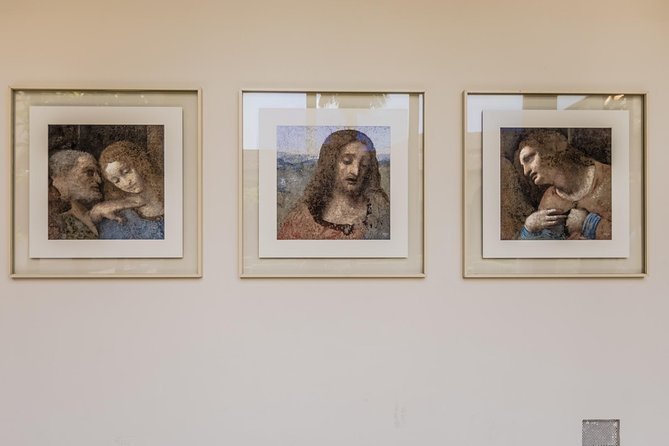
The experience is about 45 minutes total. That short format is the whole idea: you get a guided “front-load” of context, then a focused viewing block, then you exit without dragging the day into a long queue-and-wait marathon.
The best-fit mindset is: treat this as a precision visit. You’ll learn the key threads—Leonardo, Renaissance patronage, the Milan context—then your eyes get to do their work.
If you have dinner reservations (common in Milan), the timing can work nicely. People also like that it’s quick enough to fit before evening plans, which is especially helpful when you’re balancing major sights.
One note: because Milan transportation disruptions can happen, don’t plan your day as if nothing will change. Keep a flexible route back to your hotel or apartment, especially if you’re using trams or buses. A short museum visit is usually fine; the challenge can be the return.
Price and value: what you’re really paying for
Even without quoting a number, it’s fair to say this tour can feel pricey if you think of it as 15 minutes of standing in a room. If you only value “wall time,” it will be hard to feel like a bargain.
But if you value time saved and meaning added, the value is different. You’re paying for:
- Skip-the-line access that reduces wasted waiting
- A professional art historian guide who helps you see the painting instead of just recognize it
- A guided flow through controlled museum processes, which matters at this specific site
The museum limits viewing for preservation reasons, so the experience isn’t trying to be “long and lazy.” It’s trying to be “right and readable,” with expert context doing the heavy lifting.
If you can only afford one Last Supper-related experience, this is often the kind that earns its cost. If you’re traveling on a tight budget and simply want to see the mural as long as you like, you may want a different approach that prioritizes cost over guide time.
Who should book this, and who might want another option
This works best if:
- You want a guided introduction so your viewing time feels productive
- You’re short on time and want a streamlined visit
- You like art history that connects to place, politics, and patronage
- You’re comfortable with a strict museum time limit
It may not be the best choice if:
- You’re hoping for maximum freedom in the room and zero time pressure
- You’re planning to bring a lot of luggage or bulky items (bags are not allowed)
- You want a slow church-and-cloister wandering experience beyond the Last Supper focus
Families can generally participate, with a specific note for very young children: children up to age 1 do not need a reservation if carried by a parent and entering without a stroller. (Still, keep in mind the museum’s strict no-bag rule.)
Should you book the Skip-the-Line Last Supper Tour?
Book it if you want the smart version of this famous sight: guided context first, then focused viewing with skip-the-line entry. This tour is built around the reality of controlled access, and the best outcomes come when you treat the 15-minute viewing window like a chance to look closely, not a chance to linger.
Pass or reconsider if you feel you’ll be unhappy with a hard time limit or if you need to bring extra items with you. In that case, you’ll likely feel the restrictions more than the benefits.
If your priority is to see The Last Supper with clarity and confidence—so you leave Milan understanding what you saw—this is a solid, efficient choice.