REVIEW · MILAN
Highlights of Milan Bike Tour
Book on Viator →Operated by Fat Tire Tours Holdings LLC - Italy · Bookable on Viator
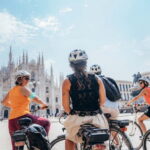
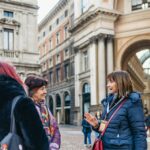
Milan clicks into place faster on a bike. This 3-hour ride strings together big-name sights and lesser-known corners, with audio commentary that keeps the story going as you move, in a small-group format.
I love how the route mixes iconic stops like the Duomo and La Scala with neighborhood breaks where you can actually pause, look around, and take photos. I also like the practical feel of a 3-speed cruiser setup—geared for city cruising—plus helmet-and-poncho comfort that makes the whole thing easier than it sounds.
One consideration: Milan’s streets can mean cobbled streets and plenty of traffic energy, so you’ll want steady footing and patience. And if you care about going inside major sites, remember entrance tickets aren’t included, so you may need to plan for that.
In This Review
- Key things to know before you ride
- Milan by bike: why this tour beats a quick hop-on, hop-off
- Getting started at Via Falcone and setting your pace for the day
- Duomo and the surrounding streets: first stop, big payoff
- Galleria Vittorio Emanuele II and La Scala: classic Milan, photographed in motion
- Brera district: art streets and a softer pace
- Monumental Cemetery’s Jewish section and Chinatown: contrast with context
- Arco della Pace and Parco Sempione: a breathing space between monuments
- Santa Maria delle Grazie and Sant’Ambrogio: UNESCO and ancient stones
- Navigli canals and San Lorenzo columns: the finish feels local
- Price and what you truly get for $48.06
- Tips to make the ride easy: shoes, traffic, and kids’ bike sizes
- Who this Milan bike tour suits best
- Should you book this Milan bike tour?
- FAQ
- How long is the Milan bike tour?
- What is the price per person?
- Is the tour offered in English?
- What’s included in the tour price?
- Are entrance tickets to monuments included?
- Where does the tour start, and what time does it begin?
- Does the tour run in bad weather?
- Can children join, and are bikes available in different sizes?
- What is the cancellation policy?
Key things to know before you ride
- Small-group feel (max 14 people): easier pace, more time for your questions.
- English audio + guide talk: the city makes more sense when you hear the why while you ride.
- A classic-to-canal route: Duomo and Galleria down to Navigli canals and San Lorenzo ruins.
- Helmet and ponchos included: you’re set up for safety and typical Milan weather.
- Not every stop includes entry: several landmarks list admission tickets as not included.
- Child bike options exist: limited 20″ and 24″ wheels—ask early if needed.
Milan by bike: why this tour beats a quick hop-on, hop-off
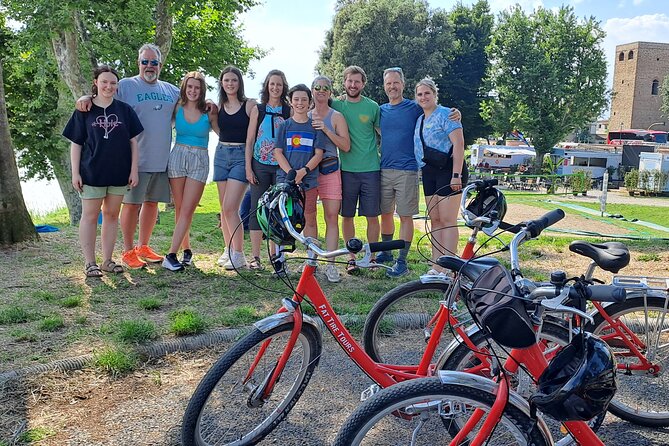
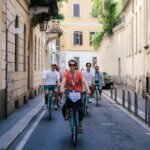
A bike tour works in Milan for one simple reason: the city rewards street-level viewing. You don’t just see landmarks in postcard form—you glide past them in context, turning your head as you would on a walk, but covering more ground.
This ride is built for that sweet spot between sightseeing and breathing room. You get a comfortable 3-speed cruiser bike (so hills and slow stretches don’t feel like a battle), plus a helmet, and ponchos if the weather turns. The tour also runs with a small cap—up to 14 people—which matters. In a big group, you can end up waiting. Here, the pace feels more like a guided neighborhood walk, just with wheels.
The other piece I like is the mix of guided audio commentary and chances to ask questions. Milan can feel dense if you’re trying to read every plaque while dodging bikes and cars. Having the story explained while you ride helps you place what you’re seeing, especially around the historic center and the UNESCO-designated sites later on.
You can also read our reviews of more cycling tours in Milan
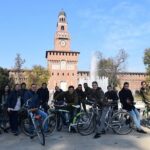
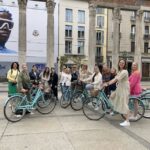
Getting started at Via Falcone and setting your pace for the day
Meet at Via Falcone, 7 (20123 Milano) and start at 10:00 am. The tour ends back at the same place, so you’re not piecing together transit at the end of a busy morning.
What this timing does well: you hit the major central sights early enough to avoid some of the heaviest mid-day crunch. You also get into Brera and the quieter sections while they still feel like neighborhoods, not just backdrops.
The tour format is also worth noting. You’re moving through the city with short pauses at set points—think quick stops to look, photograph, and ask a question. That’s ideal if you like to see a lot without turning your whole trip into a museum day.
If you’re the type who likes long, slow wandering, this won’t replace free time. But it’s a strong way to get your bearings fast and then decide what deserves deeper attention later.
Duomo and the surrounding streets: first stop, big payoff
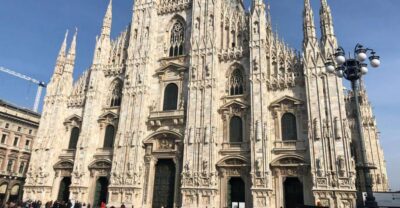
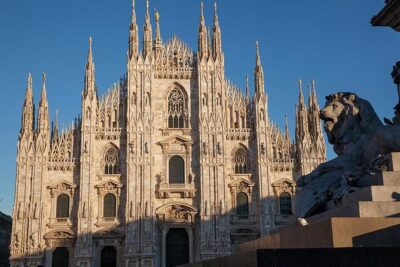
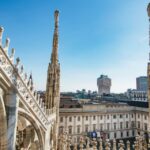
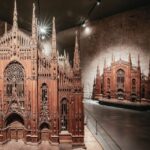
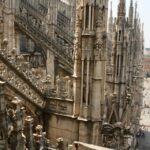
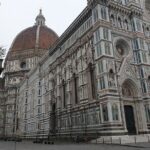
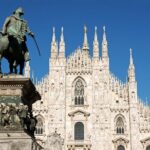
Your first major stop is Milan Cathedral (Duomo), dating to 1386. Even if you’re not going inside, the cathedral area is where Milan’s scale hits you. You’ll have about 10 minutes here, which is enough time to take photos from a few angles and get a sense of how the square and streets open up around it.
Admission isn’t included for the Duomo. So if you plan to go into the cathedral or onto the terraces, treat this stop as an orientation moment and plan separate entry tickets for later.
What makes this stop valuable on a bike tour is how quickly you can reposition for photos. A walking-only plan can be awkward when crowds block your view. With bikes, your guide can move you to a more comfortable viewpoint without you feeling like you’re fighting the map.
Galleria Vittorio Emanuele II and La Scala: classic Milan, photographed in motion
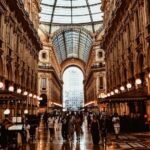
Next up is the Galleria Vittorio Emanuele II, famous as Italy’s oldest active shopping gallery. You’ll have around 10 minutes. The time is short, but it’s practical: you get to see the glass-roofed arcade, the landmark design, and the energy of people moving through a space that feels like a mix of street and interior room.
Admission is listed as free for this stop, so you can focus on looking rather than ticket logistics.
Then you ride to Teatro Alla Scala (La Scala) with about 15 minutes. La Scala is one of the world’s best-known opera houses, and even for non-opera fans, the building signals how deeply music sits in Milan’s identity. Admission isn’t included here, so again, you’re likely getting the exterior and a quick look from the right angles rather than a full interior visit.
One practical note: this whole corridor can feel like a traffic-and-pedestrian braid. If you’re nervous about busy streets, pay attention to your guide’s timing and keep your eyes up. The payoff is that you see two of Milan’s most recognizable icons in a single ride segment.
Brera district: art streets and a softer pace
After the big landmarks, you roll into Brera, a neighborhood known for its artistic atmosphere. You’ll spend around 15 minutes, and this is one of my favorite types of stops on any city bike tour: the place where Milan feels less like a monument and more like a living district.
Brera includes the Brera Academy of Fine Arts and the Brera Art Gallery, and the area is often described as having a bohemian vibe. Translation: you’re more likely to spot side streets, cafes, and shop windows worth scanning for ideas—especially if you want to remember the city beyond its headlines.
Because the stop is free-entry, you can use the time exactly how you want: quick photos, watch how people move, then decide if Brera deserves a longer wander after the tour ends.
If you want a simple souvenir strategy, this is it. Skip the biggest-ticket shopping early. Use Brera’s vibe to guide what you buy later.
Monumental Cemetery’s Jewish section and Chinatown: contrast with context
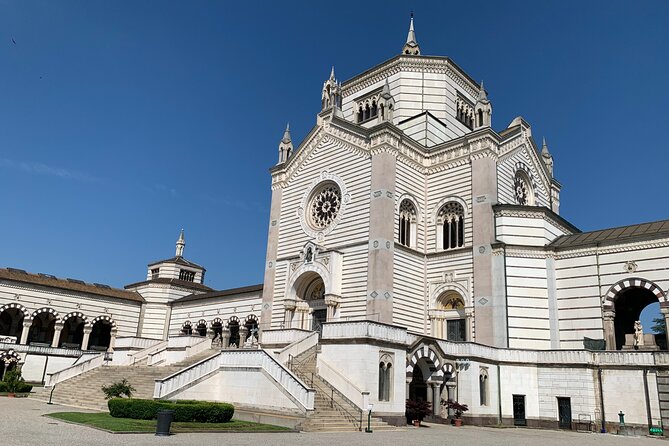
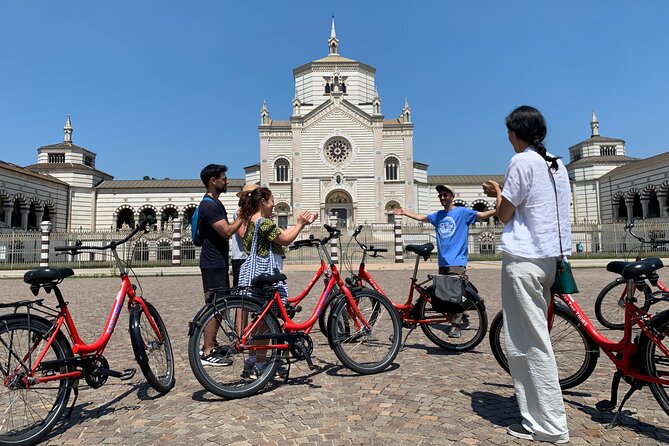
Milan isn’t only cathedrals and couture windows. You’ll also stop at Monumental Cemetery – Jewish Section for about 10 minutes. This stop is listed as not including admission tickets. So treat it as a meaningful viewing pause, not a guided inside visit unless you’ve planned entry separately.
This is a powerful contrast stop. It reminds you that Milan holds multiple layers of community history, not just the polished center.
Then comes Chinatown, which the route describes as an important commercial district in Milan’s 8th quarter. You’ll have about 10 minutes and admission is listed as free. Chinatown is a good example of why a bike tour beats a single neighborhood walk. You connect it to surrounding sights without losing time.
Use this moment to taste with your eyes. Look for shops, signage, and streets that feel different from the Duomo-to-Brera corridor. Even if you don’t buy anything, it broadens your sense of what Milan is.
Arco della Pace and Parco Sempione: a breathing space between monuments
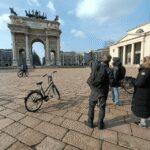
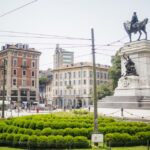
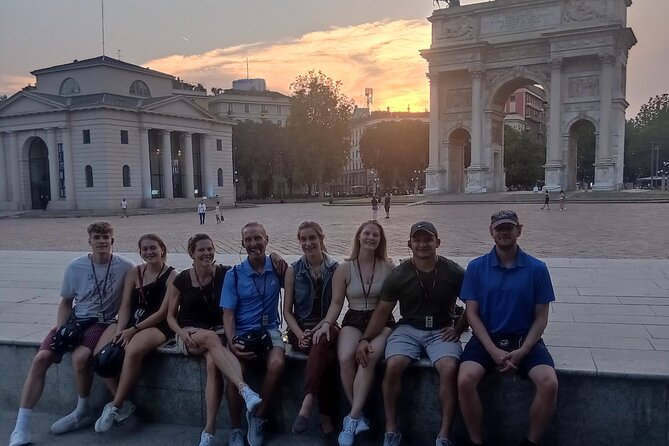
You’ll pass through Arco della Pace (Arch of Peace) around a 10-minute stop. It’s described as a 19th-century triumphal arch, with origins tied to a gate from Roman walls. This is one of those landmarks where a short guided explanation can make the structure click.
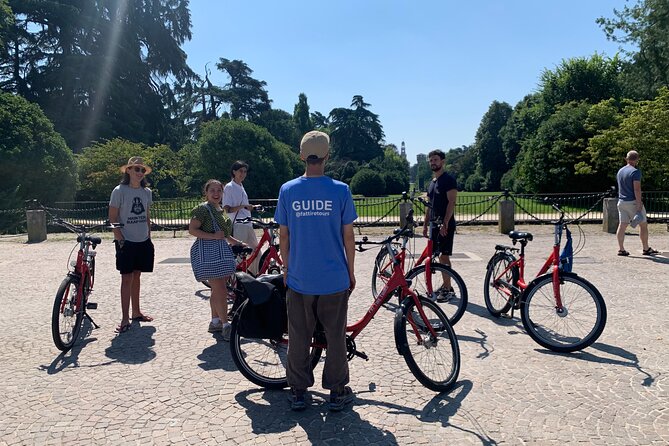
Then you ride toward Parco Sempione, stopping for about 10 minutes. The tour gives you a break here—less about checking off another site and more about resetting your eyes and legs.
A park stop matters on bike tours. You’re still in the same city, but the sensory load drops. You catch your breath, take photos without running across busy lanes, and let the guided narrative settle.
If you’re traveling with someone who gets restless during constant stop-and-go, this segment is usually the one that feels like a treat.
Santa Maria delle Grazie and Sant’Ambrogio: UNESCO and ancient stones
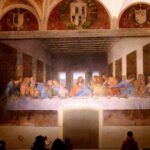
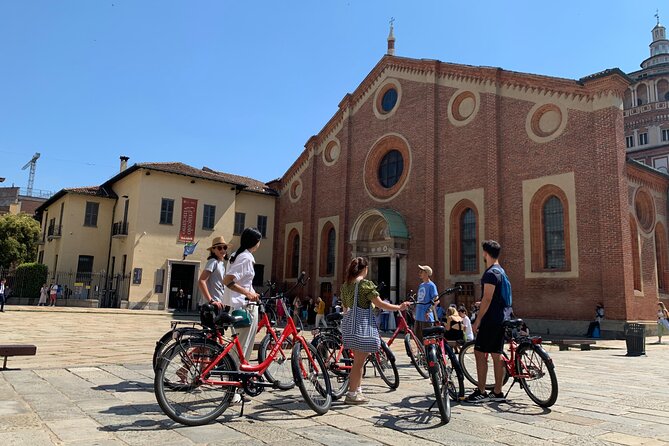
One of the biggest “where am I?” moments on this route is Santa Maria delle Grazie, a UNESCO World Heritage Site and home to Leonardo da Vinci’s Last Supper fresco. You’ll spend about 15 minutes here. Admission tickets are not included.
That’s important. If you’re hoping to see the Last Supper itself, this tour can help you position yourself and understand the significance, but you’ll likely need separate planning for entry timing. I’d treat this stop as a guided approach—understanding what you’re seeing and why—then decide on your ticket strategy after.
Right after that, you’ll stop at Basilica di Sant’Ambrogio for about 10 minutes. This one is listed as not requiring tickets in your tour inclusions, so it’s a good chance for an exterior/brief viewing moment with less ticket friction.
This pairing works on the route because it gives you scale. One stop anchors you in Renaissance genius and global recognition. The other brings you back to early Milan in a Roman-era context, giving your trip a longer timeline.
Navigli canals and San Lorenzo columns: the finish feels local
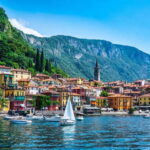
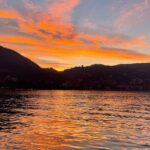
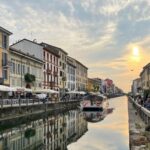
To close, you ride to I Navigli, Milan’s interconnected canal system dating back to the Middle Ages. You’ll get about 15 minutes here, with admission listed as free. The canals are one of those places where you notice details fast—water edges, bridges, street-level scenes—especially after the monumental stops earlier in the morning.
Then you head to the Colonne di San Lorenzo (Columns of San Lorenzo) for about 15 minutes. These are ancient Roman ruins in front of the Basilica of San Lorenzo. Admission is listed as free.
This final zone is a smart ending because it shifts you from “big monuments” mode into “how Milan lives” mode. You’re less likely to feel like you’re racing to the next thing. Instead, it’s a gentle landing.
Also, ending back at the departure point means you’re not scrambling for your next plan while already tired. You can grab a drink or food on your own terms, or simply continue wandering without needing to re-orient.
Price and what you truly get for $48.06
At $48.06 per person for about 3 hours, this tour is priced like a solid value, mostly because your costs are bundled into the core experience: bike, helmet, and an English guide who helps translate what you’re seeing. That’s the big win. You’re paying for structure, guidance, and time-saving transportation between neighborhoods.
What isn’t included is also clear: entrance to monuments and museums, plus food and drinks. That means the tour is best as a highlights and context ride, not a full-ticket museum day.
In practice, you can treat it like this:
- Use the bike tour to understand the city and decide what to revisit.
- Plan separate entry for the landmarks where you specifically want interiors—like the Duomo, La Scala, and the Last Supper.
One extra value point: the tour is usually booked around 20 days in advance and runs rain or shine. That tells me it’s a popular, dependable morning activity. If your dates are fixed, locking it in earlier is a smart move.
Tips to make the ride easy: shoes, traffic, and kids’ bike sizes
First: wear comfortable closed-toe shoes. Milan’s stone and street surfaces can be rough, and you’ll want grip.
Second: expect traffic energy. This route crosses the kind of streets where cars, bikes, and pedestrians share space. The solution is simple: stay aware, follow your guide, and don’t try to sprint between photo angles.
Third: the company provides ponchos, but you still should plan to ride with a light rain layer if you run cold.
Kids: they have limited 20-inch and 24-inch wheels bikes available. If you’re traveling with a child, contact the team so they reserve the correct size.
Pregnancy note: bike tours are strongly discouraged for pregnant women due to cobbled streets. If that applies to you, it’s worth thinking about an alternative that avoids uneven surfaces.
Who this Milan bike tour suits best
This is a great fit if you:
- Want a guided way to see Milan’s key highlights in about three hours
- Prefer your history explained while you ride, not while standing still for long stretches
- Like photo stops but don’t want to plan a dozen separate routes
- Appreciate a small-group pace where your questions actually get answered
It may not be the best fit if you’re mainly interested in deep museum time or you hate the idea that several major sights are outside your tour’s included admissions.
If you’re somewhere in the middle—excited to see a lot, but also happy to add tickets later—this tour often lands right where it should.
Should you book this Milan bike tour?
Book it if you want a smart, active morning that strings Duomo, Galleria, La Scala, Brera, UNESCO-area sights, and the Navigli canals into one coherent route. The helmet, ponchos, and cruiser bike make it feel practical, while the audio and guide talk add meaning beyond simple photo stops.
Skip it or plan carefully if you know you need indoor access at several major locations. Since entrance tickets aren’t included, you’ll want to pair this ride with separate planning for the sights you truly want to enter—especially the Last Supper and any monument interiors.
FAQ
How long is the Milan bike tour?
It’s approximately 3 hours.
What is the price per person?
The price is $48.06 per person.
Is the tour offered in English?
Yes, the tour is offered in English.
What’s included in the tour price?
Included items are a local English-speaking guide, a comfortable 3-speed cruiser bike, a helmet, and ponchos in case of rain.
Are entrance tickets to monuments included?
No. Entrance to monuments and museums is not included, so you may need to arrange tickets separately if you want to go inside.
Where does the tour start, and what time does it begin?
The tour starts at Via Falcone, 7, 20123 Milano MI, Italy and begins at 10:00 am. It ends back at the meeting point.
Does the tour run in bad weather?
Yes. The tour goes rain or shine, and ponchos are available in the office free of cost.
Can children join, and are bikes available in different sizes?
Most travelers can participate. For children, there are limited 20-inch and 24-inch wheel bicycles available. Guests under 18 must be accompanied by a parent or guardian 18 years or older.
What is the cancellation policy?
You can cancel for a full refund up to 24 hours before the experience’s start time. If you cancel less than 24 hours before, the amount paid is not refunded.
If you want, tell me your travel dates and whether you’re planning to book Last Supper tickets, and I’ll suggest a simple order of operations around this ride.