REVIEW · MILAN
Milan Da Vinci Mystery: Self-Guided Puzzle Quest
Book on Viator →Operated by Questo · Bookable on Viator
Follow Leonardo through Milan with puzzles. This self-guided puzzle quest uses a mobile app for offline route directions, so you can wander without the usual guidebook lecture. I like that it mixes Da Vinci-themed quizzes and city challenges with clear step-by-step directions. One thing to keep in mind: some stops list admission as not included, and that’s where a bit of confusion can happen if you expect to enter every site on the game alone.
You choose your start time and set your pace, and the app lets you pause and resume whenever you want. You also get a mobile access code and a storyline inspired by Leonardo da Vinci, so the experience feels like a connected walk rather than random trivia.
It’s designed as a private activity for your group, starting at Piazza della Scala and ending near Corso Magenta. It’s also offered in English, and service animals are allowed, with most travelers able to participate.
In This Review
- Key highlights you’ll feel right away
- Why this Da Vinci puzzle quest beats the usual guided tour
- Price and value: how $6 turns into a solid 1 hour 20 minute plan
- Logistics that make or break self-guided: where to start and how to finish
- Stop-by-stop: the Milan clues from Piazza della Scala to Leonardo’s vineyards
- Stop 1: Piazza della Scala (about 5 minutes)
- Stop 2: Duomo di Milano (about 10 minutes)
- Stop 3: Palazzo della Veneranda Fabbrica del Duomo (about 5 minutes)
- Stop 4: Piazza Mercanti (about 5 minutes)
- Stop 5: Pinacoteca Ambrosiana (about 5 minutes)
- Stop 6: Cripta di San Sepolcro (about 5 minutes)
- Stop 7: Palazzo dei Giureconsulti (about 5 minutes)
- Stop 8: Palazzo Carmagnola (about 5 minutes)
- Stop 9: Imperial Palace Maximian (about 5 minutes)
- Stop 10: Leonardo da Vinci’s Vineyard (about 5 minutes)
- Stop 11: La Vigna Di Leonardo (about 5 minutes)
- What you learn: quizzes, challenges, and paying attention
- App experience: how to keep it smooth in the real world
- Who should do this Milan Da Vinci Mystery quest (and who might skip)
- Should you book this puzzle quest?
Key highlights you’ll feel right away

- Mobile-first puzzle format instead of standing around for explanations
- Offline directions so you can keep moving even with spotty data
- 10 interactive puzzle challenges spread across major Milan landmarks
- Flexible timing with a 1 hour 20 minute flow and the ability to pause/resume
- A teen-friendly scavenger style that gets you looking at details in the street and façades
Why this Da Vinci puzzle quest beats the usual guided tour
A lot of Milan tours feel like a script you either follow or tune out. This one flips the format. You’re not just hearing about famous places; you’re solving clues and answering challenges as you walk. The payoff is simple: you look closer, because the next step depends on it.
I especially like that the experience is built around quizzes and challenges tied to Da Vinci’s life and work. That turns what could be a quick stop into a mini mission. Even when you only spend about 5 to 10 minutes at each location, you still get a sense of discovery instead of rushing through.
The other big win is how self-paced it is. You can start when you want (within the daily opening window), go faster or slower, and stop for photos without losing your place. That flexibility matters in Milan, where crowd levels and time-of-day can change fast.
One practical note: a couple of the stops show admission as not included. For the game itself, entrance tickets are not required to play, but if you want to go inside certain buildings, you may need separate tickets for those visits. That’s the kind of detail you’ll want to read before you plan your day.
You can also read our reviews of more guided tours in Milan



Price and value: how $6 turns into a solid 1 hour 20 minute plan
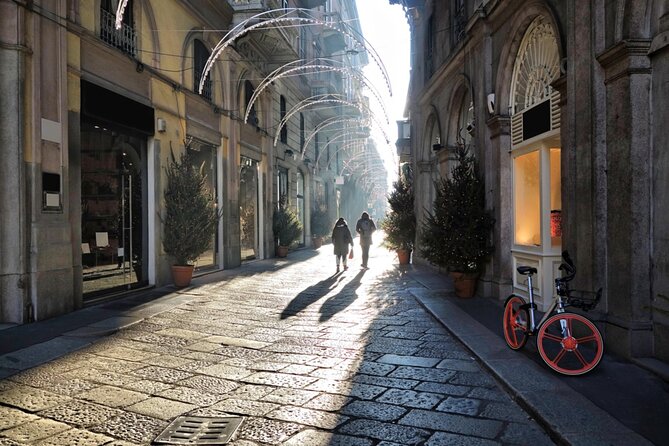
At $6 per person, the Milan Da Vinci Mystery puzzle quest is priced like an affordable activity, not a premium private guide. The value comes from what you’re paying for: the app access plus 10 interactive puzzle challenges with a connected Leonardo-style storyline.
If you’re budgeting, this makes a lot of sense. You get a structured route (so you’re not stuck figuring out where to go next), and you get an experience that works even if you’re traveling solo or with a group that has mixed interests. A classic paid guide can be expensive fast, especially if you only want a short, focused walk.
The sweet spot is time. You’re looking at about 1 hour 20 minutes total. That’s long enough to cover multiple big-name landmarks, but not so long that it eats your whole afternoon. It’s an easy “fit it in” add-on for a day already packed with museums or cathedral visits.
Logistics that make or break self-guided: where to start and how to finish

The quest starts in Piazza della Scala (20121 Milano) and ends at Casa Atellani on Corso Magenta, 65 (20123 Milano). That end point is helpful for planning: you can grab a drink or continue exploring near the Corso Magenta area without needing to backtrack.
You can start any day during the daily window listed for the experience (from 5:00 AM to 9:00 PM). That matters because it lets you match the route to your energy. Want cooler morning walking? Early start. Prefer later city vibes? Go in the evening.
You also don’t have to rely on a constant data connection. The directions are designed so you can follow along without needing mobile data. In practice, that means you should still have enough battery to run your phone’s screen and GPS, but you won’t be held hostage by weak reception.
One more detail I’d plan for: you’ll be using your phone for the experience, and one review specifically notes the need to install one more app. So if you’re trying to do this on short notice, give yourself time before you leave home or your hotel to set everything up.
Stop-by-stop: the Milan clues from Piazza della Scala to Leonardo’s vineyards
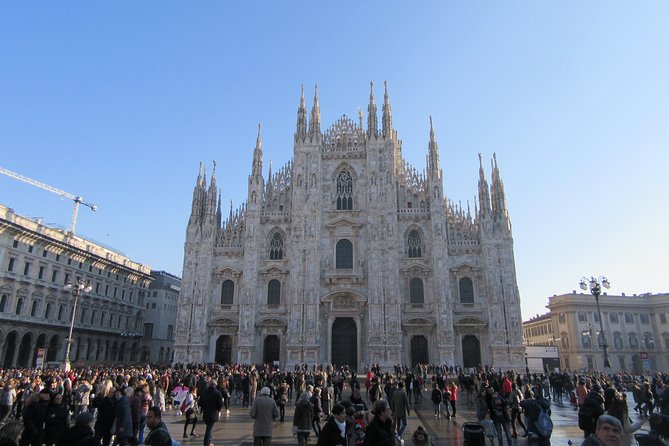
This puzzle quest is built around a sequence of major places. Each stop is short, typically about 5 minutes (with a few around 10 minutes), and each one feeds the next step. You’ll also get directions on how to continue the game while learning about what you’re seeing.
Stop 1: Piazza della Scala (about 5 minutes)
You begin at Piazza della Scala. The first move is clue-based: you’ll get a puzzle task that guides you to the next location. Once you’re there, the app gives you instructions for what comes next and shares context about the place you’ve just reached. This start sets the tone: don’t rush—watch for what the clue wants you to spot.
Admission here is listed as free, which makes this a low-stress opener. If you’re worried about “Do I need tickets to play?” this first stop is a good sign that you won’t be stuck right away.
You can also read our reviews of more tours and experiences in Milan





Stop 2: Duomo di Milano (about 10 minutes)
Next comes the Duomo di Milano. You solve another puzzle to reach it, and then the app points you forward while giving learning moments tied to the overall Da Vinci storyline.
Here’s the practical consideration: admission for the Duomo is listed as not included. Still, entrance tickets are not required to play the game at places like the Duomo. So you can keep playing even if you choose not to enter. If you do want to go inside, plan on separate tickets.
Stop 3: Palazzo della Veneranda Fabbrica del Duomo (about 5 minutes)
Right after the Duomo area, you’ll hit Palazzo della Veneranda Fabbrica del Duomo. Like the others, you reach it through clues and puzzles. Expect quick on-the-spot learning and instructions for continuing the route.
Admission is listed as not included here too. Treat this as a stop for observing and answering, not necessarily for a full interior visit.
Stop 4: Piazza Mercanti (about 5 minutes)
Piazza Mercanti is one of the free-admission stops in the sequence. You’ll solve a clue to find it, then get immediate direction on where the story goes next. This is a good stretch if you want the quest to slow you down—small plazas can reward careful looking, and puzzles tend to work better when you’re not sprinting.
Stop 5: Pinacoteca Ambrosiana (about 5 minutes)
At Pinacoteca Ambrosiana, you’ll again switch from “I’m walking” to “I’m searching.” The app uses challenges that can involve spotting details and using what you find to answer the next question.
Admission is listed as free here. That’s helpful if you want the option to spend a little extra time after your puzzle is done.
Stop 6: Cripta di San Sepolcro (about 5 minutes)
Then the quest moves to Cripta di San Sepolcro. This stop keeps the momentum going with another short puzzle-led learning moment. It’s a small time commitment, but it can feel like a change of pace because crypt-like sites often shift the atmosphere.
Admission is listed as not included for this stop. Since entrance tickets are not required to play the game, you can still complete the storyline without planning an extra ticketed entry.
Stop 7: Palazzo dei Giureconsulti (about 5 minutes)
Palazzo dei Giureconsulti is another puzzle checkpoint. You’ll find it by following a clue, then get app guidance while you learn about the place.
Admission is listed as not included. The practical plan: treat the exterior and the immediate setting as part of the puzzle, and don’t rely on entry access to finish the quest.
Stop 8: Palazzo Carmagnola (about 5 minutes)
Next is Palazzo Carmagnola. Like several stops in this section, it’s built around quick observation and quick answers. You’ll move from the puzzle to the next indicator without wasting time.
Admission is listed as not included. If you’re someone who likes to linger, keep in mind the overall time target. The app’s pacing is part of the experience, and the route flows from point to point.
Stop 9: Imperial Palace Maximian (about 5 minutes)
Imperial Palace Maximian continues the same structure: clue to locate, puzzle to answer, then direction for what’s next. You’re still in the core city zone here, so it feels like a walking story that’s stitched together by Da Vinci-themed clues.
Admission is listed as not included. Again, you can play without needing access inside, if the game is your goal.
Stop 10: Leonardo da Vinci’s Vineyard (about 5 minutes)
Now the quest pivots toward Leonardo’s world with Leonardo da Vinci’s Vineyard. The puzzle mechanic returns, and the app connects this location to the broader storyline. This is one of the more thematically satisfying stops, because it shifts away from famous architecture and into Leonardo-themed setting.
Admission is listed as free here. It’s a nice reward near the end.
Stop 11: La Vigna Di Leonardo (about 5 minutes)
The final checkpoint is La Vigna Di Leonardo, also listed as free. Expect one last clue-led puzzle moment and app guidance that wraps the route. From there, you finish your walk near Corso Magenta.
This ending is useful because it doesn’t trap you in a single museum district. You get a finish point that’s easy to connect to food and other plans.
What you learn: quizzes, challenges, and paying attention
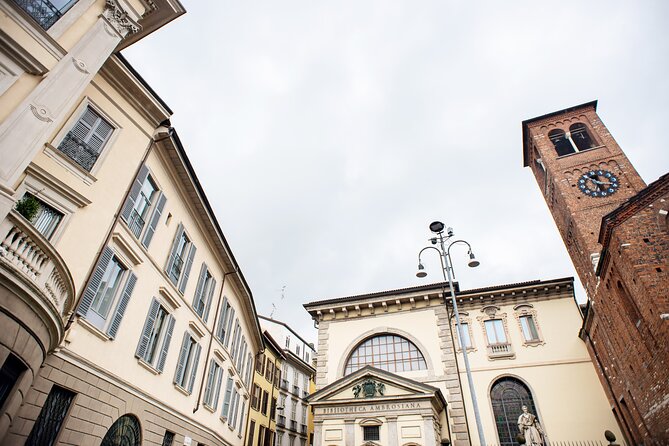
The experience is designed around more than route-following. It includes 10 interactive puzzle challenges and a storyline inspired by Leonardo da Vinci, with quizzes and challenges meant to teach you about Da Vinci’s life and work.
You’ll also get learning prompts tied to each specific stop. The format matters: instead of you reading a thick wall of text, you answer questions and move. That keeps you engaged, especially if you learn best by doing rather than listening.
One of the more practical benefits is how it trains attention. When you’re solving image/text-based tasks, you’re forced to notice details you might normally skip—letters, symbols, architectural features, or whatever the puzzle asks you to find. That means you come away with memories that feel connected to what you saw on the street.
App experience: how to keep it smooth in the real world
This is a phone-based game, so your success depends on simple tech habits. Make sure you have the mobile access code ready when you arrive. Since there’s a mobile ticket element too, you’ll want your confirmation info accessible on your device.
Because you follow detailed directions around the city, you’re not juggling random maps and guesses. Still, give yourself a few minutes of buffer at the start to get oriented, especially if you’re starting in a busy area like Piazza della Scala.
If something does go wrong, there’s a support route. The help team is available via 24/7 chat support, and they also provide an email contact at [email protected]. That kind of safety net is especially useful when a clue doesn’t line up with what your phone shows.
And yes, tickets can be a sticking point. One negative experience came from confusion about entrance tickets needed for sites like the Duomo. The key clarification is that entrance tickets are not required to play the game, including at sites such as the Duomo. The admission notes in the itinerary are still worth reading if you plan to enter buildings during your walk.
Who should do this Milan Da Vinci Mystery quest (and who might skip)
This is a great fit if you want:
- A self-guided way to see Milan landmarks without a physical guide
- A paced walk that lasts about 1 hour 20 minutes
- Something puzzle-based that works well even with teens
It’s also a solid option if you like structure. Many self-guided routes fail because you don’t know what to do next. Here, the app tells you the next step, so you spend less time deciding and more time exploring.
You might skip it if you strongly prefer a traditional guided lecture, where you can relax and listen the whole time. If you don’t want to use a phone for navigation and puzzles, you may find the format less enjoyable.
Should you book this puzzle quest?

Book it if you want a low-cost, short, puzzle-driven walk that ties famous Milan stops to a Leonardo-inspired storyline. The value is strongest when you’re happy to solve challenges on your own and you like learning through action.
Think twice if you’re planning your day around entering multiple ticketed interiors. The game can be played without entrance tickets, but some stops list admission as not included, so you may need to buy separate tickets if you want full access to buildings.
If you’re deciding between this and a classic guided tour, treat this as the best kind of in-between: part sightseeing, part game, and done fast enough that it won’t hijack your whole day in Milan.