REVIEW · MILAN
Milan: La Scala Theater and Museum Tour with Entry Tickets
Book on GetYourGuide →Operated by Milanoguida · Bookable on GetYourGuide
La Scala has a pulse you can feel. In just one hour, you get a guided walk through Teatro alla Scala and its museum, with stories that connect famous composers and performers to what you see in the rooms. If you love opera or ballet, this is a focused way to get oriented fast—without needing to be an expert.
Two things I really like about this tour are the hands-on feeling of the museum displays (costumes, musical instruments, portraits, and busts) and the way a licensed guide brings the stage to life with anecdotes about major names like Verdi, Toscanini, Maria Callas, Luciano Pavarotti, and Carla Fracci. One drawback to plan for: depending on rehearsals and events, your visit may be limited to the museum only, with reduced access to the auditorium.
In This Review
- Key things to know before you go
- Teatro alla Scala, up close: what this tour really gives you
- The one-hour flow: what you’ll do, step by step
- Inside the museum: costumes, instruments, and the big names that shaped La Scala
- Teatro alla Scala’s auditorium peek: boxes, seating, and day-dependent access
- The guide, the headsets, and why the storytelling matters
- Price and value: does $34 make sense for La Scala?
- How this fits your Milan day (and your opera night)
- Accessibility and what to expect if you see only the museum
- Who should book this La Scala tour?
- Should you book this La Scala Theater and Museum Tour with entry tickets?
- FAQ
- How long is the La Scala Theater and Museum tour?
- What’s included in the ticket price?
- Which languages are available?
- Will I be able to skip the ticket line?
- Can I be limited to the museum only?
- Is the tour wheelchair accessible, and are pets allowed?
Key things to know before you go
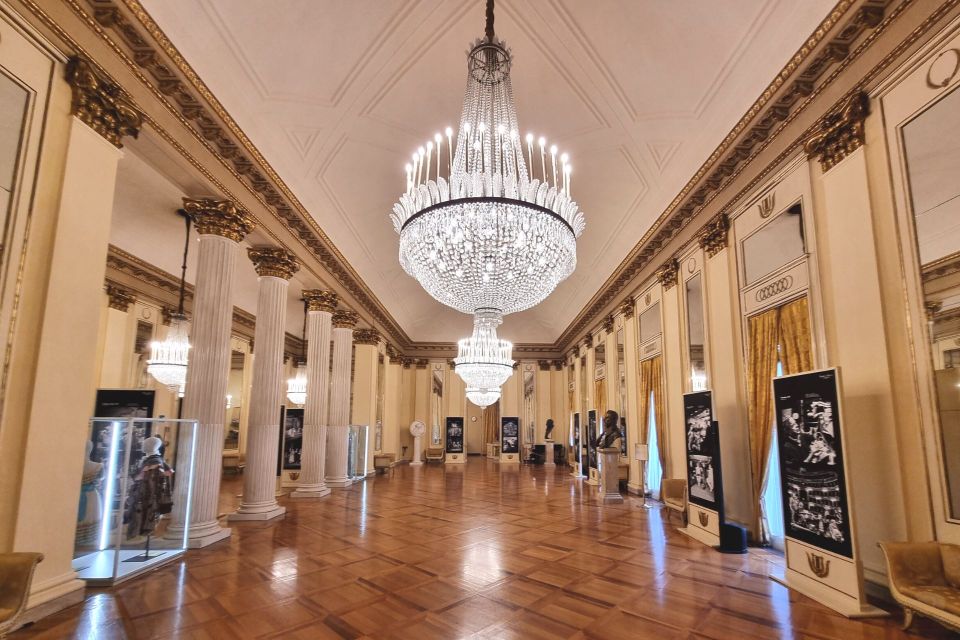
- One hour, guided, with entry included: You’re paying for a structured museum-and-theater visit, not just standing in line.
- Licensed English/French narration: A live guide helps you understand what you’re looking at.
- Headsets make listening easy: Included for groups of 10+ so you’re not stuck straining.
- You get a sneak peek inside the theater: Box views and auditorium access can vary by day.
- Day-to-day access depends on the schedule: Rehearsals and events can change how much of the theater you see.
Teatro alla Scala, up close: what this tour really gives you
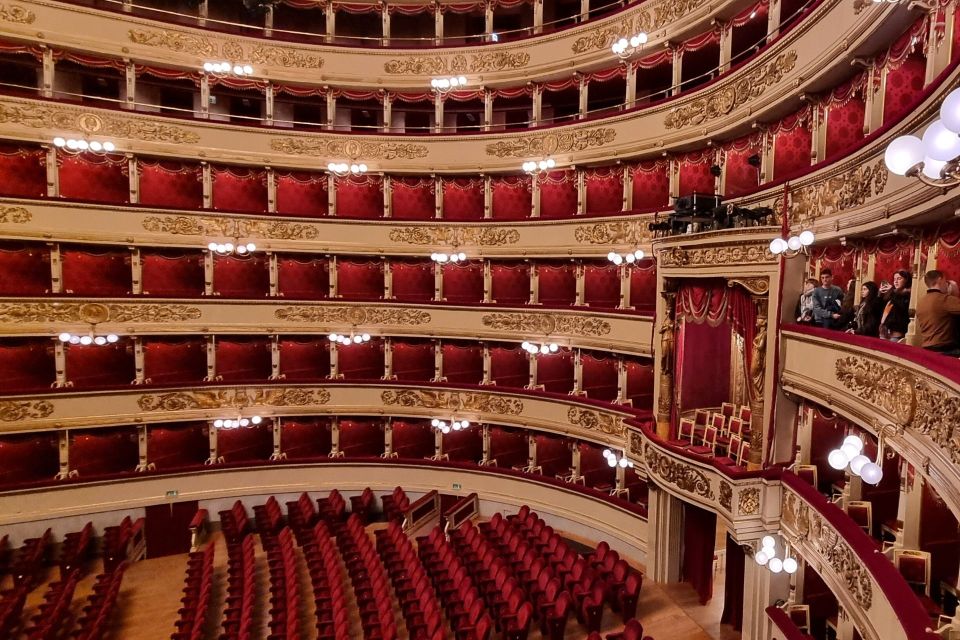
This is a ticket-based tour that zeroes in on one specific goal: understanding La Scala as a working opera and ballet house, not just a pretty building. The museum portion is where you build context. The costume displays and musical instruments help you connect performances to real craft—people, tools, and design decisions.
The theater peek matters too. Even when you’re not seeing every angle of the auditorium, you’re getting that essential sense of scale: the way the boxes sit around the stage, and the idea of an audience gathered in a room designed for performance. That changes how you experience an opera night later. Instead of watching in the dark with no landmarks, you know where you are in the story.
And since the tour is led by a licensed guide in English or French, the explanations are meant to be understood, not just recited. You also get the small but important details: who performed there, what kinds of productions shaped the house, and why certain names became tied to La Scala’s identity.
You can also read our reviews of more tours and experiences in Milan

The one-hour flow: what you’ll do, step by step
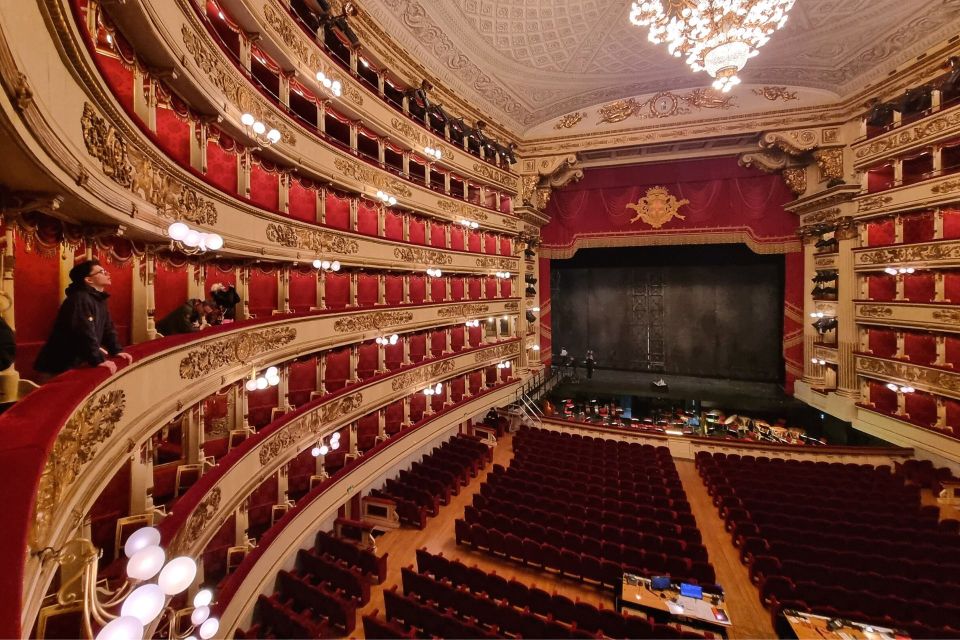
This runs for about 1 hour, so the rhythm is “see, listen, connect,” rather than “slow museum stroll.” You’ll start at a meeting point that can vary based on the option you book, then the guide takes over and keeps you moving.
Here’s the typical structure of the experience:
- Museum galleries first: You’ll be guided through the museum areas that focus on La Scala’s history and legacy.
- A focused look at key collections: You spend real time on the displays that explain the art form—costumes, musical instruments, and portraits/busts of important figures.
- Then a theater sneak peek: After the museum, you get access inside the auditorium area, often with a view from elevated seating/boxes when that’s possible.
Because the tour is short, you’ll get value from paying attention early. If you’re the type who likes to take in details at your own pace, plan to leave time afterward for independent wandering. The guided hour is the map; you’ll likely want extra time to use it.
One more practical point: you’re going rain or shine. La Scala is an indoor experience, but you’ll still be walking between entrances and rooms.
Inside the museum: costumes, instruments, and the big names that shaped La Scala
The museum collection is built around understanding the performers and the sound. You’ll see a collection of costumes that connect directly to productions, plus musical instruments that help translate what you hear onstage into real physical objects.
What makes the museum useful for first-timers is the guide’s framing. You’re not just looking at artifacts. You’re getting the connections between artists and the stage where they worked. The tour is designed to highlight famous figures linked to La Scala, including Verdi, Toscanini, Maria Callas, Luciano Pavarotti, and Carla Fracci.
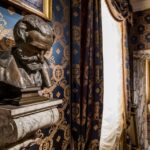
You’ll also spend time with portraits and busts of major musicians from history. That’s more than decoration. It helps you recognize names you’ll later hear in opera conversations, and it turns those names into people attached to a place.
A detail I like about this museum approach is the balance between spectacle and craft. Costumes give you the visual language. Instruments and performer-focused items remind you that opera and ballet are built on technique, not just drama.
And if you want a bonus learning moment, some guides also point out models or spatial explanations of the building so you can picture how different areas connect.
Teatro alla Scala’s auditorium peek: boxes, seating, and day-dependent access
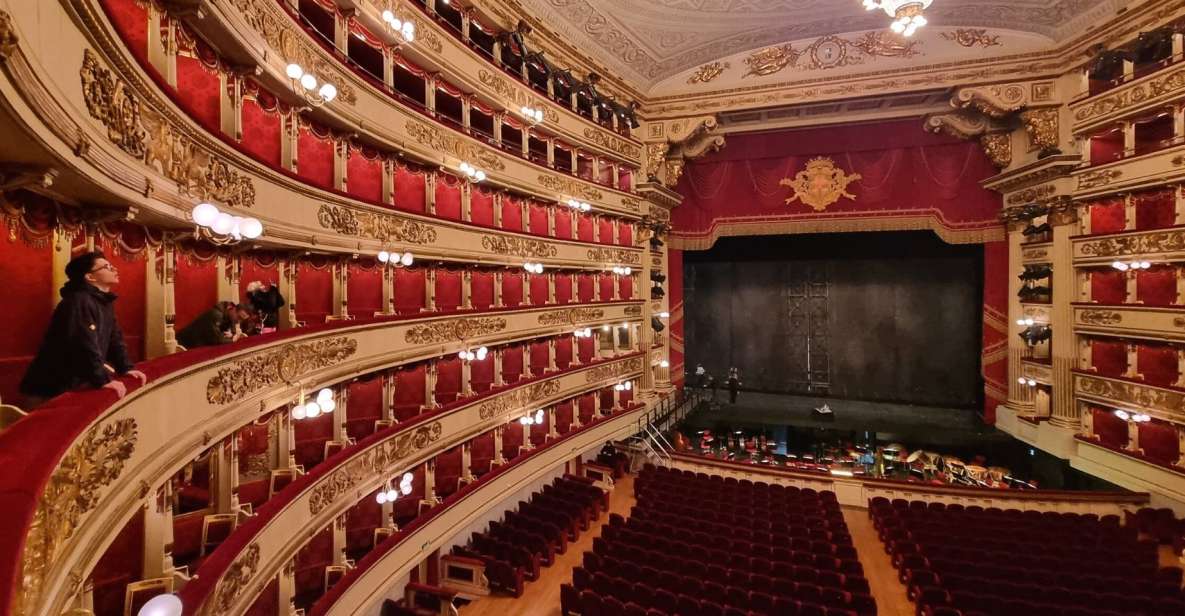
This is the part that many people remember most. Even a short sneak peek helps you grasp what makes La Scala feel special: the way the auditorium wraps around the stage, and how close the performance space feels when you’re in the right vantage point.
The tour is designed to give you a peek inside the theater. In practice, access can vary. The tour can become museum-only if rehearsals or events limit what’s available that day. That’s not a failure of the tour. It’s just how an active opera house works.
When the auditorium is accessible, you’re likely to get views from the boxes or seating areas. That’s the sweet spot for understanding the audience experience. From there, you can imagine what it’s like to be seated as a patron, not just walking around a museum exhibit.
If your schedule lines up well, you may catch an additional perk: a view into rehearsals. Several people describe spotting singers or the orchestra practicing around their visit. Whether or not that happens, the key thing is still this: the tour turns the auditorium from an idea into a location you can picture.
The guide, the headsets, and why the storytelling matters
The tour lives or dies on the guide, and this one is consistently led by lively professionals. You’ll hear English or French narration, and the guide uses stories and stage context to make the building feel like it has a pulse.
Names you may run into include guides such as Eddie/Eddy, Daniele, Silvia, and Simone—each bringing a distinct style, often with humor. That humor isn’t random. It helps you stay present while you absorb history, production details, and artist connections.
One practical improvement I’m glad this tour includes: headsets. They’re provided for groups of 10 participants and up. It makes a difference in a big venue. You can hear the guide clearly even if your group shifts position, which means you don’t lose the good parts of the story.
A small listening tip: keep your headset volume at a comfortable level early. If you wait until you feel lost, you’ll spend the middle of the tour catching up. Stay tuned from the first room.
You can also read our reviews of more museum experiences in Milan



Price and value: does $34 make sense for La Scala?
At $34 per person for a one-hour guided tour, the best way to judge value is what you get bundled together:
- Entry tickets to the theater and museum are included.
- You get skip-the-ticket-line access.
- You’re not just walking the rooms; you have a live guide with headsets (for larger groups).
- You also get a theater peek, which is the part many people can’t easily do on their own without planning around schedules.
If you were to visit the museum alone, you’d likely still need time to figure out what you’re seeing. This tour shortens that learning curve. It’s especially good value if you want context for an opera evening and you don’t want to spend your precious Milan time guessing.
The trade-off is the one-hour length. You can’t expect a slow, stop-every-5-minutes experience. If you want that, plan a longer museum window afterward.
How this fits your Milan day (and your opera night)
This tour is a strong “setup” activity. If you have an opera or ballet performance later in your trip, I’d treat this as prep. You’ll walk into the night with a sense of where things are and why the house matters.
If you don’t have tickets for a performance, it still works because you leave with structure: museum collections plus a theater peek. It’s one of the fastest ways to turn La Scala into something personal, not just famous.
If your main goal is photos, you’ll probably want to move with purpose during the guide’s stops and then spend a few minutes afterward re-seeing the viewpoints you liked. Because access can be limited on some days, that extra time after the tour can help you get the most from what’s available.
Accessibility and what to expect if you see only the museum
Good news if mobility is part of your planning: this tour is wheelchair accessible and it also works with strollers.
The day-dependent access is the main variable. The tour notes that, due to rehearsals and events, your visit may be limited to the museum only. If that happens, you still get the core collections and the guide’s explanations. You just won’t have the same level of auditorium access you might have hoped for.
My practical advice: treat the theater peek as a bonus when possible, not a guaranteed final stop. Then the museum portion doesn’t feel like a consolation prize—it becomes the centerpiece.
Who should book this La Scala tour?
I’d book it if you fall into any of these groups:
- You want a first-time introduction to La Scala without doing homework.
- You like opera or ballet, even if you’re not an expert. The guide’s stories connect the art form to real people and real objects.
- You value clear listening. The headsets help you stay engaged.
- You’re pairing this with an opera night and want to walk in already “oriented.”
If you only care about seeing the auditorium from every possible angle, you might feel shortchanged by the one-hour structure and day-dependent access. In that case, consider planning extra independent time in the area after your tour.
Should you book this La Scala Theater and Museum Tour with entry tickets?
Yes, you should book it if you want the most efficient path to understanding what La Scala is, how it works, and why certain artists became legends here. The biggest reason is the combination: entry included + a live guide + headsets + skip-the-line access, all in about an hour.
I’d only hesitate if you need guaranteed full auditorium access on a specific day. Since rehearsals and events can limit what you see, you may end up with a museum-focused visit. Still, even that option remains structured and guided, so you won’t just wander.
If La Scala is on your Milan must-do list, this is a smart way to get value fast and leave with stories you’ll remember during your next opera scene.
FAQ
How long is the La Scala Theater and Museum tour?
The tour duration is 1 hour.
What’s included in the ticket price?
Your booking includes entry tickets to the Alla Scala Theater and Museum, plus headsets to hear the guide clearly (from 10 participants). You’ll also have a live tour guide.
Which languages are available?
The live tour guide speaks English and French.
Will I be able to skip the ticket line?
Yes, the tour includes skip-the-ticket-line entry.
Can I be limited to the museum only?
Yes. Due to rehearsals and events, the visit may be limited to the museum only.
Is the tour wheelchair accessible, and are pets allowed?
The tour is wheelchair accessible. Pets are not allowed, and luggage or large bags are not allowed.