REVIEW · MILAN
Sforza Castle guided tour – Small Group -Skip-the-line
Book on Viator →Operated by Keys of Italy / Milan · Bookable on Viator
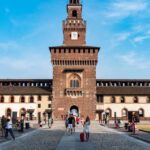
Two hours, and Milan’s big art is yours. This guided visit to Castello Sforzesco works because you’re not just looking at walls—you’re getting the story of how the fortress became a residence, then a military site, then today’s cultural stop. I also like that the tour stays right in the city center, so you can slot it into a normal day without losing half your afternoon to transit.
I loved the small group size (maximum 9 travelers) and the practicality of included headsets when the group is larger. And I really enjoyed the art lineup: Michelangelo’s last sculpture, Pietà Rondanini, plus a Leonardo da Vinci fresco highlight that’s famous in Milan.
The main drawback to plan for is time. This is a 2-hour highlights route, so you’ll see key rooms and showpieces, but you won’t get a slow, full museum-style pass.
In This Review
- Key points to know before you go
- Why Sforza Castle feels different with a guide
- Meeting at Piazza Castello and avoiding the stress spiral
- Stop 1: Michelangelo’s Pietà Rondanini (20 minutes)
- Stop 2: A Leonardo da Vinci fresco in Milan (15 minutes)
- Stop 3: Sforza rooms and Renaissance collections (1 hour)
- Small-group comfort: headsets, questions, and pacing
- Price and value: what $165.54 really buys
- The Milan logistics reality: when city events can affect you
- Who this tour suits best
- Should you book the Sforza Castle small-group guided tour?
- FAQ
- FAQ
- How long is the Sforza Castle guided tour?
- Where is the meeting point?
- What time does the tour start?
- How big is the group?
- Is the entrance ticket included?
- Are headsets provided?
- Which major artworks will I see?
- What should I bring or wear?
- Is food or drinks included?
- Can I cancel for a full refund?
Key points to know before you go
- Skip-the-line with a mobile ticket: you’ll enter more smoothly than trying to manage access on your own.
- Max 9 travelers: small enough for questions and clear explanations from your guide.
- Headsets included: especially useful once your guide starts speaking from different positions in the castle.
- Michelangelo stop: Pietà Rondanini is the first big emotional hit.
- Leonardo da Vinci stop: you’ll focus on a specific fresco rather than wandering randomly.
- Sforza rooms and collections: you leave with a better sense of who the castle was built for.
Why Sforza Castle feels different with a guide
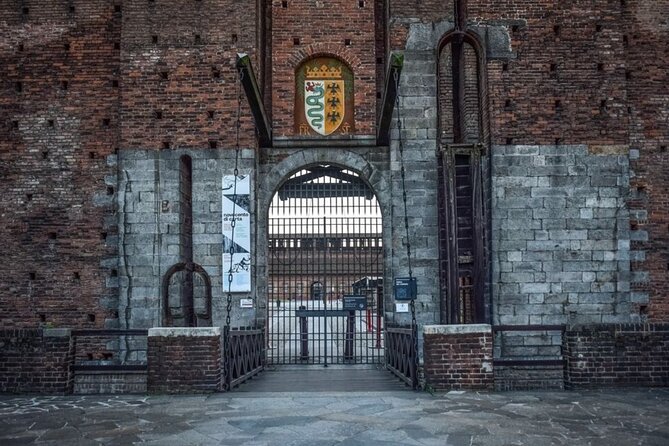
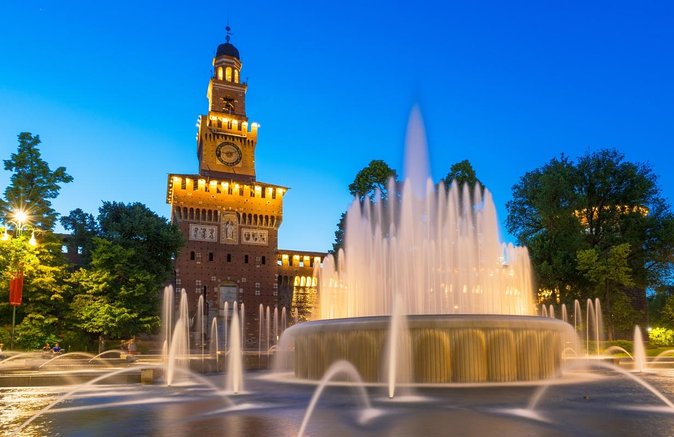
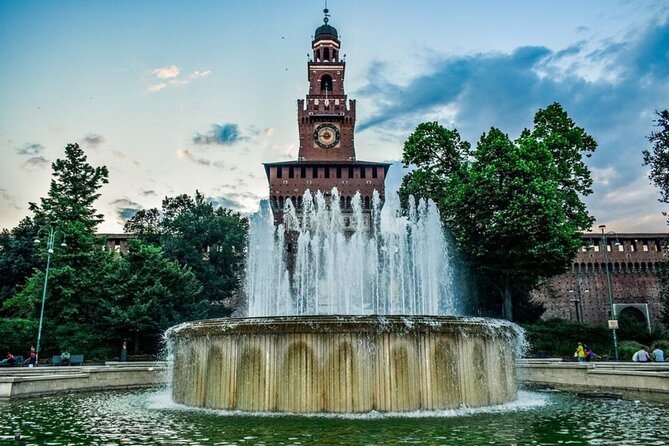
Sforza Castle, or Castello Sforzesco, is one of those places that can feel confusing if you wander without a plan. The buildings and museum spaces are spread out, and the castle’s purpose changed again and again over time. With this tour, you get a guided thread that makes the place click: you’re not memorizing dates—you’re learning why different parts mattered at different moments.
I also like the pace. The total time is about 2 hours, which is long enough for real context but short enough that you’re not exhausted halfway through. That matters in Milan, where you’ll probably do multiple major sights in a single day.
Finally, there’s a smart focus on the art. Instead of a generic overview, the tour points you to specific works tied to Michelangelo and Leonardo da Vinci—two names that can otherwise turn into a blur of “yeah, I saw it” photos.
You can also read our reviews of more guided tours in Milan

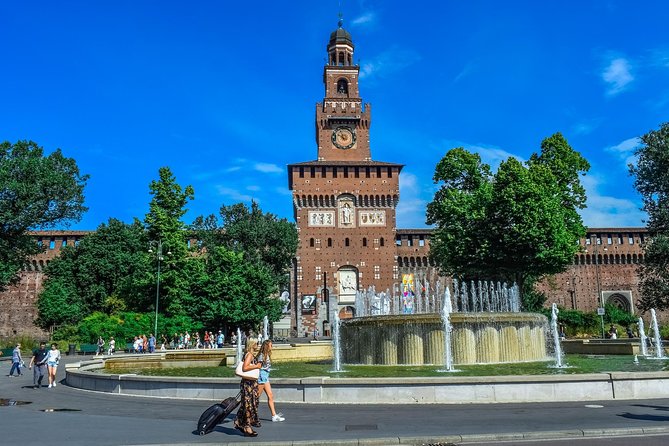
Meeting at Piazza Castello and avoiding the stress spiral
You meet at Piazza Castello (starting point). The start time listed is 2:30 pm, and you’re asked to arrive at least 10 minutes early. That’s not busywork. It helps because you’ll want time to check in, get oriented, and settle before the group heads inside.
This area is well connected by public transportation, which is great for planning. Still, keep one practical thing in mind from a real-world issue that has affected this kind of city-center tour: if a local event disrupts transit access, tours can be canceled. One cancellation reported happened because of a political demonstration in the area that led to the closure of the nearby Duomo metro station, and the guide had trouble reaching guests on an international phone. The lesson is simple: make sure your phone can receive calls or texts while traveling, and confirm your contact details at booking.
What to wear: comfortable shoes. You’ll be walking around castle grounds and moving between stops, and you’ll feel it if your footwear is more fashion than support.
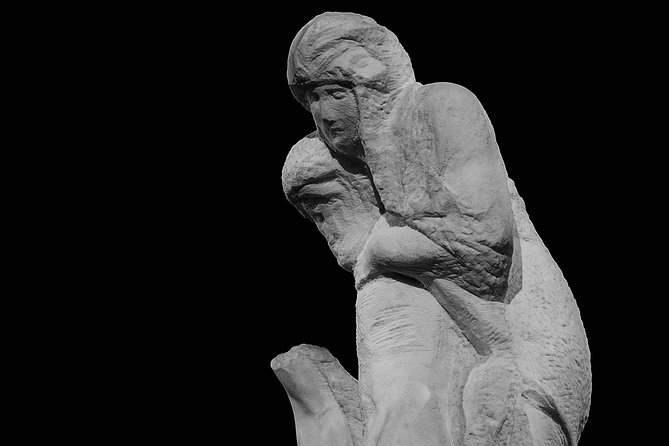
Stop 1: Michelangelo’s Pietà Rondanini (20 minutes)
Your first named art stop is Pietà Rondanini, described on this tour as Michelangelo’s last sculpture. Even if you don’t know much about the artist’s late style, it’s the kind of work that changes your mood when you see it in person. Up close, you can feel why it’s treated as a standout rather than just another famous name on a wall.
The 20-minute timing works here because it gives you enough time to actually look, not just pose. Your guide’s job is to point out what to watch for—how the sculpture sits, what details matter, and why this piece is significant in Michelangelo’s story.
A small consideration: if you’re the type who likes to read everything at museum speed, 20 minutes can feel short. I’d treat it as the main course, not the entire meal. If you want more, you can always build in extra time later for independent wandering.
Stop 2: A Leonardo da Vinci fresco in Milan (15 minutes)
Next comes a shorter stop focused on Leonardo da Vinci’s second fresco in Milan. Fifteen minutes isn’t long, but that’s kind of the point: you’re not there to do a complete museum loop. You’re there to see the fresco with context and leave with enough information to understand what you just looked at.
This is also the kind of visit that benefits from a guide. Frescoes can look “beautiful” from a distance and “what am I supposed to notice?” up close. The guide helps you get grounded: what it is, what makes it notable, and how it fits into Leonardo’s wider work.
If you tend to get distracted by side details, this short timing may be frustrating. But if you enjoy focused viewing, it’s a strong way to keep the day efficient.
Stop 3: Sforza rooms and Renaissance collections (1 hour)
The final major portion is about the Sforza lords—Renaissance-era power in Milan—and it takes about an hour. This is where the tour shifts from individual masterpieces to the bigger picture: how the castle functioned for the ruling family, and how the surrounding collection and rooms support that story.
You’ll visit the rooms and art collection connected to the Renaissance lords of Milan, specifically the Sforza family. For me, this part was the payoff. After seeing the Michelangelo and Leonardo highlights, you start to understand the castle as more than a backdrop for famous names. It becomes a place tied to influence, display, and control—then later transformed into something public-facing and cultural.
The benefit of the hour here is that it’s long enough to stop treating the visit like a checklist. You get time for questions, and you have enough minutes to let the context land.
The trade-off is similar to the first drawback: even with an hour, you can’t absorb every corner in a single 2-hour experience. If you love galleries and want to linger, plan a follow-up visit another day—or at least add time before or after the tour.
You can also read our reviews of more tours and experiences in Milan



Small-group comfort: headsets, questions, and pacing
This tour is built around a small group experience with a maximum of 9 travelers, and it includes headsets to help you hear the guide clearly (they’re noted as provided from 6 participants). That detail might seem minor, but it changes the whole vibe. In large crowds, you end up looking at your guide like you’re at the back of a theater. With headsets, you can actually follow the story without straining.
I also appreciate that this isn’t a “herding cats” situation. Small groups mean the guide can slow down when someone asks a question and can keep you from drifting too far apart during transitions between stops.
And yes: with skip-the-line access, you waste less time waiting around doors. That matters at a big-ticket price point, which brings me to the next section.
Price and value: what $165.54 really buys
At $165.54 per person, this isn’t a budget tour. The value comes from several specific inclusions, not from vague promises:
- Entrance ticket included, so you’re not adding that cost later.
- Professional guide, which is key in a complex castle setting.
- Skip-the-line entry, which reduces time lost to queues.
- Headsets and small-group size, which improve comfort and understanding.
If you’re the kind of traveler who tends to spend time reading labels and checking hours twice, you’ll benefit from paying for a guided route. You’re buying clarity and time savings.
If you’re the kind of traveler who only wants a quick glance and then leaves, the price may feel steep. In that case, you might prefer a self-guided museum pass and spend your money elsewhere.
The Milan logistics reality: when city events can affect you
This part is worth mentioning because Milan is a live city. One reported situation: a political demonstration in the area caused closure of the nearby Duomo metro station, and the tour was canceled. The guide tried to call and text guests, but the guests’ European phone wasn’t working properly, so they didn’t get the message in time.
You can’t control city events. But you can control your readiness:
- Use a working phone number during your trip.
- Make sure you can receive messages while you’re out.
- Don’t plan a tight “must be somewhere else right after” schedule.
It’s rare, but it’s the kind of thing that’s easier to handle if you plan for the possibility.
Who this tour suits best
This tour fits best if you want a guided highlights experience with a clear route and minimal guesswork.
You’ll likely enjoy it if:
- You’re in Milan for a few days and want the biggest art hits without planning every turn.
- You care about understanding what you’re seeing, not just collecting photos.
- You like small groups and hearing the guide clearly.
You may want to skip or supplement it if:
- You’re planning a deep, slow museum day and want to read every label.
- You hate fixed-time schedules and prefer flexible wandering.
Should you book the Sforza Castle small-group guided tour?
Yes—if you want structure, comfort, and a targeted route through the castle’s most famous art moments. The best part of this experience is the combination of small-group touring and built-in hearing support, plus the focused stops for Michelangelo and Leonardo. At 2 hours, it’s a solid fit for a city itinerary.
I’d book it when:
- You want to get the story of Castello Sforzesco without spending your time figuring it out.
- You value skip-the-line entry and don’t want to waste your afternoon waiting.
- You’re happy to treat it as highlights, then build extra time for your own exploration later if you want.
FAQ
FAQ
How long is the Sforza Castle guided tour?
It’s about 2 hours.
Where is the meeting point?
The tour meets at Piazza Castello, 7139, 20121 Milano MI, Italy.
What time does the tour start?
The listed start time is 2:30 pm.
How big is the group?
The tour is small group with a maximum of 9 travelers.
Is the entrance ticket included?
Yes, the entrance ticket is included.
Are headsets provided?
Yes. Headsets are included to hear the guide clearly (noted from 6 participants).
Which major artworks will I see?
The tour highlights Michelangelo’s Pietà Rondanini and a Leonardo da Vinci fresco in Milan, plus rooms and art collection related to the Sforza.
What should I bring or wear?
Wear comfortable shoes and bring a bottle of water.
Is food or drinks included?
No. Food and drinks are not included.
Can I cancel for a full refund?
Yes. You can cancel up to 24 hours in advance for a full refund.