REVIEW · MILAN
Milan: Bicycle Tour Live Tourist Guide 3 hours and half
Book on Viator →Operated by City Guided Tour · Bookable on Viator
Milan clicks into place on two wheels. I love how this small-group bike tour gets you out of your hotel-fixated routine fast, and I also love the short stops that turn big landmarks into clear, memorable stories. One thing to consider: the bikes are functional, but a few departures use equipment that can feel a bit dated.
You’re out for about 3.5 hours, cycling through central Milan with a real guide steering the route and handling the rhythm. Most stops are quick and don’t require tickets, and the ride is geared to people with moderate fitness (there’s no long, sweaty slog built into the plan), with helmets and bikes included.
In This Review
- Key highlights at a glance
- Why This Milan Bike Tour Works for First-Timers
- Where You Start: Via Lecco and the Rhythm of a Guided Ride
- Brera District: Art History in a Small Pause
- Arco della Pace and Parco Sempione: Neoclassical Milan’s Moment
- Castello Sforzesco: Milan’s Power Symbol, Now a Culture Hub
- Basilica di Sant’Ambrogio: The Patron Saint’s Ancient Church
- Roman-Era Traces from the Second Century: Milan’s Deep Layer
- Darsena: Waterways, Restaurants, and a Different Milan Feel
- Piazza Affari and Piazza Mercanti: Trading, Medieval Admin, and Modern Art
- Duomo di Milano Outside: The Cathedral Moment Without the Ticket Time
- Galleria Vittorio Emanuele II: A 19th-Century Shopping Arcade That Feels Like a Set
- Piazza della Scala: La Scala’s Exterior and the Palazzo Marino Area
- Price and Value: What You’re Paying For (and What You’re Not)
- Who Should Book This Bike Tour—and Who Might Skip It
- Should You Book This Milan Bike Tour?
- FAQ
- How long is the bicycle tour in Milan?
- What is the price per person?
- Is the guide available in English?
- How many people are in the group?
- What should I bring, since hotel pickup is not included?
- Where do we meet for the tour?
- Where does the tour end?
- Are bikes and helmets provided?
- Do I need tickets for the stops?
- Is the tour okay for people with moderate fitness?
- Are there any weather limitations?
Key highlights at a glance
- Central Milan, covered efficiently in about 3.5 hours without walking long distances
- Small group size (max 8) for a more personal ride and Q&A time
- Frequent, well-timed photo-and-story stops so you actually remember what you saw
- Iconic sights without big detours: Brera, Sforza Castle, Sant’Ambrogio, Duomo area
- Bike + helmet provided, plus an English-speaking guide for first-time visitors
- Most stops are free, with Duomo viewing handled differently than the rest
Why This Milan Bike Tour Works for First-Timers
If you’re in Milan for a short trip, it’s easy to get trapped in a loop of Duomo photos, then tired feet, then more Duomo photos. This tour is designed to fix that. You get a route that links several of the city’s key neighborhoods and landmarks, so you start understanding how Milan fits together: art districts, medieval squares, big civic monuments, and the cathedral zone all in one outing.
What really makes it work is the pacing. You’re not sitting still for long, but you also aren’t just coasting through glass-and-traffic hell. You roll through the center, pause for a few minutes at each stop, and get just enough context to connect the dots without turning the ride into a classroom.
It’s also practical. The tour includes the bike and helmet, and you don’t need a plan for tickets at most viewpoints. And because the group is capped at 8, the guide can keep things moving without losing people or turning the experience into a herd shuffle.
You can also read our reviews of more guided tours in Milan
Where You Start: Via Lecco and the Rhythm of a Guided Ride
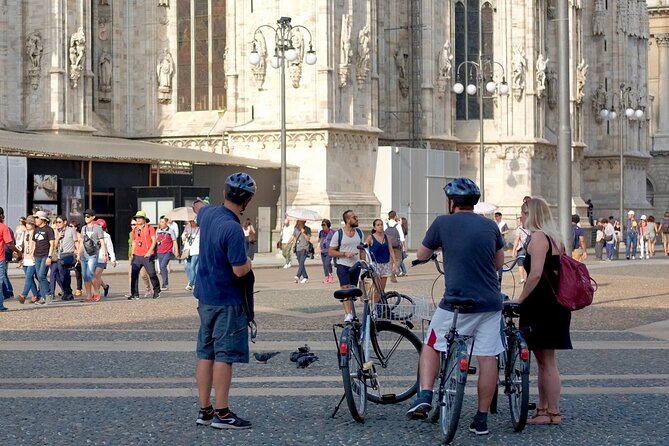
You meet at Via Lecco, 18 (20124 Milano), and you finish back there—so there’s no complicated end-of-tour transfer. The meeting point is near public transportation, which matters if you’re arriving from another part of town and don’t want to fight parking or taxis before a bike ride.
The tour is set up for a smooth, flat-feeling experience, and the physical demands are kept moderate. Still, treat it like cycling in real city traffic: you’ll want comfortable clothes, a light layer for wind, and shoes you can walk in for short segments. Since helmets are provided, you can focus on looking where you’re going instead of trying to track down gear.
One small planning note: Duomo and the area near La Scala are handled as outdoor views rather than deep museum-style visits. That’s a good thing for timing, but it means you shouldn’t expect a full interior experience on this specific ride.
Brera District: Art History in a Small Pause
Brera is one of those Milan neighborhoods that feels like it’s always talking—about style, scholarship, and creativity. This stop gives you a quick introduction to the Palace of Brera and the broader district identity as an artists’ area. Even with only a few minutes, you’ll leave with a handle on why Brera feels different from the commercial and civic lanes around it.
Here’s what you’ll appreciate if you’re new to Milan: the guide doesn’t just point at buildings. The pause is short on purpose, so you can absorb the vibe and keep moving without losing the momentum of the ride.
Practical tip: if you like architecture and street atmosphere, this is a good stop to slow down slightly as you roll through. Brera’s charm isn’t only in one façade—it’s in how the district connects streets and squares.
Arco della Pace and Parco Sempione: Neoclassical Milan’s Moment
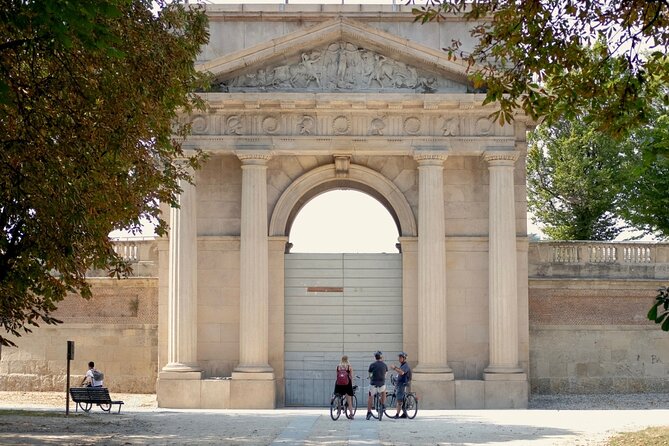
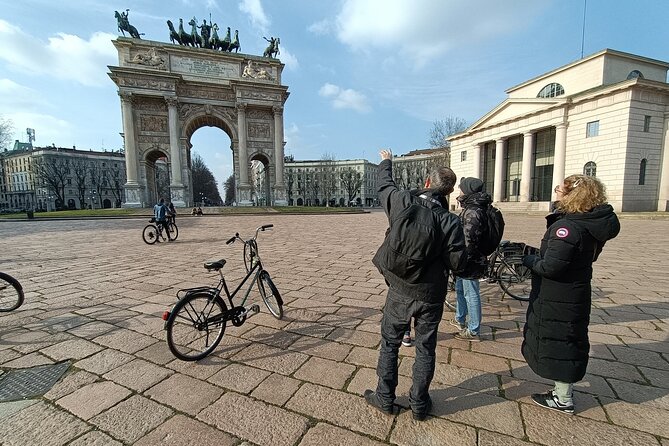
Next comes the Arco della Pace, positioned in front of Parco Sempione. This is one of Milan’s most recognizable neoclassical monuments, and the stop is timed to give you a clear look without turning into a long detour.
The value here is interpretation. The arch isn’t just a photo prop; it’s a key clue to Milan’s civic and architectural storytelling. If you’ve ever wondered why the city’s design looks both grand and formal in some areas, this stop helps you read that logic.
A quick heads-up: since you’re outdoors and on a bike route, it’s the kind of place where you’ll want your camera ready, but don’t get so fixated you drift from the group line.
Castello Sforzesco: Milan’s Power Symbol, Now a Culture Hub
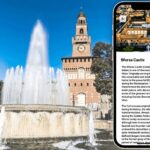
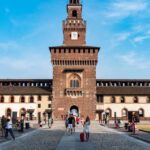
Then you hit Castello Sforzesco, one of Milan’s biggest symbols and one of the largest castles in Europe. Even if you don’t step inside, you’ll get the essential idea: this place once represented authority, and today it functions as a base for major cultural institutions.
This is a stop I’d recommend even if you think you’re a casual museum person. Why? Because the castle’s meaning shows up immediately—shape, scale, and the way it anchors the surrounding area. The guide’s short explanation helps you connect what you see to the long arc of Milan’s identity.
If you want to linger later, you’re still set up for it. Seeing the castle from the right distance helps you decide whether you want to return for a deeper visit on a separate day.
You can also read our reviews of more tours and experiences in Milan

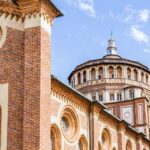
Basilica di Sant’Ambrogio: The Patron Saint’s Ancient Church
At Basilica di Sant’Ambrogio, you’re dealing with age and tradition. This is described as the ancient church of Milan’s patron saint, and it’s a perfect contrast to the castle stop. Castello Sforzesco is about civic scale; Sant’Ambrogio brings you down to spiritual permanence.
The stop lasts about 10 minutes, which is just enough time to appreciate the façade and learn the basics without turning it into a full worship-space etiquette marathon. You’ll come away understanding why this area matters beyond the tourist checklist.
If you’re the type who likes to photograph stonework and textures, this is one of your best opportunities on the route to slow down mentally. Older churches can look repetitive until someone gives you the cultural anchor—and the guide does.
Roman-Era Traces from the Second Century: Milan’s Deep Layer
Between the big landmarks, the tour includes a stop for traces of the Roman era dating back to the second century. This part is easy to underestimate. You’re thinking: Roman ruins, okay, next.
But it’s valuable because it changes how you view everything else you’ve seen. Milan isn’t just Renaissance and modern fashion branding. It has older layers, and the city’s evolution shows in small remnants as much as in grand monuments.
Because the stop is brief, don’t expect a full excavation-style explanation. Instead, treat it like a “mental breadcrumb.” Afterward, you’ll be better at spotting how the city reuses space and memory over time.
Darsena: Waterways, Restaurants, and a Different Milan Feel
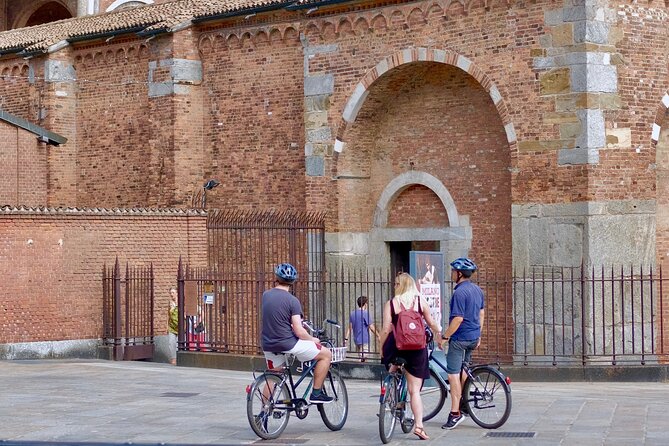
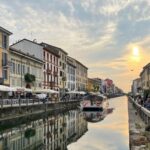
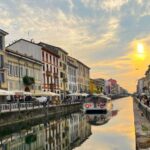
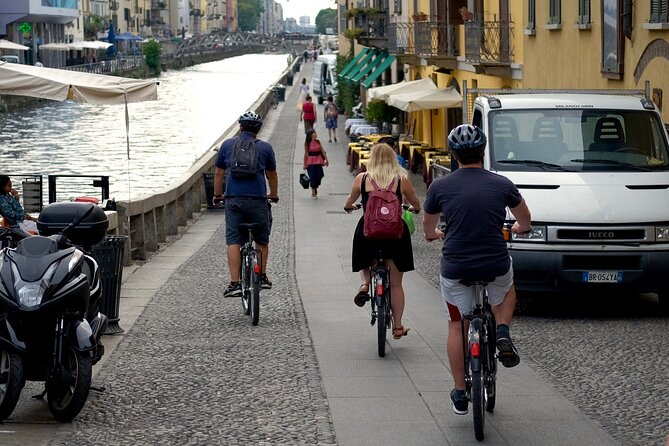
Now you shift to Darsena, known for historic waterways and a restaurant-focused atmosphere. This is the part of the ride that adds a taste of how Milan lives day-to-day, not only how it looks in postcards.
The stop gives you context for why Darsena feels different: it’s a neighborhood defined by movement and water—less formal than the castle-and-cathedral lanes, more social and contemporary in how people hang out.
If you’re hungry, this is also a good mental cue for later. You’ll have a better sense of where you might want to grab a meal after the tour ends, since you’re already oriented to the area’s vibe.
Piazza Affari and Piazza Mercanti: Trading, Medieval Admin, and Modern Art
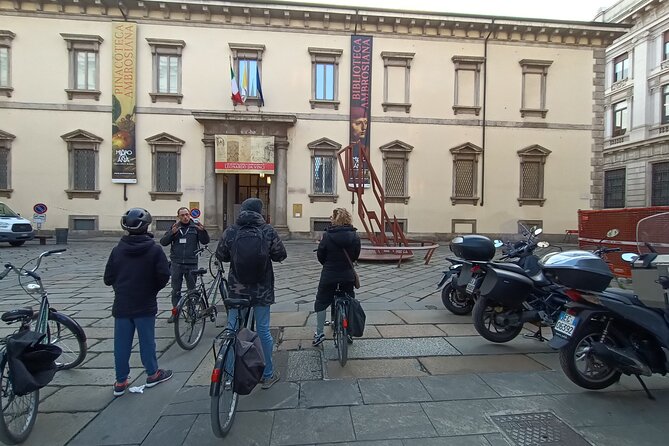
Two short stops here do a neat trick: they show Milan’s shift from old governance to modern finance while keeping the visual story interesting.
- Piazza Affari is tied to the Stock Exchange, and there’s mention of a contemporary art installation. You’re seeing how Milan layers modern creativity onto financial space.
- Piazza Mercanti is a medieval square that served as the seat of ancient municipal administration. It’s a step back into how the city used to run itself.
Both stops are about 5 minutes, which means the guide’s job is interpretation, not wandering. And it works, because these plazas can look similar if you don’t know what to look for. The guide helps you read the function behind the architecture.
Duomo di Milano Outside: The Cathedral Moment Without the Ticket Time
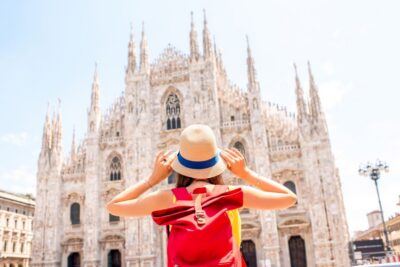
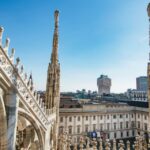
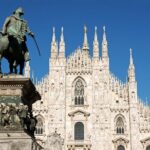
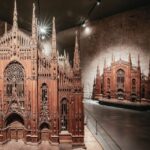
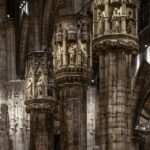
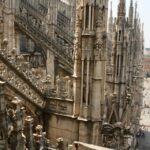
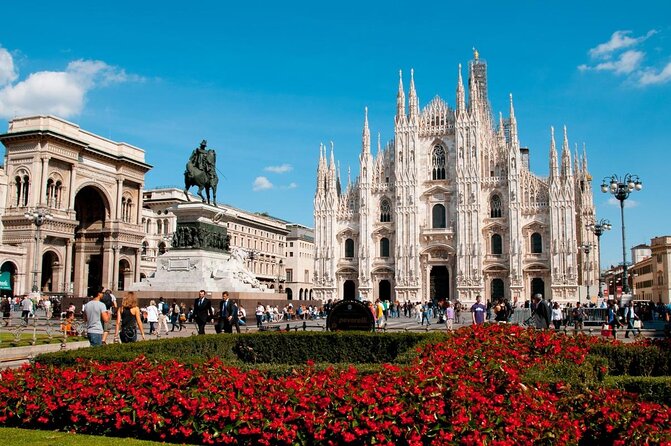
You’ll reach Duomo di Milano for an outdoor view, with admission not included. This matters because it sets expectations. You won’t be inside the cathedral on this tour, but you will get time to see why it dominates the city’s image.
For many visitors, the real question is not whether the Duomo is impressive. It is. The question is timing. Doing an outdoor viewing spot in a bike tour lets you get the landmark moment while the rest of the route still happens smoothly.
If you want to go inside, plan a separate block of time afterward. This bike tour is best understood as the “orientation and highlights” layer of your Milan trip.
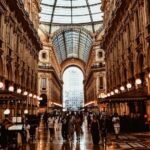
Galleria Vittorio Emanuele II: A 19th-Century Shopping Arcade That Feels Like a Set
Next is Galleria Vittorio Emanuele II, described as a luxury shopping arcade created at the end of the 19th century. Even if shopping isn’t your thing, this is one of those places where you’ll get architectural payoff quickly.
The guided stop is short—about 5 minutes—but it’s placed at a good moment. After seeing civic and religious giants (castle, basilica, cathedral), you get a change in tempo: glass and elegance, a kind of 19th-century stage set that Milaners still use.
If the weather’s tricky, this part can also feel like a relief because you get a more sheltered feel than open plaza stops.
Piazza della Scala: La Scala’s Exterior and the Palazzo Marino Area
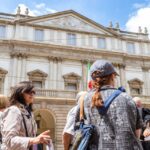
The tour ends with an external look at La Scala theater and Palazzo Marino from Piazza della Scala. Again, this is a highlight-view, not a backstage visit. But it’s exactly the right kind of ending for a bike tour because it ties Milan’s cultural reputation into a single final picture.
This final stop also works well because you’re not trying to squeeze everything into one huge day. You finish with a sense of where Milan puts its arts energy.
Then you cycle back to your starting point at Via Lecco, keeping the whole day simple.
Price and Value: What You’re Paying For (and What You’re Not)
At $58.87 per person for roughly 3.5 hours, this isn’t a bargain tour in the “cheapest option” sense. But it’s strong value for what’s included: bike use, helmet use, and a live guide in a small group that stays under 8 people.
You’re also getting a format that saves energy. Milan’s sights are spread out enough that walking can eat half a day and leave you worn out by the time you reach the Duomo area. Here, you cover more ground without losing the chance to learn. The stop structure—brief pauses at each landmark—keeps the cost from turning into a slow, drawn-out affair.
Most stops are free, which helps your planning. The big exception is Duomo viewing, which has no admission included for this ride. So if you want to go in, you’ll need to budget time and tickets elsewhere.
One more value angle: the tour runs with English guidance and you’re near public transportation for an easier start. That reduces friction, which is underrated when you’re sightseeing on a schedule.
Who Should Book This Bike Tour—and Who Might Skip It
This tour is a great fit if you:
- want a first-time orientation to central Milan in a half-day slot
- like getting historical context without standing in lines
- prefer cycling over stacking up long walks
- want a guide who can explain and keep the ride safe at city pace
It’s also a decent option if you’ve got limited time, because the structure is tight: you get a skyline start, then Brera to Sforza to the Duomo zone, and you finish with La Scala.
You might think twice if you:
- strongly want a detailed interior visit of the Duomo or a museum-heavy day
- need more frequent breaks for food stops, since this ride is built around quick learning moments rather than café detours
- dislike sharing bike lanes with real-world pedestrian traffic (this is normal city cycling)
Should You Book This Milan Bike Tour?
I’d book it if you want the best mix of sightseeing plus context without burning a full day. The small-group cap, helmet-and-bike setup, and the way the route stitches together Brera, Sforza, Sant’Ambrogio, the Roman-era traces, and the Duomo area makes it a smart “get your bearings fast” move.
If Duomo interior tickets are your top priority, treat this as the orientation layer and plan the interior separately. Otherwise, you’ll leave with a clearer sense of Milan’s eras and neighborhoods—and fewer hours wasted walking in circles.
FAQ
How long is the bicycle tour in Milan?
It runs for about 3 hours 30 minutes (approximately).
What is the price per person?
The price is $58.87 per person.
Is the guide available in English?
Yes, the tour is offered in English.
How many people are in the group?
The tour has a maximum of 8 travelers.
What should I bring, since hotel pickup is not included?
You should be ready to meet at the listed start point. The tour does not include hotel pickup or drop-off.
Where do we meet for the tour?
The meeting point is Via Lecco, 18, 20124 Milano MI, Italy.
Where does the tour end?
The activity ends back at the meeting point.
Are bikes and helmets provided?
Yes. Bicycle use and helmet use are included, along with a tourist guide.
Do I need tickets for the stops?
Most stops have admission listed as free. Duomo di Milano is marked as admission ticket not included, and Piazza della Scala is also marked as admission ticket not included (with an external view).
Is the tour okay for people with moderate fitness?
The tour is designed for travelers with a moderate physical fitness level, and the minimum age is 12.
Are there any weather limitations?
The experience requires good weather. If it’s canceled due to poor weather, you’ll be offered a different date or a full refund.